COVID-19 Contact Tracing (Coursera)

COVID-19 Contact Tracing (Coursera)

The COVID-19 crisis has created an unprecedented need for contact tracing across the country, requiring thousands of people to learn key skills quickly. The job qualifications for contact tracing positions differ throughout the country and the world, with some new positions open to individuals with a high school diploma or equivalent.

Class Deals by MOOC List - Click here and see Coursera's Active Discounts, Deals, and Promo Codes.

100% off - Original price: €42
Sale price: €0 with 100 percent off
Free enrollment available until December 31, 2021. Valid for one enrollment per person.

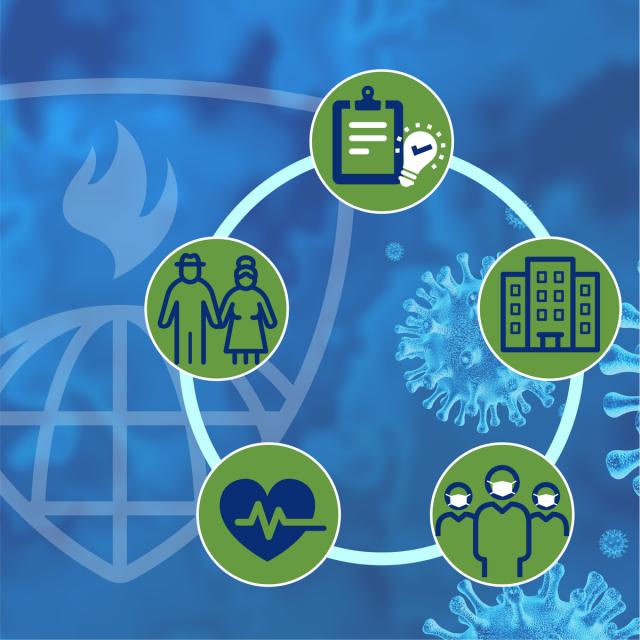
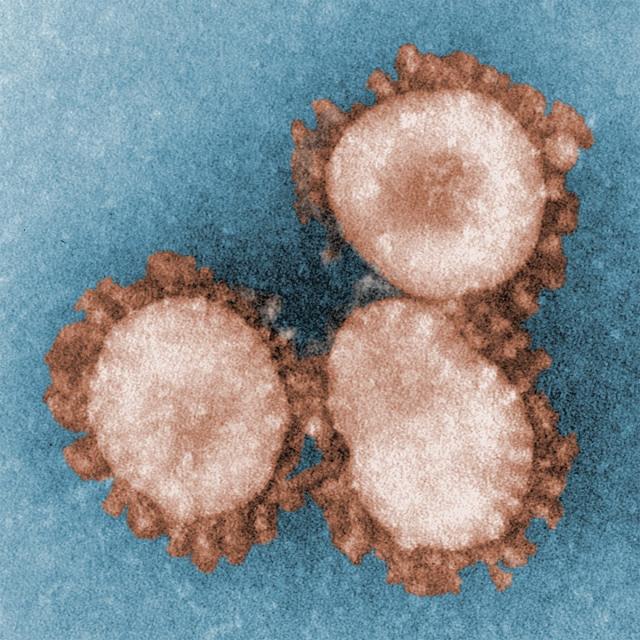
In this introductory course, students will learn about the science of SARS-CoV-2 , including the infectious period, the clinical presentation of COVID-19, and the evidence for how SARS-CoV-2 is transmitted from person-to-person and why contact tracing can be such an effective public health intervention. Students will learn about how contact tracing is done, including how to build rapport with cases, identify their contacts, and support both cases and their contacts to stop transmission in their communities. The course will also cover several important ethical considerations around contact tracing, isolation, and quarantine. Finally, the course will identify some of the most common barriers to contact tracing efforts -- along with strategies to overcome them.

What You Will Learn

  • Describe the natural history of SARS-CoV-2 , including the infectious period, the presentation of COVID-19, and evidence for how it is transmitted.
  • Define an infectious contact and timeline for public health intervention through contact tracing.
  • Demonstrate the utility of case investigation and contact tracing, identify common barriers, and possible strategies to overcome them.
  • Present some ethical considerations around contact tracing, isolation and quarantine.

Syllabus

WEEK 1
Basics of COVID-19
In this first module, we'll dig into the science of COVID-19, including what we know about its origins, clinical signs and symptoms, risk factors, diagnosis, transmission, and infectious period.
Basics of Contact Tracing for COVID-19
Now that you've learned about the basics of COVID-19, we'll turn our attention to some of the tools being used to stop the spread: contact tracing, isolation, and quarantine. We'll also show you how what you've already learned about infection and transmission informs the use of these critical public health tools.
Steps to Investigate Cases and Trace Their Contacts
In this module, we'll walk through the steps of the contact tracing process and provide examples. You'll also get to watch demonstrations of basic interactions with a case and and a contact.
Ethics of Contact Tracing and Technological Tools
In this module, you'll learn about the important ethical dimensions of contract tracing, including how we balance the protection of the public's health with limits on personal privacy and autonomy. We'll walk through some specific examples to prepare you for some of the issues contact tracers encounter during the course of their work.
Skills for Effective Communication
Effective communication is the cornerstone of a successful contact tracing interaction. That includes building rapport with cases and contacts, active listening, and asking the right kinds of questions. In this module, you'll watch and read several example interactions that demonstrate both how and how not to conduct yourself as a contact tracer.
Final Assessment (Graded)

Go to Class
MOOC List is learner-supported. When you buy through links on our site, we may earn an affiliate commission.

Related Courses

Data Science Ethics (Coursera) Coursera
University of Michigan

Data Science Ethics (Coursera)

What are the ethical considerations regarding the privacy and control of consumer information and big data, especially in the aftermath of recent large-scale data breaches? This course provides a framework to analyze these concerns as you examine the ethical and privacy implications of collecting and managing big data. Explore the broader impact of the data science field on modern society and the principles of fairness, accountability and transparency as you gain a deeper understanding of the importance of a shared set of ethical values.

Jun 1st 2026
4 Weeks
In the footsteps of Zika… approaching the unknown (Coursera) Coursera
University of Geneva

In the footsteps of Zika… approaching the unknown (Coursera)

Welcome to this on-demand MOOC “In the footsteps of Zika… approaching the unknown”. This MOOC has been produced by Université de Genève Institut Pasteur, Université Paris Descartes and Centre Virchow-Villermé. With the help of the intervention of faculty members and international experts, we will explore together the recent Zika phenomenon, a previously rare benign virus that recently turned unexpectedly into the limelight when on the 1st of February 2016 it was declared by the WHO as a Public Health Emergency of International Concern.

Jun 1st 2026
5-12 Weeks
Global Impact: Business Ethics (Coursera) Coursera
University of Illinois at Urbana-Champaign

Global Impact: Business Ethics (Coursera)

Global business ethics is the study and analysis of how ethics and global business are connected. How we should treat each other and our organizations in global and local contexts is the topic of this course. Business ethics and corporate responsibility are inherent in global commerce. Commerce is about markets, and markets entail exchanges between people and groups of people. So commerce is about human relationships, and indeed, it could not be otherwise.

Jun 1st 2026
4 Weeks
Managing Responsibly: Practicing Sustainability, Responsibility and Ethics (Coursera) Coursera
University of Manchester

Managing Responsibly: Practicing Sustainability, Responsibility and Ethics (Coursera)

Managers are increasingly confronted with issues of sustainability, responsibility and ethics. Managing responsibly is an integrative approach to sustainability, responsibility and ethics, which allows you as a manager to deal competently with such challenges. This course will facilitate your learning process to engage in changing practices to make them more sustainable, responsible, and ethically informed.

Jun 1st 2026
5-12 Weeks
Global Health Diplomacy (Coursera) Coursera
The State University of New York

Global Health Diplomacy (Coursera)

The field of global health is often thought of purely in medical or public health terms, but there are important geopolitical and policy dimensions of global health that underlie programmatic responses to global health challenges. By completing this course, learners will be able to explain the specific institutions and initiatives that are fundamental to current global health diplomacy activities and functions, and how these influence global health outcomes. Learners will further be able to summarize real-world examples where global health diplomacy either helped or limited global health outcomes, and explain the reasons for those outcomes.

Jun 1st 2026
5-12 Weeks
Foundations of Public Health Practice: The Public Health Approach (Coursera) Coursera
Imperial College London

Foundations of Public Health Practice: The Public Health Approach (Coursera)

The Public Health Approach course is the first instalment of the wider Foundations of Public Health Practice specialisation from Imperial College London's Global Master of Public Health (MPH). The scope and content of this course has been developed from the ground up by a combined team of academics and practitioners drawing on decades of real-world public health experience as well as deep academic knowledge. Through short video lectures, practitioner interviews and a wide range of interactive activities, learners will be immersed in the world of public health practice.

Jun 1st 2026
4 Weeks
Foundations of Teaching for Learning: Being a Professional (Coursera) Coursera
Commonwealth Education Trust

Foundations of Teaching for Learning: Being a Professional (Coursera)

The Foundations of Teaching for Learning programme is for anyone who is teaching, or who would like to teach, in any subject and any context - be it at school, at home or in the workplace. With dynamic lessons taught by established and respected professionals from across the Commonwealth, this eight course programme will see you develop and strengthen your skills in teaching, professionalism, assessment, and more. As you carry on through the programme, you will find yourself strengthening not only your skills, but your connection with colleagues across the globe. A professional development opportunity not to be missed.

Jun 1st 2026
5-12 Weeks
International Women's Health and Human Rights (Coursera) Coursera
Stanford University

International Women's Health and Human Rights (Coursera)

This course focuses on women’s health and human rights issues from infancy through old age, including information about positive interventions relating to those issues. Learners are encouraged to interact with each other through interactive discussions. It is important to us that this course be available to all learners. We encourage you to apply for Coursera's financial aid (see link to left) if the cost of the course certificate is difficult for you to afford. Please note that you may view all materials in this course, and participate in it, without purchasing a certificate.

Jun 1st 2026
5-12 Weeks
Global Health at the Human-Animal-Ecosystem Interface (Coursera) Coursera
University of Geneva

Global Health at the Human-Animal-Ecosystem Interface (Coursera)

The University of Geneva, Institute Pasteur, University of Montreal and Centre Virchow-Villermé/University Paris Descartes welcome you to this new MOOC on "Global Health at the Human-Animal-Ecosystem Interface"! Over the next 5 weeks, you will explore and learn about some of the major and current Global Health Challenges at the Human-Animal-Ecosystem Interface: zoonotic emerging infections (e.g. Ebola, Nipah, MERS, Avian Influenza), antimicrobial resistance, neglected tropical diseases (e.g. rabies, leishmaniasis, zoonotic TB), snakebite and other human-animal conflicts etc.

Jun 1st 2026
5-12 Weeks
Healthcare Innovation: What Does Success Look Like and How to Achieve It? (Coursera) Coursera
Imperial College London

Healthcare Innovation: What Does Success Look Like and How to Achieve It? (Coursera)

This course focuses on the factors involved in the adoption of innovation - features, organizations, country of origin, cognitive, normative and affective aspects, change agents. Using real-world health innovations, you'll assess what impacts their scaleability to new contexts, how organizational and human characteristics affect adoption, to what extent diffusion of an innovation is influenced by unconscious bias.

Jun 1st 2026
4 Weeks
Foundations of Public Health Practice: Health Protection (Coursera) Coursera
Imperial College London

Foundations of Public Health Practice: Health Protection (Coursera)

The Health Protection course is the fourth instalment of the wider Foundations of Public Health Practice specialisation from Imperial College London's Global Master of Public Health (MPH). The scope and content of this course has been developed from the ground up by a combined team of academics and practitioners drawing on decades of real-world public health experience as well as deep academic knowledge. Through short video lectures, practitioner interviews and a wide range of interactive activities, learners will be immersed in the world of public health practice.

Jun 1st 2026
3 Weeks