Fundamentals of Immunology: Death by Friendly Fire (Coursera)

Offered by Rice University,
Fundamentals of Immunology: Death by Friendly Fire (Coursera)

Course 3 of a three course specialization called Fundamentals of Immunology. Each course in the specialization presents material that builds on the previous course's material. This is the third leg of the journey through the defenses your body uses to keep you healthy. In the first course we learned about innate immunity and B cell function. In the second course we studied T cell function and coordination of the immune response.

Class Deals by MOOC List - Click here and see Coursera's Active Discounts, Deals, and Promo Codes.

Fundamentals of Immunology: Death by Friendly Fire introduces students to the basic functions of the adaptive and innate immune systems. The early lectures survey cells, tissues and organs using metaphors, cartoons and models to improve understanding and retention. After describing the form, function, origin and varieties of antibodies, subsequent lectures provide details on the mechanism of the generation of variation. The course provides animations of gene rearrangement and class switching and descriptions of affinity maturation correlated with detailed physical models of antibody structure. The final lecture reviews these concepts in anatomical context. Testing employs multiple choice questions testing facts, concepts, and application of principles. Questions may refer to diagrams, drawing and photographs used in lecture and reproduced in the outline.
What You Will Learn
A survey of immune cells and how they attack pathogens, with emphasis on the mechanism of inducing apoptosis and details of Antibody Directed Cell-mediated Cytotoxicity. The inflammatory response and mechanisms of generating tolerance, presented in sequence to emphasize the decision making involved in controlling attacks. A survey of autoimmune disease, their characteristics, cause and treatment. Survey of hypersensitivity reactions, including allergy, anaphylaxis, anemias, granulomas, and a variety of skin responses. This is accompanied by identification, prevention and treatment. The final discussion of preventing transplant rejection is preceded by a detailed unit on antibody technology and the methods of testing for incompatibility.
Course 3 of 4 in the Fundamentals of Immunology Specialization.

Syllabus

WEEK 1: Cellular Immunity
WEEK 2: Inflamation
WEEK 3: Tolerance
WEEK 4: Autoimmunity
WEEK 5: Hypersensitivity
WEEK 6: Transplant Immunity

Go to Class
MOOC List is learner-supported. When you buy through links on our site, we may earn an affiliate commission.

Related Courses

Community Awareness Course: Sexuality and Disability (Coursera) Coursera
University of Minnesota

Community Awareness Course: Sexuality and Disability (Coursera)

This community awareness course from the University of Minnesota Program on Human Sexuality will provide you with a solid introduction to human sexuality for those living with disabilities. Often there are assumptions that the disabled or differently abled people are not sexual, do not have sexual needs, or cannot be involved sexually. In this professionally produced one-hour course, you'll learn about the basics of disabilities and human sexuality.

Nov 2nd 2026
5-12 Weeks
Communicating During Global Emergencies (Coursera) Coursera
Emory University

Communicating During Global Emergencies (Coursera)

In collaboration with the Rollins School of Public Health and the CDC's Division of Global Health Protection, Emergency Response, and Recovery Branch, this course introduces basic concepts and principles of communicating during a global crisis or emergency. It explores why communication during an emergency is different and the importance of adapting emergency messages to the needs of affected populations.

Nov 2nd 2026
3 Weeks
The Oral Cavity: Portal to Health and Disease (Coursera) Coursera
University of Pennsylvania

The Oral Cavity: Portal to Health and Disease (Coursera)

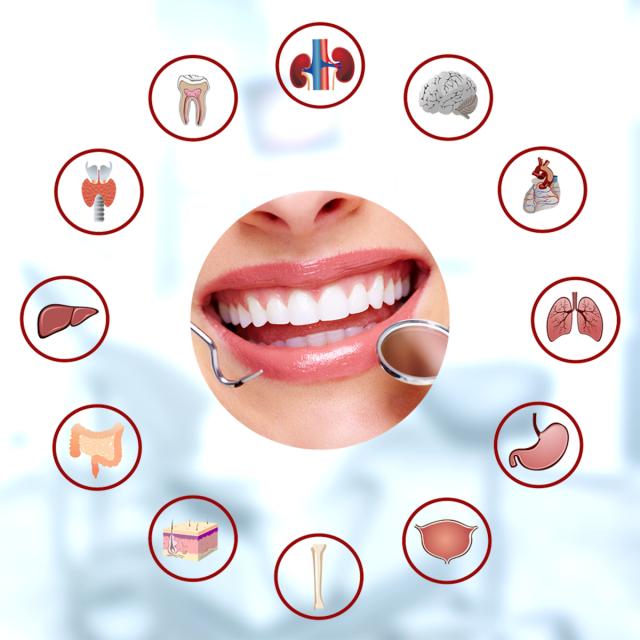
This course will focus on the interprofessional realtionship of dentistry and medicine. For each session, the medical specialist will present a broad overview of specific disease entity which will be followed by a dental educator discussing the relevant oral manifestations and implications. The final module of each session will be devoted to the interaction between the dental and other health care professionals.

Nov 2nd 2026
5-12 Weeks
Population Health: Alternative Payment Models (Coursera) Coursera
Leiden University

Population Health: Alternative Payment Models (Coursera)

The way we currently pay our care providers lead to suboptimal outcomes and unnecessary spending. Consequently, we fail to maximize the value of our health care services. We need to change provider payment models in order to keep health care systems financial sustainability. Doing nothing is not an option. But the question is, how do we do it?

Nov 2nd 2026
4 Weeks
Cosmetologia em prol do envelhecimento com saúde e beleza (Coursera) Coursera
Universidade Estadual de Campinas - UNICAMP

Cosmetologia em prol do envelhecimento com saúde e beleza (Coursera)

Esse curso foi planejado com muito cuidado e dedicação visando trazer conhecimentos clássicos e atuais sobre o processo de envelhecimento, produtos cosméticos e as múltiplas vias de atuação de substancias ativas aplicadas em produtos para prevenção e atenuação dos sinais de envelhecimento da pele.

Nov 2nd 2026
5-12 Weeks
Mind Control: Managing Your Mental Health During COVID-19 (Coursera) Coursera
University of Toronto

Mind Control: Managing Your Mental Health During COVID-19 (Coursera)

Never in the history of humanity have so many people been feeling intense anxiety related to COVID-19 and the world it will leave in its wake. The intent of this course is to give you a deeper understanding of the anxiety reaction as it relates to various aspects of our current life, ranging from our consumption of news to the way we talk to our children about this. I will also give you clear strategies for managing and, in fact, turning off the anxiety response at least for short periods.

Nov 2nd 2026
4 Weeks
Psychological First Aid (Coursera) Coursera
Johns Hopkins University

Psychological First Aid (Coursera)

Learn to provide psychological first aid to people in an emergency by employing the RAPID model: Reflective listening, Assessment of needs, Prioritization, Intervention, and Disposition. Utilizing the RAPID model (Reflective listening, Assessment of needs, Prioritization, Intervention, and Disposition), this specialized course provides perspectives on injuries and trauma that are beyond those physical in nature. The RAPID model is readily applicable to public health settings, the workplace, the military, faith-based organizations, mass disaster venues, and even the demands of more commonplace critical events, e.g., dealing with the psychological aftermath of accidents, robberies, suicide, homicide, or community violence.

Nov 2nd 2026
5-12 Weeks
Autism Spectrum Disorder (Coursera) Coursera
University of California, Davis

Autism Spectrum Disorder (Coursera)

Understanding the characteristics of autism spectrum disorder (ASD) and their implications for behavior, learning and the ability to process information is critical for anyone working or interacting with those on the spectrum -- educators, clinicians, counselors, therapists, medical staff, family and employers. This course will give you a fundamental understanding of what ASD is, how it is diagnosed, the primary areas of impairment, and why prevalence is increasing.

Nov 2nd 2026
5-12 Weeks
Lymphoedema: Monitoring & Intervention After Breast Cancer (Coursera) Coursera
Macquarie University

Lymphoedema: Monitoring & Intervention After Breast Cancer (Coursera)

Lymphoedema following breast cancer treatment is a poorly understood and under-researched condition which can significantly impact physical and psychological function, reduce quality of life and result in substantial cost burdens to both patients and the healthcare system. In these interactive modules we will cover an introduction to lymphoedema, lymphatic physiology and anatomy, assessment and treatment, as well as utilise case studies to understand the prospective surveillance and early intervention model of care in breast cancer rehabilitation.

Nov 2nd 2026
4 Weeks
Urbanisation and Health - Promoting Sustainable Solutions (Coursera) Coursera
University of Copenhagen

Urbanisation and Health - Promoting Sustainable Solutions (Coursera)

More than half of world’s population lives in cities while only 5% did so in the 18th century. The rapid urbanisation has resulted in for example inadequate infrastructure, physical inactivity, gentrification, air pollution, and growing numbers of slum dwellers. All factors challenging health and wellbeing of the people living in the cities. In addition, when addressing climate change it has become of paramount importance to look at mitigation and adaptation investments tailored to the urban context.

Nov 2nd 2026
5-12 Weeks