The Holocaust: an Introduction - Part 2 (FutureLearn)

Offered by Tel Aviv University,
The Holocaust: an Introduction - Part 2 (FutureLearn)

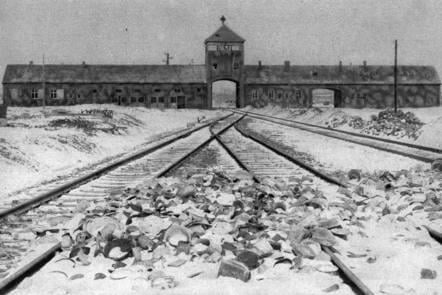
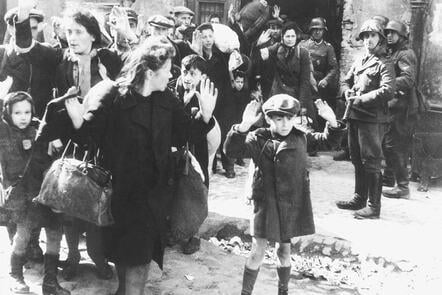
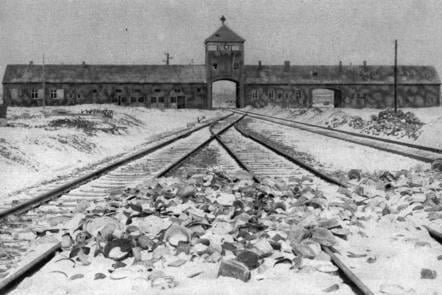
Part 2 of 2. This course depicts the complex history of the Holocaust, highlighting its impact on our world today. The Holocaust was an inconceivable historical event, which forever robbed Western culture of its innocence. As civilized human beings, we fail to understand how events of such horror could have taken place, and how an idea so inhumanly warped could have spread like wildfire through an entire continent, instigating the systematic annihilation of millions of Jews.

Class Deals by MOOC List - Click here and see FutureLearn's Active Discounts, Deals, and Promo Codes.

This free online course was produced jointly by Tel Aviv University and Yad Vashem – the World Center for Holocaust Research.
This course is the second of the two courses and covers three themes in its three weeks:

Week 1: The Final Solution
We’ll look at the cultural and mental processes that paved the way to the comprehensive and systematic mass murder of Jews in Europe – that is, the Final Solution. As part of this hard lesson we will discuss the various characteristics of the murder sites and death camps, and reveal selected aspects of the horror that occurred in them.

Week 2: Jewish and Non-Jewish Responses to the Holocaust
We will try to explore questions regarding knowledge about the application of the Final Solution, as well as a variety of responses and annihilation of victims, local populations and perpetrators.

Week 3: The End of the War
We will dedicate this lesson to the events that occurred in the last years of the Holocaust, as well as questions of memory, commemoration and future research.

We strongly recommend that you register for The Holocaust: an Introduction - Part 1 as well. Taking both parts of the course would enable you to obtain a fuller and more comprehensive knowledge about The Holocaust.
This online course is offered in an innovative, multi-level format, comprising:

  • Comprehensive lectures by leading researchers from Tel Aviv University and Yad Vashem.
  • A wealth of voices and viewpoints presented by guest lecturers.
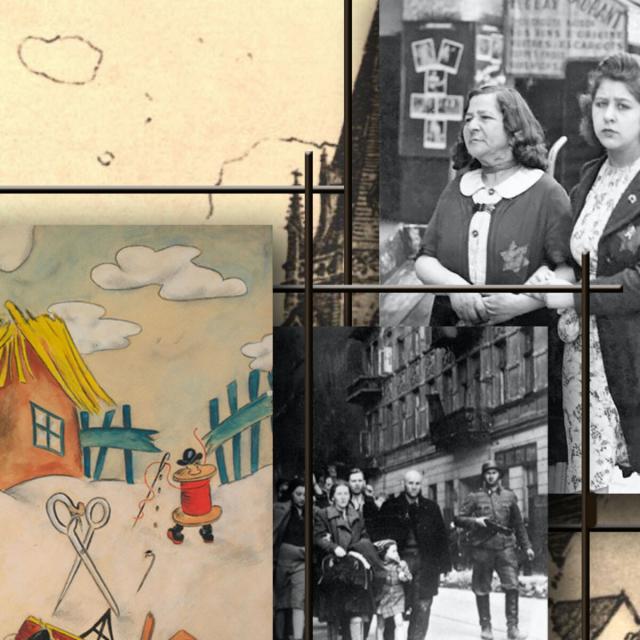
  • Numerous documents, photos, testimonies and works of art from the time of the Holocaust.
  • Novel learning experience: Crowdsourcing – involving the learners themselves in the act of collecting and shaping information, via unique, exciting online assignments.
Go to Class
MOOC List is learner-supported. When you buy through links on our site, we may earn an affiliate commission.

Related Courses

Odesa: Jews in the Modern World (Coursera) Coursera
University of California, Santa Cruz

Odesa: Jews in the Modern World (Coursera)

In this course, Peter Kenez and Murray Baumgarten, both emeritus professors at UC Santa Cruz, tell the story of the Jews of the Black Sea port of Odesa. Kenez and Baumgarten include music, literature, and history in their analysis of a city like no other. The course is for anyone with an interest in the history and culture of the Jewish people.

Jun 15th 2026
5-12 Weeks
World War 1: Trauma, Memory, Controversy (FutureLearn) FutureLearn
The Open University

World War 1: Trauma, Memory, Controversy (FutureLearn)

Explore the traumatic effects of WW1 on soldiers and civilians. Discover how we remember and debate the history of this war. In this free online course, you will study the social, cultural, medical and diplomatic history of the First World War. Topics range from physical and mental trauma suffered by combatants to the traumatic experiences of civilians in wartime.

Self Paced
4 Weeks
Antisemitism: From Its Origins to the Present (FutureLearn) FutureLearn
Yad Vashem

Antisemitism: From Its Origins to the Present (FutureLearn)

Join 50 leading scholars in exploring antisemitism, from its roots to its contemporary forms. In this course, 50 leading scholars from all over the world will explore questions and issues relating to antisemitism including: what is antisemitism? How has it changed throughout history? Why can it be found among so many diverse cultures, and even among opposing ideologies? What happened to antisemitism after the Holocaust? How is antisemitism expressed today, and what are the main spheres in which it can be found?

Nov 8th 2021
5-12 Weeks
Religion, Conflict and Peace (edX) EdX
HarvardX,Harvard University

Religion, Conflict and Peace (edX)

Explore the diverse and complex roles that religions play in both promoting and mitigating violence. In this course, we will explore a series of contemporary conflicts in different regions of the world with a special focus on identifying and analyzing the diverse and complex roles that religions play in both promoting and mitigating violence in each context.

Self Paced
Self-Paced
Oriental Beliefs: Between Reason and Traditions (edX) EdX
LouvainX,Université Catholique de Louvain - UCL

Oriental Beliefs: Between Reason and Traditions (edX)

Explore the spiritual and magical beliefs of cultures, from ancient Egypt to modern Japan, as we discuss gods, the universe, cosmos, dreams and so much more! This course takes a journey through the world of beliefs as they have developed in a great variety of cultures, ranging from Ancient Egypt, the Near East to Central Asia, India, China, and the Far East.

No sessions available
5-12 Weeks
The Qur'an Between Judaism and Christianity (FutureLearn) FutureLearn
The University of Nottingham

The Qur'an Between Judaism and Christianity (FutureLearn)

Get an introduction to the history of the Qur'an, and its relationship with Judaism and Christianity. Explore the relationship between the Qur'an, Judaism and Christianity. This online course will illustrate how the Qur’an situates itself as part of, and as a correction to, the religious discourse of the Jewish and Christian communities of Late Antique Arabia.

Jan 10th 2022
4 Weeks
The Making of Modern Ukraine (Coursera) Coursera
Yale University

The Making of Modern Ukraine (Coursera)

Ukraine must have existed as a society and polity on 23 February 2022, else Ukrainians would not have collectively resisted Russian invasion the next day. What does it mean for a nation to exist? Is this a matter of structures, actions, or both? Why has the existence of Ukraine occasioned such controversy? In what ways are Polish, Russian, and Jewish self-understanding dependent upon experiences in Ukraine? Just how and when did a modern Ukrainian nation emerge?

Oct 12th 2026
1 Week
Irish 102: An Introduction to Irish Language and Culture (FutureLearn) FutureLearn
Dublin City University

Irish 102: An Introduction to Irish Language and Culture (FutureLearn)

Find out how to speak, write and understand basic words, phrases and dialogues in Irish. Develop your knowledge of the basics of the Irish language. Ireland is home to one of the oldest living languages in Europe. On this course, you’ll improve your understanding of basic spoken words, phrases and dialogues in Irish.

Self Paced
4 Weeks
The Holocaust: an Introduction - Part 1 (FutureLearn) FutureLearn
Tel Aviv University

The Holocaust: an Introduction - Part 1 (FutureLearn)

Part 1 of 2. This course depicts the complex history of the Holocaust, highlighting its impact on our world today. The Holocaust was an inconceivable historical event, which forever robbed Western culture of its innocence. As civilized human beings, we fail to understand how events of such horror could have taken place, and how an idea so inhumanly warped could have spread like wildfire through an entire continent, instigating the systematic annihilation of millions of Jews.

No sessions available
3 Weeks
Photographing the Holocaust (FutureLearn) FutureLearn
The University of Nottingham

Photographing the Holocaust (FutureLearn)

What insights do photos offer into histories of National Socialism and the Holocaust? Are they authentic sources, or ‘fake news’? Learn to decode photos and visit secret archives for a new view of history. This course, created by academics from Nottingham and the UK’s National Holocaust Centre and Museum, invites you on a visual journey of discovery.

Oct 11th 2021
3 Weeks
Toledo: Deciphering Secrets of Medieval Spain (Coursera) Coursera
University of Colorado System

Toledo: Deciphering Secrets of Medieval Spain (Coursera)

This course evaluates the medieval history of Toledo from the era of the Visigoth Kingdom (6th-8th centuries) through its Islamic period (8th to 11th centuries) and into its reintegration into Christian Spain (after 1085 c.e.) In particular, we take note of the cultural and religious transformations that characterized the city with a special effort to understand how many peoples and religions came to settle and live amongst one another.

Jul 1st 2024
5-12 Weeks