Teaching the Holocaust: Innovative Approaches to the Challenges We Face (FutureLearn)

Teaching the Holocaust: Innovative Approaches to the Challenges We Face (FutureLearn)

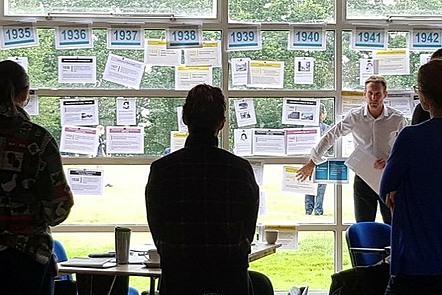
Explore history, delve into pedagogical challenges revealed by research, and find practical solutions for teaching the Holocaust. The Holocaust was the murder of approximately 6 million Jews perpetrated by Nazi Germany and its collaborators. That this atrocity proved possible raises many complex questions which remain relevant for young people today.

Class Deals by MOOC List - Click here and see FutureLearn's Active Discounts, Deals, and Promo Codes.

During this course you will enrich your understanding of the history of the Holocaust, hearing from scholars at Yad Vashem, whilst experts from UCL will share their research into teaching and learning about the Holocaust.
By the end of the course you will have also considered innovative pedagogical approaches and resources, becoming empowered to develop your own material.

Syllabus

Week 1
Introduction to the History of the Holocaust: What was the Holocaust?

  • Overview of Jewish life before the war;
  • The roots of antisemitism;
  • The story of the late Holocaust survivor Leon Greenman;
  • The beginning and un-folding of the Holocaust 1933-onwards;
  • Emigration options for Jewish people and the reception of refugees around the world;
  • The beginning of the Second World War and the Holocaust from 1939 onwards;
  • The ghettos;
  • The development of the ‘Final Solution’;
  • Resistance and rescue;
  • Concentration and extermination camps;
  • Liberation;
  • Return to life.

Week 2

  • Can young people grasp the enormity of this history?
  • What are the challenges that teachers face?
  • What do students know and understand about the Holocaust?
  • What are the issues in textbooks?
  • Using atrocity images? An ethical question;
  • What are the implications of misconceptions?
  • How do we teach about the Holocaust in a world without survivors?

Week 3

  • What are key pedagogical principles to keep in mind?
  • How can we apply key pedagogical principles in our teaching practice?
  • How can we address misconceptions?
  • How can using artefacts deepen student understanding of the Holocaust?
  • Theory into practice: Developing your own classroom material.

Who is the course for?
Adults who are engaged in the following work may find this course especially helpful. A basic introduction to the history of the Holocaust will be covered on the course.

  • Teachers of high school age students;
  • Senior leaders in schools;
  • Teacher training providers;
  • Further Education lecturers;
  • Higher Education lecturers;
  • Youth workers;
  • Heritage sector educators;
  • Informal educators;
  • Home school educators;
  • Interested parents.
Go to Class
MOOC List is learner-supported. When you buy through links on our site, we may earn an affiliate commission.

Related Courses

The Online Educator: People and Pedagogy (FutureLearn) FutureLearn
The Open University

The Online Educator: People and Pedagogy (FutureLearn)

Design engaging courses, make your teaching more inclusive, navigate online research ethics and shape your digital identity. Enhance your online teaching with strategies from educational technology experts. As e-learning becomes ever-more widespread, online educators are being required to design learning experiences that engage and meet the needs of very diverse learners.

Self Paced
4 Weeks
Teaching Entrepreneurial Thinking (FutureLearn) FutureLearn
Queensland University of Technology

Teaching Entrepreneurial Thinking (FutureLearn)

Get an introduction to what entrepreneurial thinking is, and how and why we should teach it. We live in an uncertain and complex world, where the big problems of today and tomorrow are yet to be identified. Teaching young people the skills and resilience to live and thrive in such a world is the purpose of entrepreneurial thinking. This course will introduce you to what entrepreneurial thinking is, and why it’s an important skill for young people to learn.

Self Paced
2 Weeks
Preparing for University (FutureLearn) FutureLearn
University of East Anglia

Preparing for University (FutureLearn)

Build the academic skills you need for learning at university and ease your transition from school learning to higher education. Develop writing, critical thinking, and analytical skills for university study. Learning at a university level requires enhanced critical thinking skills, as well as being able to hold a supported, substantive argument and critically analyse sources or data.

Self Paced
5-12 Weeks
Preparing to Learn Online at University (FutureLearn) FutureLearn
University of Leeds

Preparing to Learn Online at University (FutureLearn)

Need advice on how to study online? Discover study techniques and skills for learning online as part of your university studies. Improve your online study skills and get academic online learning tips. Learning online is very different from learning in an on-campus classroom and often involves independent study. On this course, you will explore and learn about various different approaches to online learning.

Self Paced
3 Weeks
Teaching Students Who Have Suffered Complex Trauma (FutureLearn) FutureLearn
Queensland University of Technology

Teaching Students Who Have Suffered Complex Trauma (FutureLearn)

Find out what complex trauma is, how it affects children and adolescents, and what can be done to help. Learn how to support students who have experienced complex trauma. Complex trauma affects the physical, emotional and social development of children and adolescents. In order to minimise harm, teachers and school leaders need to respond appropriately using trauma-informed practices and policies. In this course, you’ll get an introduction to what complex trauma is and how it affects young people’s development at school.

Self Paced
2 Weeks
Understanding and Teaching Evolution (FutureLearn) FutureLearn
University of Bath

Understanding and Teaching Evolution (FutureLearn)

Learn key concepts in biological evolution and find out how to integrate them into the classroom. Find out how to teach evolution to 7–16 year olds. How does evolution happen? Can we observe it in real time? How do new species come about and how long does this take? When you think about evolution, you may think of Darwin, but modern genetics has transformed our understanding of how evolution happens. This course uses this new genetics-centred approach to explain key concepts in our scientific understanding of evolution.

Self Paced
3 Weeks
The Tudors (FutureLearn) FutureLearn
University of Roehampton

The Tudors (FutureLearn)

Go back in time to learn about the dramatic rule of the Tudor monarchs and religious change of the sixteenth century reformation. Uncover the turbulent history of Tudor England and its lasting impact. From magnificence and martyrs to weddings and war, the Tudor period was one of the most eventful in British history. The reigns of the five (or was it six?) monarchs during the late fifteenth to seventeenth century has enthralled historians, students and television and film producers alike.

Self Paced
5-12 Weeks
The Scottish Highland Clans: Origins, Decline and Transformation (FutureLearn) FutureLearn
University of Glasgow

The Scottish Highland Clans: Origins, Decline and Transformation (FutureLearn)

Explore fascinating Scottish history by learning about the Highland clans and how clanship has changed across hundreds of years. Discover the important history of the Highland clans. The Highland, Gaelic speaking clans are a vital part of Scotland’s history. They also shape how the world imagines Scotland today.

Self Paced
3 Weeks
Creating Apps in the Classroom (FutureLearn) FutureLearn
Queensland University of Technology

Creating Apps in the Classroom (FutureLearn)

Find out how to create your own educational apps to support learning activities in your classroom. Learn how to create apps to use in your own teaching practice. There are many educational apps available, but the majority are created by non-educators. Platforms for developing apps are becoming increasingly user-friendly, so it’s easier for teachers to create apps to support their own classroom activities.

Self Paced
2 Weeks
Child Protection for Teachers (FutureLearn) FutureLearn
Queensland University of Technology

Child Protection for Teachers (FutureLearn)

Feel empowered to protect your students by identifying and reporting signs of child abuse and neglect. Learn to identify the warning signs and indicators of child abuse and neglect. This course will enable you to recognise the signs of child abuse and neglect, and learn how maltreatment impacts on children’s learning and development. It will also help you to understand your role as a reporter.

Self Paced
2 Weeks
Education Research that Matters: Doing Research in Your Learning Community (FutureLearn) FutureLearn
University of Birmingham,Chartered College of Teaching

Education Research that Matters: Doing Research in Your Learning Community (FutureLearn)

Build the tools and knowledge to perform your own education research and establish yourself as a teacher-researcher. Learn how to analyse research data and communicate your research findings. Many teachers want to learn new knowledge and methods to improve their teaching, but it can be hard for someone outside of research communities to perform research of their own. On this course, you will learn how to do your own education research and build supported communities of education research practice.

Self Paced
4 Weeks
Becoming a Student Assistant: Teaching and Mentoring (FutureLearn) FutureLearn
University of Groningen

Becoming a Student Assistant: Teaching and Mentoring (FutureLearn)

Learn how to be professionally involved in teaching, support and governing of higher education institutions. Student assistants are valuable staff members at the University of Groningen. Currently, over 700 students take up teaching duties, support role functions, governing positions, and many other responsibilities. But, how to prepare for a job as a student assistant? What is professional behaviour? How to deal with challenging situations in the classroom? How to support first year students? These and other questions will be covered in this course.

Self Paced
5-12 Weeks