Chosen Issues in Holocaust History (Coursera)

Offered by Yad Vashem,
Chosen Issues in Holocaust History (Coursera)

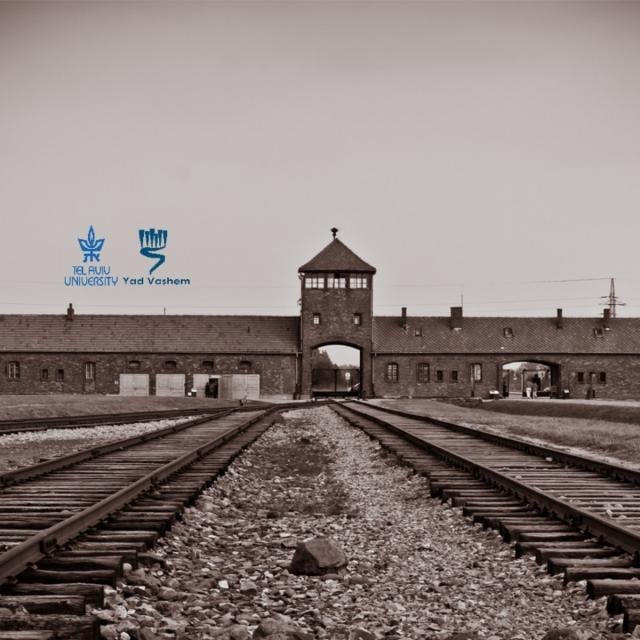
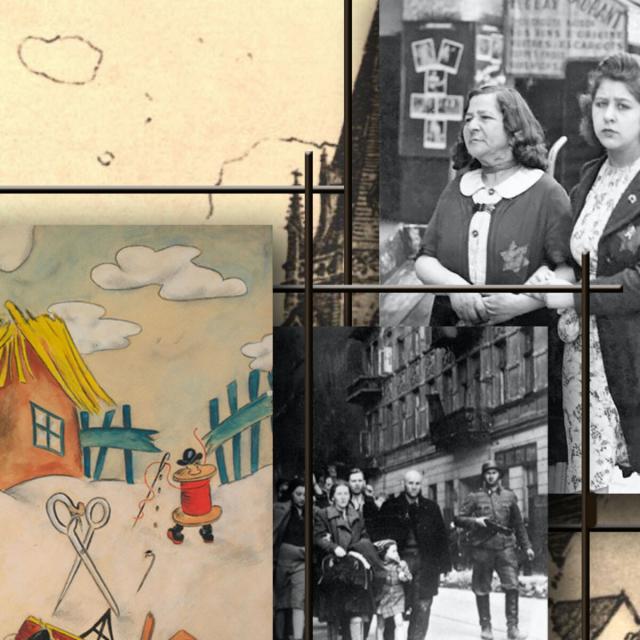
The Holocaust - what do we know about it and what more can we learn? This course provides a broad and in-depth look at central topics relating to the history of the Holocaust. It examines the events and processes that took place during these earth-shattering years through new and thought-provoking perspectives.

Class Deals by MOOC List - Click here and see Coursera's Active Discounts, Deals, and Promo Codes.

What You Will Learn

  • The rise of Nazi party to power and the development of anti-Jewish policy until the outbreak of the war
  • The establishment of the ghettos and the daily life within them
  • The development and implementation of the "Final Solution"
  • The development of antisemitism throughout the ages and its expression

Syllabus

WEEK 1
Nazi Germany: 1933-1939
In this chapter, the first of the course, we will learn together with Professor Guy Meron about Nazi Germany between 1933-1939. The chapter begins with an overview of the state of European Jewry during the interwar years. It will explore the fall of the Weimar Republic and the rise of the Nazi regime to power, as well as the implementation of anti-Jewish policies until the outbreak of World War II in 1939.

WEEK 2
The Outbreak of World War II and Anti-Jewish Policies, 1939-1941
Under the direction of Professor Dan Michman, this chapter will focus on Nazi Germany's anti-Jewish policies, from the outbreak of the war until 1941. We will identify different regime patterns in countries under German occupation and their anti-Jewish policies. We will also learn about the so-called "Jewish Council" (Judenrat), the establishment of ghettos and the lives of Jews within and outside of them during the Holocaust.

WEEK 3
The Formulation and Implementation of the "Final Solution", 1941-1945
Together with Dr David Silberklang, in this chapter, we will discuss the formulation and implementation of the "Final Solution". Dr Silberklang will explain different historiographical approaches to the development of the "Final Solution", will discuss Germany's invasion of the Soviet Union and the beginning of the mass murders. We will also explore the establishment of the death camps, as well as the life of prisoners in the various camps.

WEEK 4
The Image of "the Jew" in Nazi Antisemitism - Visuals and Typology
In this chapter, Dr Robert Rosett will describe the development of antisemitism throughout the ages and the evolution of the image of the Jewish figure within it. We will explore modern, political and racial antisemitism in the 19th century, as well as Nazi ideology.

WEEK 5
Key Stages in the History of World War II and The Deportations
Two main subjects are raised in Dr Joel Zisenwine lectures found in this chapter: The key stages in the history of world war II and the deportation of Jews to camps during the Holocaust.

WEEK 6
The World After the Holocaust: Trauma, Memory and Culture
The issues discussed in this chapter are taken from Yad Vashem's learning center "Reflections After the Holocaust", situated in the museum complex. The speakers include historian Prof. Omar Bartov, author David Grossman and Father Emile Shoufani and Holocaust survivor and journalist Roman Frister. The chapter consists of three sub-chapters, each containing one video lecture. Alongside them, you will find testimonies, original documents, discussion prompts, and primary and secondary sources.

Go to Class
MOOC List is learner-supported. When you buy through links on our site, we may earn an affiliate commission.

Related Courses

Introduction to Typography (Coursera) Coursera
California Institute of the Arts

Introduction to Typography (Coursera)

Typography is the art of manipulating the visual form of language to enrich and control its meaning. It’s an essential area of skill and knowledge for graphic designers. Typography predates modern graphic design by around 500 years; it is rich in rules, conventions, and esoteric terminology—but it remains an exciting space for invention and expression.

Jun 15th 2026
4 Weeks
Introduction to Korean Philosophy and Culture (Coursera) Coursera
Sungkyunkwan University - SKKU

Introduction to Korean Philosophy and Culture (Coursera)

This course will give you the cultural and historical background to begin your journey into Korean philosophy, and there is no prerequisite knowledge on philosophy required. Anybody who either has an interest in Korean culture, maybe through K-Dramas or K-pop, or an interest in philosophy from a cross-cultural perspective, are all welcome.

Jun 8th 2026
4 Weeks
Reimagining Blackness and Architecture (Coursera) Coursera
The Museum of Modern Art

Reimagining Blackness and Architecture (Coursera)

Architecture structures our daily lives. It shapes our homes, streets, neighborhoods, cities and more. But who gets to create and occupy these spaces? In the United States, a long history of anti-Black racism has created spatial inequalities that are built into the physical environment and erased the stories of Black architects and communities. Reimagining Blackness and Architecture explores the relationship between architecture and Blackness as an identity and a lived experience.

Jun 15th 2026
5-12 Weeks
Intellectual Change in Early China: Warring States and Han (Coursera) Coursera
The Chinese University of Hong Kong

Intellectual Change in Early China: Warring States and Han (Coursera)

This sequence of four courses will propose a multi-disciplinary approach to the study of Chinese cultural history conceived of as a succession of modes of rationality (philosophical, bureaucratic, and economic). The focus will be on the moments of paradigm shift from one mode of rationality to another. For each of these moments, cultural facts and artifacts—thought, literature, ritual—will be examined in relationship to changing social, political, and economic systems.

Jun 15th 2026
5-12 Weeks
History of Rock, Part Two (Coursera) Coursera
University of Rochester

History of Rock, Part Two (Coursera)

This course, part 2 of a 2-course sequence, examines the history of rock, primarily as it unfolded in the United States, from the early 1970s to the early 1990s. This course covers the music of Led Zeppelin, the Allman Brothers, Carole King, Bob Marley, the Sex Pistols, Donna Summer, Michael Jackson, Madonna, Prince, Metallica, Run-DMC, and Nirvana, and many more artists, with an emphasis both on cultural context and on the music itself. We will also explore how developments in the music business and in technology helped shape the ways in which styles developed.

Jun 8th 2026
5-12 Weeks
Coexistence in Medieval Spain: Jews, Christians, and Muslims (Coursera) Coursera
University of Colorado System

Coexistence in Medieval Spain: Jews, Christians, and Muslims (Coursera)

This course explores Jewish, Christian, and Muslim intercultural relations in Iberia from the Visigothic era (6th century CE) until the creation of Queen Isabel I and King Ferdinand II Catholic Spain (late 15th century). We evaluate the many identities of the peninsula known as Christian Hispania, Jewish Sefarad, and Islamic al-Andalus. We trace the origins and trajectory of conflict between these communities (the Muslim conquest of Spain, Christian Reconquista, prohibitions blocking intermixing of peoples, and expulsions).

Jun 8th 2026
5-12 Weeks
Transmedia Writing (Coursera) Coursera
Michigan State University

Transmedia Writing (Coursera)

Do you have a desire to write a novel, write a screenplay, design a video game? In this project-centered course you will develop your own, original, intellectual property (IP) into a transmedia project containing written versions of your IP on various platforms. You will begin your novel, adapt the first chapters of your novel into the opening scenes of a film or TV show and create a game design concept of your IP.

Jun 15th 2026
5-12 Weeks
Understanding China, 1700-2000: A Data Analytic Approach, Part 2 (Coursera) Coursera
The Hong Kong University of Science and Technology - HKUST

Understanding China, 1700-2000: A Data Analytic Approach, Part 2 (Coursera)

The purpose of this course is to summarize new directions in Chinese history and social science produced by the creation and analysis of big historical datasets based on newly opened Chinese archival holdings, and to organize this knowledge in a framework that encourages learning about China in comparative perspective. Our course demonstrates how a new scholarship of discovery is redefining what is singular about modern China and modern Chinese history.

Jun 8th 2026
4 Weeks
Arch of Titus: Rome and the Menorah (Coursera) Coursera
Yeshiva University

Arch of Titus: Rome and the Menorah (Coursera)

The Arch of Titus: Rome and the Menorah explores one of the most significant Roman monuments to survive from antiquity, from the perspectives of Roman, Jewish and later Christian history and art. The Arch of Titus commemorates the destruction of Jerusalem by the emperor Titus in 70 CE, an event of pivotal importance for the history of the Roman Empire, of Judaism, of Christianity and of modern nationalism. Together with your guide, Professor Steven Fine, you will examine ancient texts and artifacts, gaining skills as a historian as you explore the continuing significance of the Arch of Titus from antiquity to the very present.

Jun 8th 2026
5-12 Weeks
Terrorism and Counterterrorism: Comparing Theory and Practice (Coursera) Coursera
Leiden University

Terrorism and Counterterrorism: Comparing Theory and Practice (Coursera)

Terrorism has arguably been one of the defining factors of our age. It frequently makes headlines, threatening or attacking governments, private business and ordinary citizens. And in many parts of the world, it has been one of the most important threats to peace, security and stability. But what does this exactly mean? What is the nature of this threat? Who or what is threatened, how, by whom and why? What can be done about it or how can we at least limit the impact of terrorism and make sure that terrorists do not make headlines and manage to scare us? These are just a handful of questions that will be addressed in this course that consists of three parts.

Jun 15th 2026
5-12 Weeks
Organising an Empire: The Assyrian Way (Coursera) Coursera
Ludwig-Maximilians-Universität München

Organising an Empire: The Assyrian Way (Coursera)

Discover the mighty kingdom of Assyria, which came to be the world’s first great empire three thousand years ago. From the 9th to the 7th centuries BC, during the imperial phase of Assyria’s long history, modern day northern Iraq was the central region of a state reaching from the Mediterranean Sea to the Persian Gulf, and incorporating what is now Iraq, Syria, and Lebanon, as well as half of Israel, and wide parts of south-eastern Turkey, and Western Iran.

Jun 15th 2026
5-12 Weeks