The Qur'an Between Judaism and Christianity (FutureLearn)

The Qur'an Between Judaism and Christianity (FutureLearn)

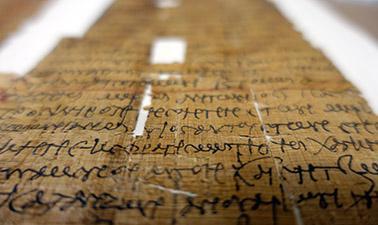
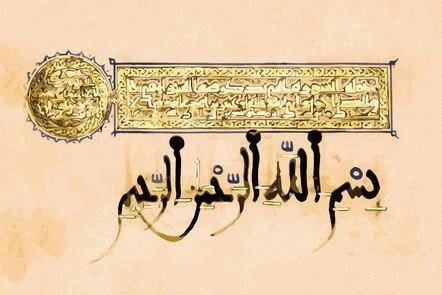
Get an introduction to the history of the Qur'an, and its relationship with Judaism and Christianity. Explore the relationship between the Qur'an, Judaism and Christianity. This online course will illustrate how the Qur’an situates itself as part of, and as a correction to, the religious discourse of the Jewish and Christian communities of Late Antique Arabia.

Class Deals by MOOC List - Click here and see FutureLearn's Active Discounts, Deals, and Promo Codes.

The course will use the Qur’an, as well as Jewish and Christian historical documents, to reconstruct the religious landscape to which the Muslim scripture reacts in a pointed, precise and nuanced way.
This will give you a historically more informed understanding of nascent Islam, and will allow you to reconsider many of theological and cultural tenets of Late Antique Judaism and Christianity.

What topics will you cover?

  • Traditional and Western approaches to the Qur’an
  • Arabia in Late Antiquity
  • Judaism and Christianity from the first to the seventh century
  • The Qur’an and the Hebrew Bible
  • The Qur’an and the New Testament
  • Law and ritual purity in the Bible, Judaism, Christianity, and in the Qur’an
  • The Qur’an, Judaism and Christianity

What will you achieve?
By the end of the course, you'll be able to...

  • Compare aspects of the Qur'an's message to Jewish and Christian teachings of Late Antiquity
  • Reflect on some of the similarities and on some of the differences between the Qur'an, Judaism, and Christianity
  • Assess some of the historical reasons for the contemporary misconceptions of nascent Islam
  • Collaborate with others on broadening your historical knowledge
  • Debate historical aspects of religion with people from various backgrounds
  • Interpret select Qur'anic passages in dialogue with the Jewish and the Christian tradition
  • Explore the opportunities and the limitations of "traditional" and "Western" approaches to the Qur'an
  • Identify helpful methods of reading the Qur'an historically, comparatively, and respectfully

Go to Class
MOOC List is learner-supported. When you buy through links on our site, we may earn an affiliate commission.

Related Courses

Shakespeare's The Merchant of Venice: Shylock (edX) EdX
HarvardX,Harvard University

Shakespeare's The Merchant of Venice: Shylock (edX)

An exploration of the magnetic and ambivalent character of Shylock in William Shakespeare’s The Merchant of Venice. In the first act of William Shakespeare’s The Merchant of Venice , the Jewish moneylender Shylock proposes a “merry sport” to the merchant Antonio: he will lend Antonio the money he needs if Antonio agrees to let Shylock take a pound of his flesh should he default. Shylock calls this contract a “merry bond,” and Shakespeare’s First Folio calls the play a comedy. But what does Shylock want from the bond, and how merry does the play ultimately prove?

Self Paced
Self-Paced
Teaching the Holocaust: Innovative Approaches to the Challenges We Face (FutureLearn) FutureLearn
University College London,Yad Vashem

Teaching the Holocaust: Innovative Approaches to the Challenges We Face (FutureLearn)

Explore history, delve into pedagogical challenges revealed by research, and find practical solutions for teaching the Holocaust. The Holocaust was the murder of approximately 6 million Jews perpetrated by Nazi Germany and its collaborators. That this atrocity proved possible raises many complex questions which remain relevant for young people today.

Feb 28th 2022
3 Weeks
The Holocaust - An Introduction (II): The Final Solution (Coursera) Coursera
Tel Aviv University,Yad Vashem

The Holocaust - An Introduction (II): The Final Solution (Coursera)

The Holocaust was an inconceivable historical event, which forever robbed Western culture of its innocence. As civilized human beings, we fail to understand how events of such horror could have taken place, and how an idea so inhumanly warped could have spread like wildfire through an entire continent, instigating the systematic annihilation of millions of Jews.

Jun 15th 2026
3 Weeks
Jewish Diaspora in Modern China (Coursera) Coursera
Nanjing University

Jewish Diaspora in Modern China (Coursera)

Jewish Diaspora in China is a unique experience for world Jewry, as China is the only country in Far East that has had Jews living in its society for over 1,000 years. Documentary evidence shows that Jews started to live in China no later than the Tang Dynasty (618–907). The famous Kaifeng Jewish community, which was established in Kaifeng, the Chinese capital of the Song Dynasty (960-1279), is but a best-known example.

No upcoming session
5-12 Weeks
Antisemitism: From Its Origins to the Present (FutureLearn) FutureLearn
Yad Vashem

Antisemitism: From Its Origins to the Present (FutureLearn)

Join 50 leading scholars in exploring antisemitism, from its roots to its contemporary forms. In this course, 50 leading scholars from all over the world will explore questions and issues relating to antisemitism including: what is antisemitism? How has it changed throughout history? Why can it be found among so many diverse cultures, and even among opposing ideologies? What happened to antisemitism after the Holocaust? How is antisemitism expressed today, and what are the main spheres in which it can be found?

Nov 8th 2021
5-12 Weeks
Islam Through Its Scriptures (edX) EdX
HarvardX,Harvard University

Islam Through Its Scriptures (edX)

Learn about the Quran, the central sacred text of Islam, through an exploration of the rich diversity of roles and interpretations in Muslim societies. How can you improve your understanding of Islam and its most important holy text, the Quran? How can you make sense of a tradition and a text that have been interpreted in different ways across vast geographical spaces for nearly a millennium and a half?

Self Paced
Self-Paced
A Global History of Architecture (edX) EdX
MIT,MITx

A Global History of Architecture (edX)

Learn about humanity’s rich architectural history on this journey around the globe – from 100,000 BCE to ca. 1,600 CE. How do we understand architecture? One way of answering this question is by looking through the lens of history, beginning with First Societies and extending to the 16th century. This course in architectural history is not intended as a linear narrative, but rather aims to provide a more global view, by focusing on different architectural "moments."

Oct 18th 2023
5-12 Weeks
Christian Virtues for Spiritual Growth (Coursera) Coursera
Duke University

Christian Virtues for Spiritual Growth (Coursera)

This Duke Divinity+ course is for all those who seek to cultivate their interior lives and to develop a way of thinking about ethics inspired by Christian tradition. In this course, renowned theologian Stanley Hauerwas reflects on the significance of specific virtues for understanding what it means to be a Christian. He examines the meaning and significance of four key virtues—kindness, hope, humility, and generosity—and their importance to living a good life.

Jun 22nd 2026
4 Weeks