A History of Royal Food and Feasting (FutureLearn)

A History of Royal Food and Feasting (FutureLearn)

Chart the history of royal food in the splendour of royal palaces. Explore the history of royal food through the tastes of five key monarchs. From the Tudors to the 20th century you’ll join expert historians, curators and food scientists from the University of Reading and Historic Royal Palaces, and indulge in the changing tastes of successive generations of royalty and experience the splendour of their palaces.

Class Deals by MOOC List - Click here and see FutureLearn's Active Discounts, Deals, and Promo Codes.

We’ll take an intimate look behind the scenes at some of the most incredible palaces in England; Henry VIII at Hampton Court Palace, Elizabeth I at the Tower of London, George I at Hampton Court Palace, George III at Kew Palace and Victoria at Kensington Palace.

What topics will you cover?

Week 1: King Henry VIII and Hampton Court Palace

  • The Tudor kitchens at Hampton Court Palace and catering to the king, his court and servants.
  • The celebrations and christening of Edward VI.
  • Henry’s expanding waistline and the science behind his assumed, heavy protein diet.

Week 2: Elizabeth I and the Tower of London

  • Palace or a prison? Elizabeth I’s relationship with the Tower.
  • The expansion of Elizabeth’s empire, discovery of new worlds, exotic foods and their influence on eating habits.
  • Surviving or thriving; life as a prisoner at the Tower, and some daring escapes.
  • Sir Walter Raleigh; his life as a prisoner in the Tower, experimenting with herbal plants, including his Great Cordial recipe.

Week 3: George I at Hampton Court Palace

  • How chocolate came to be an integral part of the English court and why George I had his own chocolate maker.
  • Lavish entertainments using chocolate to showcase kingship and wealth.
  • The science of chocolate.

Week 4: George III at Kew Palace

  • The Royal Kitchens at Kew Palace and how it catered for the Royal family.
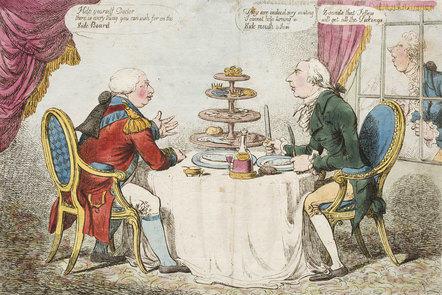
  • George III; flamboyance versus frugality
  • The mad king. George’s medical treatment and the food he ate following his first bout of mental illness.

Week 5: Victoria and Kensington Palace

  • Young Victoria and the celebrations in 1836 when she turned 17.
  • The rise of the middle class queen. New technology and the Victorian food revolution.
  • Victoria’s eating habits and her favourite foods.
  • The democratisation of tea and cake.
  • When would you like to start?

What will you achieve?
By the end of the course, you'll be able to...

  • Investigate a range of evidence including: artefacts, documents and diary entries to draw conclusions about monarchs and key food events from the past.
  • Explore common misconceptions about the palaces, monarchs and their impact on changing dietary tastes from Henry VIII to Queen Victoria.
  • Investigate the flavour intensity, nutritional value and medicinal benefits of food past and present.
  • Discuss typical flavour combinations of the era based on a selection of historic recipes and flavour experiments, adapted for learners to try for themselves at home.
Go to Class
MOOC List is learner-supported. When you buy through links on our site, we may earn an affiliate commission.

Related Courses

Understanding Food Labels (FutureLearn) FutureLearn
University of Reading,EIT Food,EIT

Understanding Food Labels (FutureLearn)

Learn how to interpret food labels so you can make informed food choices and buy food that supports your health and wellbeing. Get the facts you need to put your trust in the food system. Huge amounts of information are provided on food product labels, but surveys have shown that we’re often unsure of its meaning. On this course, you’ll learn how to make sense of the regulations, data, and logos on packaging so that you can make more informed food choices.

Jan 2nd 2023
3 Weeks
Revolutionising the Food Chain with Technology (FutureLearn) FutureLearn
Queen’s University Belfast,EIT Food,EIT

Revolutionising the Food Chain with Technology (FutureLearn)

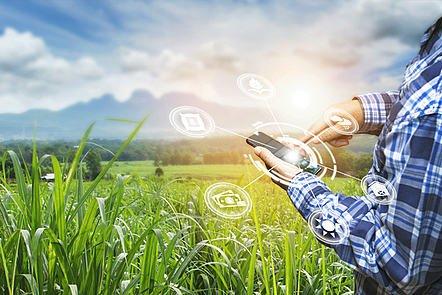
Explore how technology and digitalisation can change how the food system operates, reducing waste and environmental pressures. Discover how innovative technologies could revolutionise the food sector. Food quality and safety is increasingly under threat as natural resources are stretched by climate change, hunger, and explosive population growth. On this course, you’ll learn how the food sector can respond to these challenges by adopting innovative tech.

Jan 2nd 2023
5-12 Weeks
Act on Climate: Steps to Individual, Community, and Political Action (Coursera) Coursera
University of Michigan

Act on Climate: Steps to Individual, Community, and Political Action (Coursera)

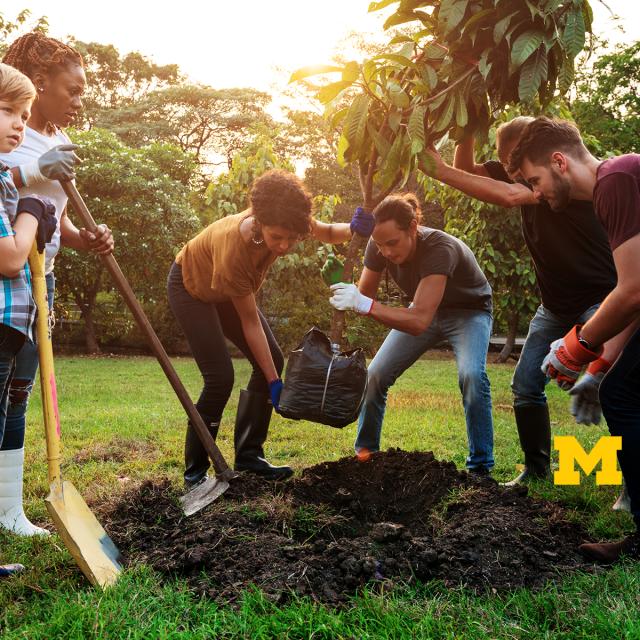
Are you concerned about climate change? Would you like to learn how to address and respond to this challenge? If so, this course is for you. Act on Climate: Steps to Individual, Community, and Political Action is intended to help learners understand, address and respond to climate change as individuals and in partnership with their communities and political leaders.

Nov 2nd 2026
5-12 Weeks
Edible Insects (Coursera) Coursera
National Taiwan University

Edible Insects (Coursera)

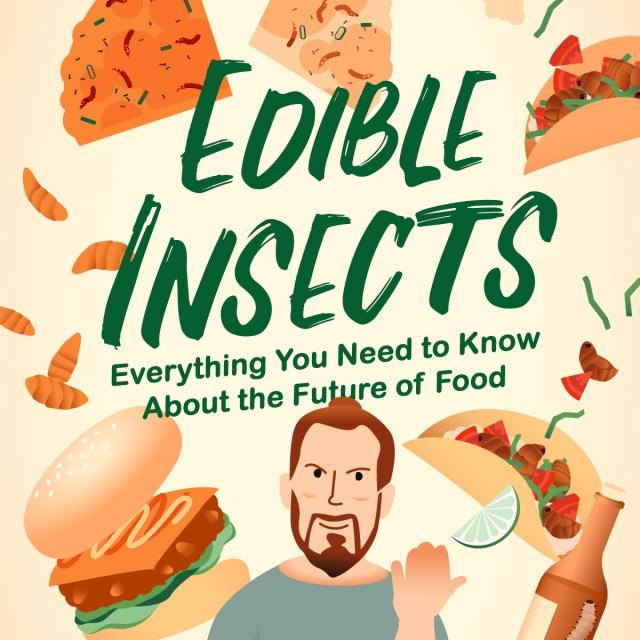
This English language course covers the science and sociology of insects as food and feed. Increasing media, investment, and public policy attention has been given over the years to the role insects may play in the future of food. Can eating insects really save the world from famine and environmental destruction? Are there health costs or benefits to adding insects to the diet? Will all people accept insects as food? Can we feed them to livestock? Should we be promoting edible insects at all, and if so, how best do we do it? What species will we eat and how shall we raise them?

Nov 9th 2026
4 Weeks
The Human Microbiome (FutureLearn) FutureLearn
EIT Food,EIT,University of Turin

The Human Microbiome (FutureLearn)

Discover what the microbiome is, how it changes throughout your life, and the role it plays in good human health. Learn how a healthy microbiome can combat disease. The microbiome – the microbes that live within the human body – can have a huge impact on human health. As such, it’s vital to understand the complexity of the microbiome, and how it can impact on disease and wellbeing. On this course, you’ll go on a fascinating journey into the human body – down to the gut – where the ecology and roles of the human microbiome will be narrated.

Jan 2nd 2023
3 Weeks
Citizen Science: Living Soils, Growing Food (FutureLearn) FutureLearn
University of Dundee,Grow Observatory

Citizen Science: Living Soils, Growing Food (FutureLearn)

Learn about approaches to food growing that can help regenerate soil and solve environmental issues. Use regenerative growing practices in your own garden. Soil loss and degradation are serious issues all over the world. We need to find effective regenerative practices to solve many local and global environmental challenges. On this course, you’ll discover interesting things about your own soil and become part of the new GROW Citizen Observatory European-wide community.

No sessions available
3 Weeks
Identifying Food Fraud (FutureLearn) FutureLearn
University of East Anglia

Identifying Food Fraud (FutureLearn)

An introduction to modern analytical science techniques and how they can be used to uncover food fraud. The food industry is one of the most important commercial sectors in the world. Everyone uses it, but how many people abuse it? As we witness the increasing globalisation of the supply chain, a growing challenge is verifying the questionable identity of raw materials in the food we eat.

Self Paced
4 Weeks
How Food is Made. Understanding Food Processing Technologies (FutureLearn) FutureLearn
EIT Food,EIT,DIL

How Food is Made. Understanding Food Processing Technologies (FutureLearn)

Have you ever wondered how your food is processed before it reaches your plate? Find out with this online course. Learn more about processing technologies and the foods that are affected. Food processing isn’t a new concept, however, many people might not understand how and why it happens. On this course, you will improve your knowledge of food processing technologies and build confidence in the processed foods on the market.

Jan 2nd 2023
4 Weeks
Our Hungry Planet: Agriculture, People and Food Security (FutureLearn) FutureLearn
University of Reading

Our Hungry Planet: Agriculture, People and Food Security (FutureLearn)

Consider how the food we grow, buy, eat and throw away relates to the global issue of food security, with this free online course. Food security is a complex, global issue, in which we all play a part. In this free online course, you’ll join experts from the School of Agriculture, Policy and Development at the University of Reading, to investigate our relationship with agriculture and your own food habits.

No sessions available
5-12 Weeks
Superfoods: Myths and Truths (FutureLearn) FutureLearn
EIT Food,University of Turin

Superfoods: Myths and Truths (FutureLearn)

What is a 'superfood'? What foods are 'superfoods'? What effect do they have on the body and society? Find out with this course. Explore the definition and impact of superfoods. Goji berries, quinoa, amaranth and green tea are all foods that have been labelled ‘superfoods’. But what does this superfood label actually mean? On this course you will learn about the definition of a ‘superfood’.

Jan 2nd 2023
4 Weeks
Circular Business Models for Sustainable Urban Food Systems (FutureLearn) FutureLearn
EIT Food,University of Helsinki,EIT,University of Turin

Circular Business Models for Sustainable Urban Food Systems (FutureLearn)

Discover how circular business models transform urban food systems to tackle grand challenges through innovative solutions. Explore how circular economy can foster sustainable urban food systems. On this course, you’ll discover how to design and build circular food systems for resilient, smart and sustainable cities.

Jan 2nd 2023
4 Weeks
Food as Medicine (FutureLearn) FutureLearn
Monash University

Food as Medicine (FutureLearn)

Explore the role of food in health. Apply nutrition science to guide you on using food as medicine for you and your family. This course introduces the concept of food as medicine. You will explore how food can be important both in preventative health and as an aid in the management of certain chronic diseases today, in the past and in the future.

Jan 17th 2022
3 Weeks