Health Care in Danger: The Rights and Responsibilities of Health-Care Personnel Working in Armed Conflict and Other Emergencies (ICRC)

Health Care in Danger: The Rights and Responsibilities of Health-Care Personnel Working in Armed Conflict and Other Emergencies (ICRC)

The rights and responsibilities e-learning module is a web based educational tool designed to provide health care workers with an in depth explanation of their rights and responsibilities during armed conflicts and other emergencies. Developed by the International Committee of the Red Cross, it includes 7 chapters addressing specific issues or themes which health-care workers may face during crises in order to prepare them to respond effectively and ensure that they can provide the necessary care to their patients.

This module has been specifically designed for anyone involved in the delivery of health care who would like to know more about the rights and responsibilities of health-care personnel in armed conflicts and other emergencies.
The purpose of this module is to make you think about specific dilemmas that health-care personnel may face when discharging their responsibilities in emergency contexts. While it cannot provide answers to such dilemmas, it aims to ease decision-making and to provide guidance for how to act in the most difficult circumstances.


Go to Class
MOOC List is learner-supported. When you buy through links on our site, we may earn an affiliate commission.

Related Courses

Telehealth Best Practices and Uses (Coursera) Coursera
University of California, Davis

Telehealth Best Practices and Uses (Coursera)

Telehealth uses technology tools such as a cellphone or laptop to give patients and doctors the ability to support healthcare communication and services remotely. The field of telehealth has seen tremendous growth, with telehealth use increasing across all specialties and becoming even more accessible. This course is designed for healthcare professionals and employees in organizations that practice telehealth or are aspiring to work within the field. As a leading pioneer in the field of telehealth, UC Davis Health began offering telehealth services in 1992 and providing a formal telehealth academic curriculum in 1999.

Nov 16th 2026
4 Weeks
BLS/CPR Course (American BLS) Other Providers
American BLS

BLS/CPR Course (American BLS)

CPR/BLS course covering adult, child, and infant procedures. The course includes choking protocols and the use of an AED. BLS stands for Basic Life Support and includes techniques used to save a victim in the case of an emergency. In this course, we will discuss and teach the steps that you should take to give a dying victim the greatest chance of survival. These techniques include Cardiopulmonary Resuscitation (CPR) and Automated External Defibrillator (AED) training.

Self Paced
Self-Paced
Mind of the Universe - Genetic Privacy: should we be concerned? (Coursera) Coursera
Leiden University

Mind of the Universe - Genetic Privacy: should we be concerned? (Coursera)

Should all our genetic information be made public in order to eradicate genetic diseases from this world? Who owns your genetic data once it becomes publicly accessible? What is your responsibility to family members when you know more about genetic diseases than they do? Who decides what kind of genetic information is relevant to a person? And what does genetic privacy mean to you?

Nov 16th 2026
5-12 Weeks
Preventing Dementia (University of Tasmania) Other Providers
University of Tasmania

Preventing Dementia (University of Tasmania)

Preventing Dementia is a Massive Open Online Course (MOOC), offering university-quality education about the latest research in dementia risk and protective factors. The free 4-week course provides an opportunity to engage with the perspectives of a global community, without requiring exams or assignments. This course runs twice a year in May and October.

May 17th 2022
4 Weeks
Media ethics & governance (Coursera) Coursera
University of Amsterdam

Media ethics & governance (Coursera)

This course explores some of the basic theories, models and concepts in the field of media ethics. We will introduce influential ethical theories and perspectives, explore changing societal demands and expectations of media creation and media use, and we will elaborate on existing ethical norms for media professionals. After following this course, you will be able to reflect on ethical dilemmas and develop a well-substantiated argumentation for ethical decision making in a variety of media-related contexts.

Nov 16th 2026
4 Weeks
Ethics in Engineering (Coursera) Coursera
University of Michigan

Ethics in Engineering (Coursera)

e.g. This is primarily aimed at first- and second-year undergraduates interested in engineering or science, along with high school Explore unique case studies in engineering ethics. On this four-week course, you’ll examine different historical case studies and understand how they led to classic engineering failures. Though each case is unique and has a distinct context, they all share common themes; a backstory, a disastrous event, a post-event with ramifications, and outcomes.

Nov 16th 2026
4 Weeks
PrEParing: PrEP for Providers and Patients (Coursera) Coursera
Johns Hopkins University

PrEParing: PrEP for Providers and Patients (Coursera)

Pre-Exposure Prophylaxis (PrEP) using the antiretroviral medication emtricitibine/tenofovir approved in countries around the world is a highly effective means of reducing transmission of HIV through sexual encounters and needle sharing. This Johns Hopkins University course PrEPares you with essential information, concepts and practical advice regarding PrEP from leaders in the field. A first of its kind learning opportunity, both providers and patients learn from the same experts through content that meets the needs of both audiences, while facilitating the opportunity for a shared community space.

Nov 23rd 2026
5-12 Weeks
Personalised Medicine from a Nordic Perspective (Coursera) Coursera
University of Iceland,University of Copenhagen

Personalised Medicine from a Nordic Perspective (Coursera)

The technical revolution has generated large amounts of data in healthcare and research, and a rapidly increasing knowledge about factors of importance for the individual’s health. This holds great potential to support a change from the one-size-fits-all paradigm to personalised or precision medicine, to guide and thereby improve each health decision of expected benefit for the patient.

Nov 16th 2026
5-12 Weeks
Create Compelling Business Cases (Coursera) Coursera
Coursera Instructor Network

Create Compelling Business Cases (Coursera)

In this one-week course, we’ll focus on the 5 most crucial elements of a business case, including what is a business case and how it is used to make investment decisions. Whether you are a student or a professional, this course will give you the fundamentals you need, from defining the problem to gathering data and performing a financial analysis.

Nov 16th 2026
1 Week
De-Mystifying Mindfulness (Coursera) Coursera
Leiden University

De-Mystifying Mindfulness (Coursera)

Interest in meditation, mindfulness, and contemplation has grown exponentially in recent years. Rather than being seen as mystical practices from ancient Buddhism or esoteric philosophy, they are increasingly seen as technologies rooted in evidence from psychology and neuroscience. Mindfulness has become the basis for numerous therapeutic interventions, both as a treatment in healthcare and as a means of enhancing well-being and happiness. For millions around the world, mindfulness has become a life-style choice, enhancing and enriching everyday experience. Mindfulness is big business.

Nov 23rd 2026
5-12 Weeks
The Holocaust: The Destruction of European Jewry (Coursera) Coursera
University of California, Santa Cruz

The Holocaust: The Destruction of European Jewry (Coursera)

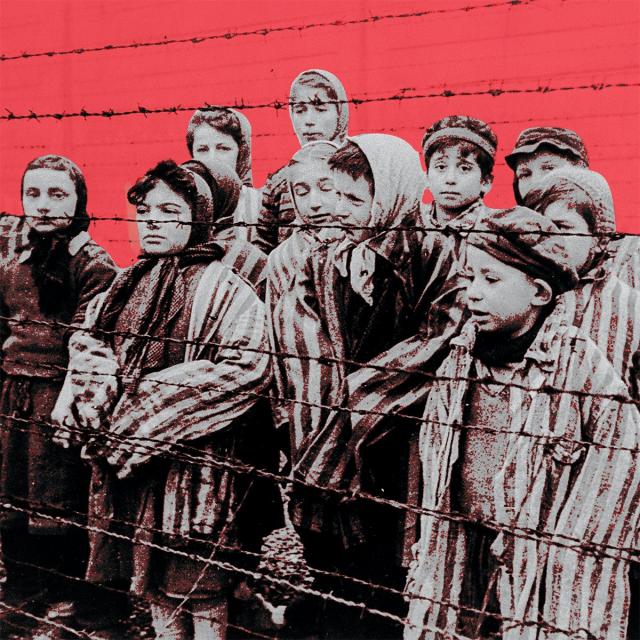
The Holocaust: The Destruction of European Jewry is an adaptation of an on-campus course that has been co-taught by Murray Baumgarten, Distinguished Professor of English and Comparative Literature (Literature Department), and Peter Kenez, Professor Emeritus (History Department), for over 20 years at UC Santa Cruz. In this course, you will explore the Holocaust from the overlapping perspectives of literature and history—through memoirs, historical documents, poetry, documentary footage, filmic representations, and novels.

Nov 16th 2026
5-12 Weeks