Telehealth Best Practices and Uses (Coursera)

Telehealth Best Practices and Uses (Coursera)

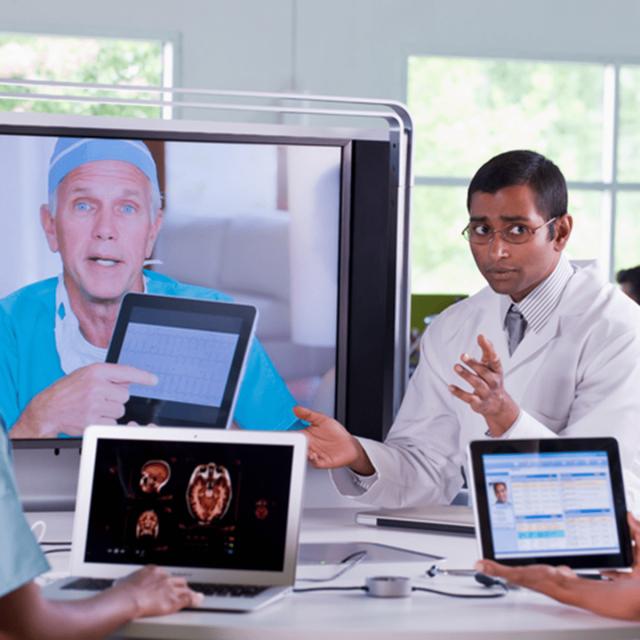
Telehealth uses technology tools such as a cellphone or laptop to give patients and doctors the ability to support healthcare communication and services remotely. The field of telehealth has seen tremendous growth, with telehealth use increasing across all specialties and becoming even more accessible. This course is designed for healthcare professionals and employees in organizations that practice telehealth or are aspiring to work within the field. As a leading pioneer in the field of telehealth, UC Davis Health began offering telehealth services in 1992 and providing a formal telehealth academic curriculum in 1999.

Class Deals by MOOC List - Click here and see Coursera's Active Discounts, Deals, and Promo Codes.

Go beyond the foundational knowledge of technology tools employed and telehealth applications. Learn about the most effective practices in implementation, regulatory compliance, and how to practice with a health equity lens. With insight from the CEO of UC Davis Health, David Lubarsky, you will leave the course better able to improve your telehealth practice and focus on the elements of telehealth that matter most to your organization and to the patients you serve.

What You Will Learn
Examine the real-world application of telehealth from a world-class, research university medical center with over 30-years of practice.

Syllabus

WEEK 1
Getting Started and Telehealth: Operations
In this module, you will be able to understand the role of telehealth in the healthcare continuum and recognize the three types of telehealth. You will be able to explain the different roles and relationships of the participants in different encounter types. You will be able understand the benefits to the participants in the different encounter types and explain how telehealth can address the six domains of healthcare quality. You will be able to identify who can benefit from telehealth using different perspectives and review common applications of telehealth. You will also be able to explore the return on investment in specific settings.

WEEK 2
Telehealth: Equity
In this module, you'll be able to define health equity and discuss the components of it. You will also be able to define health disparities and discuss the impact of health inequity on health disparities. You will be able to understand the ways in which telehealth is designed to promote health equity and recognize the ways in which it has also promote health equity. You will be able to understand the importance of monitoring the impacts that telehealth technology has on relevant outcomes and understand that although these technologies have potential to promote health equity, we must recognize the ways in which telehealth does not equitably benefit diverse populations. Finally, you will be able to recognize that telehealth equity issues are an understudied area and, as a result, we must be aware of the possible unintended consequences of these tools so that these innovative technologies improve, rather than exacerbate, existing disparities.

WEEK 3
Telehealth: Best Practices
In this module, you will be able to recognize the role of Institutional Culture plays in telemedicine and be able to explore the cultural framework for your organization and establish expectations. You will be able to recognize different telehealth modalities and understand the dynamics of a telehealth visit. You will be able to recognize and apply best practices for a provider during a telehealth visit and be able to standardize the approach to both the physical and virtual office space. You will be able to implement Clinical Practice Guidelines and recognize the steps in the coordination of care. You will be able to prepare for support, explore both the SPIKES and NURSE protocols, and be able to communicate bad news empathetically and effectively.

WEEK 4
Telehealth: Elements of Success
In this module, you will be able to recognize the effect of organizational design on a telehealth program. You will be able to determine drivers for program utilization and be able to monitor program using Continuous Quality Improvement (CQI) methods. You will also be able to identify elements of appropriate program management and plan for technical needs of users. You will be able to compare and contrast licensure and credentialing and follow state licensure compacts. You will be able to recognize the different state and federal policies for reimbursement, prescribing, privacy and security as well as be able to explore other laws and regulations that impact telehealth.
Go to Class
MOOC List is learner-supported. When you buy through links on our site, we may earn an affiliate commission.

Related Courses

Take the Lead on Healthcare Quality Improvement (Coursera) Coursera
Case Western Reserve University

Take the Lead on Healthcare Quality Improvement (Coursera)

In this course you will learn about the importance of quality in healthcare and how you can contribute by implementing a quality improvement (QI) project to improve processes of care and patient outcomes. You will learn about powerful tools to add to your QI ‘toolbox’ during short lectures and reflective exercises. You will apply these tools to the implementation of a QI project in your own practice setting or an area of personal improvement. At the completion of the course, you will have a storyboard that captures your QI project success to share with others.

Jun 8th 2026
5-12 Weeks
Gender and Sexuality: Diversity and Inclusion in the Workplace (Coursera) Coursera
University of Pittsburgh

Gender and Sexuality: Diversity and Inclusion in the Workplace (Coursera)

What is sex? What is gender? What is sexuality? What do we mean by LGBTQIA? How are these concepts related to the workplace? How have our understandings of these terms changed over time, and how have these changes impacted work and culture? To help you answer these important questions, this course will introduce you to the exciting field of gender, sexuality, and women's studies, and to LGBTQIA identities.

Jun 8th 2026
4 Weeks
Living with Dementia: Impact on Individuals, Caregivers, Communities and Societies (Coursera) Coursera
Johns Hopkins University

Living with Dementia: Impact on Individuals, Caregivers, Communities and Societies (Coursera)

Health professionals and students, family caregivers, friends of and affected individuals, and others interested in learning about dementia and quality care will benefit from completing the course. Led by Drs. Nancy Hodgson and Laura Gitlin, participants will acquire foundational knowledge in the care of persons with Alzheimer’s Disease and other neurocognitive disorders.

Jun 8th 2026
5-12 Weeks
Engaging in Enterprise Growth and Innovation (Coursera) Coursera
Northeastern University

Engaging in Enterprise Growth and Innovation (Coursera)

You will explore the challenges and processes for harnessing technological innovation for new-business development, with special focus on digital healthcare transformation. You will gain an understanding of enterprise growth and innovation topics through readings, cases, and exercises, including learning how firms from different industries gain competitive advantage through distinctive products and services. The vast expertise of faculty combined with topic perspectives from the Mayo Clinic make this an engaging and unique course.

Jun 10th 2026
4 Weeks
The New Nordic Diet - from Gastronomy to Health (Coursera) Coursera
University of Copenhagen

The New Nordic Diet - from Gastronomy to Health (Coursera)

The New Nordic Diet is a new food culture developed in 2009-13 with key emphasis on gastronomy, health, and environment. Major research in its effect on acceptability, behaviour and learning skills, and disease prevention have been conducted by the OPUS centre at the University of Copenhagen and the people behind the award-winning restaurant Noma in Copenhagen. This course will give the participants the opportunity to experience a healthy and palatable new food and eating concept diet “The New Nordic Diet” and an understanding of how food and diets can affect mental and physical health and ensure the foundation for a healthier life style for future generations with a regional based diet and food culture.

Jun 8th 2026
5-12 Weeks
Easing the burden of obesity, diabetes and cardiovascular disease (Coursera) Coursera
The University of Sydney

Easing the burden of obesity, diabetes and cardiovascular disease (Coursera)

This course is multidisciplinary in nature, and aims to equip the global audience of interested lay people, people with chronic disease, public health researchers, health clinicians, students, administrators, and researchers to reflect on the overall impact of the burden of chronic disease. It shows how all chronic diseases (obesity, diabetes, cardiovascular disease, chronic obstructive pulmonary disease, and cancer) are related by a set of common causes, and that such diseases should be tackled, not individually, but as part of a complex system, with interrelated contributing factors. These factors are genetic, environmental, psychological, economic, social, developmental, and media related.

Jun 8th 2026
5-12 Weeks
The People, Power, and Pride of Public Health (Coursera) Coursera
Johns Hopkins University

The People, Power, and Pride of Public Health (Coursera)

The People, Power, and Pride of Public Health provides an engaging overview of the incredible accomplishments and promise of the public health field. The first module includes interviews with legendary public health figures whose work led to millions of lives saved with vaccines, air bags and car seats, and the federal Women Infants and Children (WIC) nutrition program.

Jun 8th 2026
3 Weeks
Primeros Auxilios Psicológicos (PAP) (Coursera) Coursera
Universitat Autònoma de Barcelona

Primeros Auxilios Psicológicos (PAP) (Coursera)

Este curso on-demand (ABIERTO, se puede cursar en cualquier momento), impartido en castellano por la Universidad Autónoma de Barcelona y el Centro de Crisis de Barcelona, está destinado a entrenar en la aplicación de primeros auxilios psicológicos (PAP) a personas afectadas por situaciones altamente estresantes, abarcando tanto emergencias cotidianas (incidentes críticos estadísticamente frecuentes que afectan de manera muy intensa: un accidente de tráfico, una hospitalización, una agresión o la muerte traumática o repentina de una persona, etc.) como emergencias comunitarias y/o masivas (sucesos infrecuentes, que afectan a muchas personas o a una comunidad entera y que sobrepasan con mucho lo que sucede habitualmente en ella: una catástrofe natural, un accidente ferroviario o aéreo o un atentado).

Jun 8th 2026
5-12 Weeks
Doping : Sports, Organizations and Sciences (Coursera) Coursera
University of Lausanne

Doping : Sports, Organizations and Sciences (Coursera)

The objective of this course is to encourage a critical understanding of doping. To achieve this goal, this course will rely on a multidisciplinary approach that allow you to see how different disciplines get into a single object, in different perspectives and in often complementary ways. This approach will also allow us to appreciate the complexity of a subject like doping. Doping in sports is a complex practice whose definition and identification is the result of socially and historically constructed norms. This course offers to shed light on the processes that led to the use and prohibition of doping substances.

Jun 8th 2026
4 Weeks
Big Data, Genes, and Medicine (Coursera) Coursera
The State University of New York

Big Data, Genes, and Medicine (Coursera)

This course distills for you expert knowledge and skills mastered by professionals in Health Big Data Science and Bioinformatics. You will learn exciting facts about the human body biology and chemistry, genetics, and medicine that will be intertwined with the science of Big Data and skills to harness the avalanche of data openly available at your fingertips and which we are just starting to make sense of.

Jun 8th 2026
5-12 Weeks
International Hospitality & Healthcare Services Marketing (Coursera) Coursera
Yonsei University

International Hospitality & Healthcare Services Marketing (Coursera)

As the fastest-growing sectors of the current global economy, both hospitality and healthcare services sector offer tremendous growth opportunities for incumbents and entrepreneurial opportunities for new entrants. To flourish on these opportunities, one must first understand each industry's unique characteristics. This course is designed to help those who are interested in career advancement opportunities in these industries or who want to be inspired by these industries to better equip themselves with enlightened and creative management capabilities.

Jun 8th 2026
3 Weeks
Overcoming Dyslexia (Coursera) Coursera
Yale University

Overcoming Dyslexia (Coursera)

Dyslexia is everywhere, touching so many children and adults, and while science has made extraordinary progress in understanding and clarifying the condition, this incredible powerful knowledge rarely reaches those who most need to know and would greatly benefit from it. Our goal is to change all this with the Coursera you are about to view, produced by Dr. Sally Shaywitz, the Audrey G. Ratner Professor in Learning Development, both the leading scientist studying dyslexia and the most devoted advocate for helping those who are dyslexic.

Jun 13th 2026
5-12 Weeks