Climate Change and Human Rights (Coursera)

Offered by New York University,
Climate Change and Human Rights (Coursera)

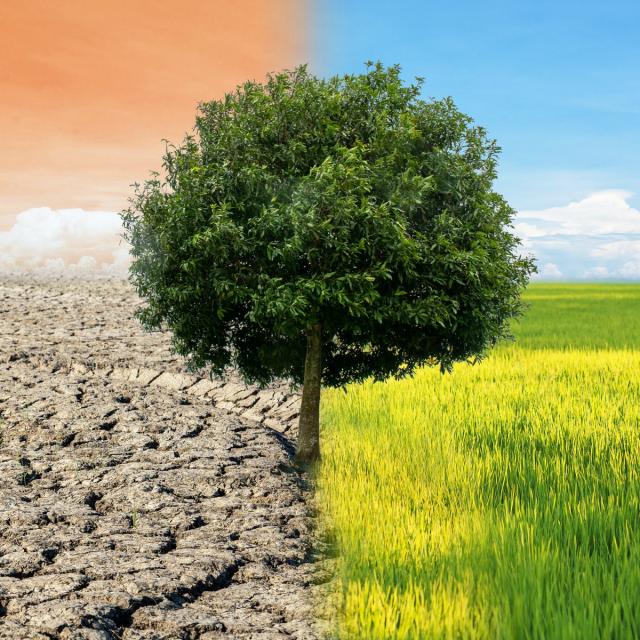
This course is primarily aimed at anyone interested in learning about the growing field of climate change and human rights. It will discuss the history of the field, key actors and cases, as well as emerging trends and takeaways.

Class Deals by MOOC List - Click here and see Coursera's Active Discounts, Deals, and Promo Codes.

This course is taught by César Rodríguez-Garavito, Professor of Clinical Law and Faculty Director and Chair of the Center for Human Rights and Global Justice at NYU School of Law.

Syllabus

WEEK 1
Overview
In this course, you will learn about the climate change and human rights field.

Go to Class
MOOC List is learner-supported. When you buy through links on our site, we may earn an affiliate commission.

Related Courses

Climate change and health (Coursera) Coursera
Imperial College London

Climate change and health (Coursera)

Climate change and health is the third and final instalment of the wider Global Health Challenges and Governance specialisation from Imperial College London's Global Master of Public Health (GMPH). The scope and content of this course has been developed from the ground up by a combined team of academics and practitioners in collaboration with experts from Imperial College’s Grantham Institute for Climate Change and the Environment. Through short video lectures, readings and a wide range of interactive activities, learners will be immersed in the intersection of climate change and health.

Jun 8th 2026
5-12 Weeks
Public Health in Humanitarian Crises 1 (Coursera) Coursera
Johns Hopkins University

Public Health in Humanitarian Crises 1 (Coursera)

This course, Public Health in Humanitarian Crises 1, introduces discussions about the public health approach to problems experienced by people affected by disasters, both natural and related to conflict. The course discusses the many changes which occur in people’s lives when they are uprooted by a disaster, ranging from changes in disease patterns, access to health care, livelihoods, shelter, sanitary conditions, nutritional status, etceteras. We will explore what humanitarian interventions could look like if we want to mitigate the effects of disasters. The course content is a mix of theoretical knowledge and many practical examples from recent disasters. We think this course is unique because it contains so many practical ‘real-life’ examples and is taught by instructors and guest lecturers who together have over 200 years of experience in this field.

Jun 8th 2026
5-12 Weeks
How Do We Manage Climate Change? (Coursera) Coursera
University of Colorado Boulder

How Do We Manage Climate Change? (Coursera)

In this course, learners will identify the types of actions that we can pursue to address climate change. These actions fall into two broad categories: 1) mitigation, which refers to efforts to reduce greenhouse gas emissions or enhance carbon sinks, and 2) adaptation, which refers to our preparations for climate impacts. We will explore the technologies, programs, and policies related to both mitigation and adaptation. Learners should leave the course with an improved ability to identify and evaluate climate actions undertaken by communities, governments, and businesses.

Jun 1st 2026
3 Weeks
Climate change and Indigenous People and local communities (Coursera) Coursera
Universitat Autònoma de Barcelona

Climate change and Indigenous People and local communities (Coursera)

Climate change is a global phenomenon, but its impacts vary among different social groups, who perceive and adapt to climate change impacts in different ways. In this course, you will: a) understand the different debates around climate change impacts on Indigenous Peoples and local communities (IPLC); b) familiarize yourself with different impacts of climate change on IPLC, with the IPLC understanding of climate change impacts and with their strategies to adapt to climate change; and c) learn about different strategies to incorporate Indigenous peoples and local communities in climate change research and policy.

Jun 8th 2026
5-12 Weeks
Global Energy and Climate Policy (Coursera) Coursera
University of London,SOAS University of London

Global Energy and Climate Policy (Coursera)

The Global Energy and Climate Policy course offers an introduction to the theoretical and practical understanding of how energy and climate change policies are designed, shaped, advocated and implemented. As energy markets go truly global, domestic energy policies are becoming more and more entangled with wider issues of international governance. Concurrently, the urgent need to mitigate and adapt to climate change and transition to a low-carbon future is adding a further layer of complexity.

Jun 1st 2026
5-12 Weeks
Introduction to the Arctic: Climate (Coursera) Coursera
University of Alberta

Introduction to the Arctic: Climate (Coursera)

The University of Alberta, the University of Tromso and the University of the Arctic invite you to explore this four week course that examines the environment and climate of the circumpolar North. This course is the result of an international collaboration and provides you with an insight into our planet's North. Following an overview of regional geography, we will focus on the cryosphere (ice), as well as the atmosphere and ocean of the region.

Jun 1st 2026
4 Weeks
Renewable Energy Futures (Coursera) Coursera
University of Colorado Boulder

Renewable Energy Futures (Coursera)

Renewable energy's future is bright, yet uncertain. Will it continue to grow rapidly? Is current growth sufficient to achieve climate stabilization? How do related technologies, like electric vehicles and heat pumps, fit in? This course will shed light on the many confusing and at-times inconsistent claims and predictions for renewable energy.

Jun 8th 2026
5-12 Weeks
Global Diplomacy: the United Nations in the World (Coursera) Coursera
University of London,SOAS University of London

Global Diplomacy: the United Nations in the World (Coursera)

The course offers a well-researched and broad-ranging primer to the United Nations system. Consisting of an introduction to the complex UN family and its history, and a series of ‘snapshots’ of key UN functions, which are used to explore important UN themes and help learners develop important analysis, communication, and policy-based skills.

Jun 8th 2026
5-12 Weeks
Sustainable Business: Big Issues, Big Changes (Coursera) Coursera
University of Colorado System

Sustainable Business: Big Issues, Big Changes (Coursera)

This is class 3 in the MOOC specialization, Become a Sustainable Business Change Agent. This class looks at the big issues companies are fixing - climate change, water, worker satisfaction and supply chain issues. You will learn tools to help your company address these issues intelligently. The class ends with an assignment to set a science-based carbon reduction target for a small company. Tis is absolutely cutting edge material. Only about 300 companies in the whole world are doing this as of July 2017. You could put your company in the elite group!

Jun 1st 2026
5-12 Weeks
Climate Aware Investing (Coursera) Coursera
EDHEC Business School

Climate Aware Investing (Coursera)

Finance may have a central role to play against climate change on the condition that risks are properly measured and managed. In this course you will be introduced to the latest academic research findings and the most commonly used methods in industry to cope with climate change financial risks. How do we assess these kinds of risks? Can our portfolios perform well and at the same time contribute to the transition towards a low-carbon economy? How do climate change risks affect financial markets?

Jun 1st 2026
5-12 Weeks
Climate Change, Sustainability, and Global Public Health (Coursera) Coursera
University of Michigan

Climate Change, Sustainability, and Global Public Health (Coursera)

The third course of the Impacts of the Environment on Global Public Health specialization will introduce you to two major environmental health challenges facing the world today. The first is climate change –the preeminent threat to public health today, and a threat that will impact every human and ecosystem on the planet.

Jun 8th 2026
4 Weeks
Sustainability and the Circular Economy (Coursera) Coursera
University of Colorado Boulder,Siemens

Sustainability and the Circular Economy (Coursera)

As the world’s population continues to rise toward an expected 10 billion citizens by 2050, it is imperative that business practices change to ensure a high quality of life is possible for all of us, both human and non-human. Today’s learners are very aware of this. Moreover, they are highly motivated and have the extraordinary capacity to create a future that provides both economic success and a more enduring, resilient, and sustainable planet. If you are one of these learners, then Sustainability and the Circular Economy is a course for you.

Jun 8th 2026
5-12 Weeks