Preventing Dementia (University of Tasmania)

Preventing Dementia (University of Tasmania)

Preventing Dementia is a Massive Open Online Course (MOOC), offering university-quality education about the latest research in dementia risk and protective factors. The free 4-week course provides an opportunity to engage with the perspectives of a global community, without requiring exams or assignments. This course runs twice a year in May and October.

With the ageing of the world’s population, dementia is a major public health issue. Is it possible to modify your risk of dementia? A substantial proportion of risk is associated with advanced ageing as well as genetic risk factors, but the latest research has indicated there are modifiable risk factors which may decrease your susceptibility to dementia. The Preventing Dementia MOOC investigates the best available evidence about dementia prevention, drawing on a range of expertise from around the globe.

You will have the opportunity to engage in online discussions, and can also participate in new research in this field, to help us determine the most effective ways to help people reduce their dementia risk. At the end of the Preventing Dementia MOOC, there is also the opportunity to undertake an assessment of your individual risk.
Preventing Dementia is suited to everyone - whether you are an individual with an interest in brain health and/or dementia risk reduction, or an allied health professional, clinician, aged care service provider or health policy professional - this course is designed to be accessible and appealing to people from diverse backgrounds.
The course begins with a 3 day orientation period. Content is then released weekly during the following 4 weeks. To obtain the most from this course, participants should expect to spend approximately 2 hours per week engaging with the course content and activities. After successfully completing the final quiz, participants will be eligible to download a free certificate of completion.

Course Outline

Module 1 – Can Dementia Be Prevented?

  • Key concepts in dementia prevention
  • Definition of dementia and introduction to the diseases that cause dementia
  • The impact of dementia across the globe
  • The major non-modifiable and modifiable risk factors for dementia
  • The impact of genetics on dementia risk
  • How dementia risk is measured at individual and population levels

Module 2 – Dementia Risk - It's Not All in Your Head

  • Evidence supporting links between key vascular risk factors and dementia

-The impact of physical activity and diet on dementia risk
-The impact of smoking and alcohol on dementia risk
Module 3 – A Healthy and Active Mind

  • Evidence supporting links between key lifestyle factors and risk of dementia
  • Impact of depression on dementia risk
  • Impact of education on dementia risk
  • Concept of ‘cognitive reserve’

Module 4 – Interventions for Prevention

  • Key strategies for prevention at the individual and population level
  • Encouraging healthy behaviours
  • What you can do to reduce your risk of dementia
  • Current research initiatives in dementia prevention
Go to Class
MOOC List is learner-supported. When you buy through links on our site, we may earn an affiliate commission.

Related Courses

Understanding Dementia (University of Tasmania) Other Providers
University of Tasmania

Understanding Dementia (University of Tasmania)

The Understanding Dementia MOOC was developed by the Wicking Dementia Research and Education Centre based in the College of Health and Medicine at the University of Tasmania. This world-leading online course is free, easily accessible and available to everyone with an interest in dementia. This course is free and runs twice a year in February and July.

Feb 7th 2023
5-12 Weeks
Leading Healthcare Quality and Safety (Coursera) Coursera
George Washington University

Leading Healthcare Quality and Safety (Coursera)

Ensuring patient safety and healthcare quality is critical and should be a key focus of everyone in healthcare practice. This course provides healthcare practitioners and others with an introduction to the knowledge and skills needed to lead patient safety and quality improvement initiatives at the micro and macro levels. Participants will explore the foundations of health care quality and the science underlying patient safety and quality improvement, design and select effective health care measures, analyze patient safety problems and processes using tools such as human factors analysis, apply systematic approaches including the Plan-Do-Study-Act (PDSA) model to address quality improvement challenges, and learn strategies to lead a culture of change

Oct 26th 2026
5-12 Weeks
Water Supply and Sanitation Policy in Developing Countries Part 1: Understanding Complex Problems (Coursera) Coursera
University of Manchester

Water Supply and Sanitation Policy in Developing Countries Part 1: Understanding Complex Problems (Coursera)

Our course explores what can be done to solve the complex problem that half a billion people worldwide do not have improved water supplies and two billion do not have improved sanitation. We look forward to you joining us. We want to help you develop the skills you need to address this major global challenge of the 21st century.

Oct 26th 2026
5-12 Weeks
One Health, One Medicine: A Sustainable Approach (SGU) Other Providers
St. George’s University, Grenada

One Health, One Medicine: A Sustainable Approach (SGU)

This course will expose you to relevant areas of One Health One Medicine with special emphasis on Sustainability issues. Global health burden, determinants of health, strategies towards promoting health and applications towards a sustainable approach for the health of humans, animals and the environment will be covered.

No sessions available
4 Weeks
Understanding Clinical Research: Behind the Statistics (Coursera) Coursera
University of Cape Town

Understanding Clinical Research: Behind the Statistics (Coursera)

If you’ve ever skipped over`the results section of a medical paper because terms like “confidence interval” or “p-value” go over your head, then you’re in the right place. You may be a clinical practitioner reading research articles to keep up-to-date with developments in your field or a medical student wondering how to approach your own research. Greater confidence in understanding statistical analysis and the results can benefit both working professionals and those undertaking research themselves.

Oct 26th 2026
5-12 Weeks
Genomics: Decoding the Universal Language of Life (Coursera) Coursera
University of Illinois at Urbana-Champaign

Genomics: Decoding the Universal Language of Life (Coursera)

What is a genome? A genome contains all of the information that a cell needs to develop, function, and reproduce itself, and all the information needed for those cells to come together to form a person, plant, or animal. Genomes contain an organism’s complete set of genes, and also the even tinier genetic structures that help regulate when and how those genes are used. The ability to regrow a torn ligament, the clues that might predict the onset of mental illness, the nutritional potential of crops, and even the history of life itself, are all encoded in genomes. By taking this course, you will discover how scientists are deciphering the language of genomes to learn how to develop sustainable food and fuel supplies, improve disease treatment and prevention, and protect our environment.

Oct 26th 2026
5-12 Weeks
Children Acquiring Literacy Naturally (Coursera) Coursera
University of California, Santa Cruz

Children Acquiring Literacy Naturally (Coursera)

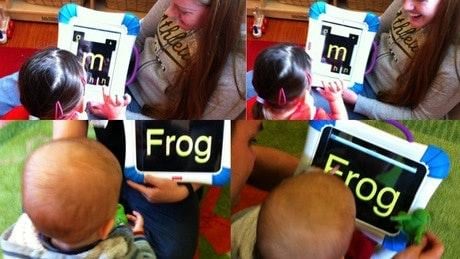
In this short course you will explore the possibility that children might acquire written language in a way that is similar to how they acquire spoken language—without instruction. You will encounter various aspects of behavioral science and technology that are relevant to this proposition. You will have the opportunity to learn the the perceptual, cognitive, and neurological capacities of children during their first years of life. You will advance your understanding of children and how they learn language. You will also be more attuned to current advances in the technology of human machine interactions, and what these phenomena imply for learning to read at an early age.

Oct 26th 2026
3 Weeks
Doping : Sports, Organizations and Sciences (Coursera) Coursera
University of Lausanne

Doping : Sports, Organizations and Sciences (Coursera)

The objective of this course is to encourage a critical understanding of doping. To achieve this goal, this course will rely on a multidisciplinary approach that allow you to see how different disciplines get into a single object, in different perspectives and in often complementary ways. This approach will also allow us to appreciate the complexity of a subject like doping. Doping in sports is a complex practice whose definition and identification is the result of socially and historically constructed norms. This course offers to shed light on the processes that led to the use and prohibition of doping substances.

Oct 26th 2026
4 Weeks
Introduction to Reproduction (Coursera) Coursera
Northwestern University

Introduction to Reproduction (Coursera)

Do you have questions about sex hormones or menstrual cycles? This is a crash-course in human reproductive health through fact and biology-based information on a variety of topics. "Sex 101" will cover reproductive anatomy, key biological changes during puberty, sexual biology and contraceptive methods, reproductive disorders, and a special introduction to the exciting field of Oncofertility. Specific lecture titles are as follows: 1) Reproductive Anatomy & Hormones, 2) Menstrual Cycle, Oocyte Maturation, & Sperm Activation, 3) Sexual Biology, Fertilization, & Contraception, and 4) Reproductive Health & Disorders.

Oct 26th 2026
4 Weeks
HI-FIVE: Health Informatics For Innovation, Value & Enrichment (Clinical Perspective) (Coursera) Coursera
Columbia University

HI-FIVE: Health Informatics For Innovation, Value & Enrichment (Clinical Perspective) (Coursera)

HI-FIVE (Health Informatics For Innovation, Value & Enrichment) Training is a 12-hour online course designed by Columbia University in 2016, with sponsorship from the Office of the National Coordinator for Health Information Technology (ONC). The training is role-based and uses case scenarios. Also, it has additional, optional modules on other topics of interest or relevance. Although we suggest to complete the course within a month's timeframe, the course is self-paced and so you can start and finish the course at anytime during a month's time period. No additional hardware or software are required for this course.

Oct 26th 2026
4 Weeks
An Introduction to the U.S. Food System: Perspectives from Public Health (Coursera) Coursera
Johns Hopkins University

An Introduction to the U.S. Food System: Perspectives from Public Health (Coursera)

A food system encompasses the activities, people and resources involved in getting food from field to plate. Along the way, it intersects with aspects of public health, equity and the environment. In this course, we will provide a brief introduction to the U.S. food system and how food production practices and what we choose to eat impacts the world in which we live. Through several case studies, we will discuss some key historical and political factors that have helped shape the current food system and consider alternative approaches from farm to fork.

Oct 26th 2026
5-12 Weeks
The exposome: cracking the science about what makes us sick (Coursera) Coursera
Universiteit Utrecht

The exposome: cracking the science about what makes us sick (Coursera)

What are the causes of disease? We know that most diseases result from a combination of genes and environment (nature and nurture). Our genes alone do not determine our fate. For most complex diseases, externalities - environmental factors in the broad sense - are more important. This includes our living and working environments, diet, social support and stress, pollution, and exposure to infectious agents. Exposome research is about discovering the non-genetic drivers of health and disease.

Nov 1st 2026
5-12 Weeks