Ethics in Engineering (Coursera)

Ethics in Engineering (Coursera)

e.g. This is primarily aimed at first- and second-year undergraduates interested in engineering or science, along with high school Explore unique case studies in engineering ethics. On this four-week course, you’ll examine different historical case studies and understand how they led to classic engineering failures. Though each case is unique and has a distinct context, they all share common themes; a backstory, a disastrous event, a post-event with ramifications, and outcomes.

Class Deals by MOOC List - Click here and see Coursera's Active Discounts, Deals, and Promo Codes.

For each case, you’ll watch and hear video lectures and explore foundational literature. You’ll also have the opportunity to discuss the case in detail and check your knowledge through quizzes and reflections on your understanding of the case. This format will help you develop a working knowledge of ethical foundations.
Delve into several case studies, including the VW emissions scandal
You’ll examine four case studies; the VW emissions scandal, the failure of the Denver airport baggage system, the fatal case of the Therac 25 radiation machine, and the software failure of the Ariane 5 rocket launch.
With each case, you’ll identify key aspects that led to the engineering failures and discuss the outcomes of the failures.
You’ll also explore the significance of each case and how they led to corrective actions.
Develop your knowledge of engineering alongside experts in the industry
The course will help you reflect on engineering as a design discipline and its impact on humans.
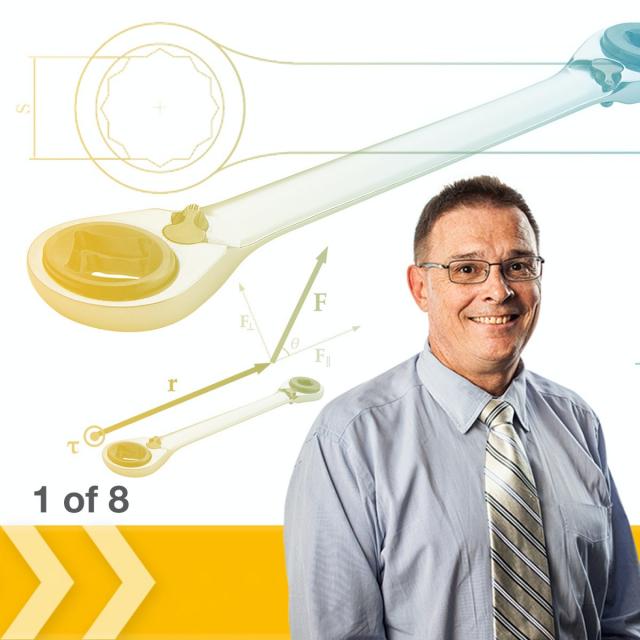
You’ll be guided by Dr David Chesney, an expert in both industry and academics with 20 years of experience at General Motors Corporation and 20 years working at the University of Michigan. Dr. Chesney’s background is in Mechanical Engineering, Biomedical Engineering, and Computer Science and he is the Toby Teorey Collegiate Lecturer in Electrical Engineering and Computer Science at the University of Michigan College of Engineering.

Syllabus

WEEK 1: Welcome to the Ethics in Engineering Course! Let’s get to know each other, meet Dr. Chesney, and get an overview of what we will learn.
WEEK 2: Welcome to our second case study! We start with an introduction to the DIA baggage handling catastrophe so that we ground our understanding in facts.
WEEK 3: Welcome to our third case study! We start with an introduction to the Therac 25 radiation machine malfunction so that we ground our understanding in facts.
WEEK 4: Welcome to our fourth case study! We start with an introduction to the Ariane 5 rocket launch disaster so that we ground our understanding in facts.

Go to Class
MOOC List is learner-supported. When you buy through links on our site, we may earn an affiliate commission.

Related Courses

Operational Research for Humanitarians (Coursera) Coursera
University of Geneva

Operational Research for Humanitarians (Coursera)

Evidence is central to good decision-making both in the humanitarian sector and beyond. Every day, a vast amount of evidence is generated that is relevant to humanitarian actors, much of it through research by academics and practitioners. This evidence can be incredibly valuable. It can help us better understand a situation and make humanitarian action more effective and accountable. The difficulty comes with understanding what evidence is relevant to our circumstances, where to find it, and how to assess its quality.

Aug 17th 2026
5-12 Weeks
Professional Responsibility and Ethics for Accountants (Coursera) Coursera
University of Illinois at Urbana-Champaign

Professional Responsibility and Ethics for Accountants (Coursera)

Accountants perform a wide variety of activities which include, but are not limited to, accounting, auditing, tax, management consulting, and financial management. However, a professional accountant’s responsibility is not exclusively to satisfy the needs of an employer or professional services client. One of the distinguishing characteristics of the accounting profession is its acceptance of the responsibility to act in the public interest.

Aug 17th 2026
4 Weeks
Ingeniería de Tráfico (Coursera) Coursera
Pontificia Universidad Católica de Chile

Ingeniería de Tráfico (Coursera)

El curso presenta en primer lugar las principales relaciones que caracterizan la circulación de vehículos y que dan pie a la teoría de circulación de vehículos sobre redes de transporte. Posteriormente se discutirán aspectos relativos al control de tráfico en intersecciones, sean estas de prioridad o semaforizadas. Finalmente, discutiremos sobre las características que presentan algunos modelos dinámicos de tráfico bastante utilizados en la actualidad.

Aug 10th 2026
4 Weeks
Leading with Impact: Team Dynamics, Strategy and Ethics (Coursera) Coursera
Coursera Instructor Network

Leading with Impact: Team Dynamics, Strategy and Ethics (Coursera)

This course provides the foundational concepts and frameworks to understand and apply leadership principles, team dynamics, strategic thinking, and ethical decision-making. Gain insights into the different types of leadership styles, and the roles and responsibilities of leaders. The course will explore how leaders can apply the principles of strategic thinking during the decision-making process. It will also dig into the complexities of team interaction and the importance of ethical considerations in decision-making.

Aug 17th 2026
1 Week
Exploring Light: Hands-on Activities and Strategies for Teachers (Coursera) Coursera
Exploratorium

Exploring Light: Hands-on Activities and Strategies for Teachers (Coursera)

This is an Exploratorium teacher professional development course taught by Teacher Institute staff, open to any science teacher (particularly middle or high school level) and science enthusiast. This is a hands-on workshop that explores topics and strategies teachers can use to help their students become active investigators of light.

Aug 9th 2026
4 Weeks
Nanotechnology and Nanosensors, Part 2 (Coursera) Coursera
Technion - Israel Institute of Technology

Nanotechnology and Nanosensors, Part 2 (Coursera)

Learn about novel sensing tools that make use of nanotechnology to screen, detect and monitor various events in personal or professional life. Together, we will lay the groundwork for infinite innovative applications, starting from diagnosis and treatments of diseases, continuing with quality control of goods and environmental aspects, and ending with monitoring security issues.

Aug 10th 2026
5-12 Weeks
Anticorrupción: Introducción a conceptos y perspectiva práctica (Coursera) Coursera
Universidad Nacional Autónoma de México

Anticorrupción: Introducción a conceptos y perspectiva práctica (Coursera)

La corrupción es uno de los principales problemas en México. Los eventos de corrupción afectan de manera directa la calidad de vida de las personas, su desarrollo, el crecimiento económico y social del país, así como la confianza en el gobierno. El objetivo del curso es presentar los conceptos centrales del fenómeno social denominado corrupción, analizar su relación con la ética e integridad en el servicio público, así como con los derechos humanos.

Aug 17th 2026
4 Weeks
De-Mystifying Mindfulness (Coursera) Coursera
Leiden University

De-Mystifying Mindfulness (Coursera)

Interest in meditation, mindfulness, and contemplation has grown exponentially in recent years. Rather than being seen as mystical practices from ancient Buddhism or esoteric philosophy, they are increasingly seen as technologies rooted in evidence from psychology and neuroscience. Mindfulness has become the basis for numerous therapeutic interventions, both as a treatment in healthcare and as a means of enhancing well-being and happiness. For millions around the world, mindfulness has become a life-style choice, enhancing and enriching everyday experience. Mindfulness is big business.

Aug 10th 2026
5-12 Weeks
Thermodynamique : fondements (Coursera) Coursera
École Polytechnique Fédérale de Lausanne

Thermodynamique : fondements (Coursera)

Ce cours vous apportera une compréhension des concepts fondamentaux de la thermodynamique du point de vue de la physique, de la chimie et de l’ingénierie. Il est scindé un deux MOOCs. Dans la première partie, le Professeur J.-Ph. Ansermet de l’EPFL et son collaborateur le Dr. Sylvain Bréchet ont rassemblé en quatre leçons tous les principes fondamentaux de la thermodynamique. La deuxième partie du MOOC illustre l’approche thermodynamique par une série d’applications présentées par des spécialistes provenant de diverses institutions partenaires du réseau RESCIF.

Aug 17th 2026
4 Weeks
Quantitative Methods (Coursera) Coursera
University of Amsterdam

Quantitative Methods (Coursera)

Discover the principles of solid scientific methods in the behavioral and social sciences. Join us and learn to separate sloppy science from solid research! This course will cover the fundamental principles of science, some history and philosophy of science, research designs, measurement, sampling and ethics. The course is comparable to a university level introductory course on quantitative research methods in the social sciences, but has a strong focus on research integrity. We will use examples from sociology, political sciences, educational sciences, communication sciences and psychology.

Aug 17th 2026
5-12 Weeks
Fundamentals of Engineering Exam Review (Coursera) Coursera
Georgia Institute of Technology

Fundamentals of Engineering Exam Review (Coursera)

The purpose of this course is to review the material covered in the Fundamentals of Engineering (FE) exam to enable the student to pass it. It will be presented in modules corresponding to the FE topics, particularly those in Civil and Mechanical Engineering. Each module will review main concepts, illustrate them with examples, and provide extensive practice problems.

Aug 10th 2026
5-12 Weeks