A Guide to Healthcare Innovation: Principles and Practice (Coursera)

A Guide to Healthcare Innovation: Principles and Practice (Coursera)

This course reflects on global health challenges and the role of innovative solutions in addressing them. By engaging in this course, you will be able to describe the principles and key types of innovation in order to characterise the fundamental features of new models of care and technologies.

Class Deals by MOOC List - Click here and see Coursera's Active Discounts, Deals, and Promo Codes.

This course will review the basic features and principles of healthcare innovation. You'll be examining innovations developed to address global health challenges, ranging from simple low-cost technologies readily deployed in resource constrained settings to more complex combinations of organizational, business model and technology innovations. Throughout this course, you'll also consider how adoption and diffusion is influenced by social, economic and political factors and explore what is required to get an innovation in to practice, effectively, at scale.

What You Will Learn

  • Describe the principles and key types of innovation in order to characterise the fundamental features of new models of care or technologies.
  • Consider the key factors that influence the adoption and scaling up of different types of healthcare innovations

Course 1 of 3 in the Global Health Innovations Specialization.

Syllabus

WEEK 1
Innovation VS invention
You will learn the difference between innovation and invention and the steps involved in the process of innovation. You'll also be provided with an overview of the challenges in healthcare innovation, the difference between technology for health and health technology, and the ways an innovation can be categorised.

WEEK 2
Types of innovation - disruptive, frugal and reverse
You will learn about the different types of innovation that exist including disruptive, frugal and reverse innovation.

WEEK 3
Product development and commercialisation
You will learn about design thinking, what is involved in the design process, what is required to take a product to market, and the differences between key roles in a business (e.g. CEO vs COO).

WEEK 4
Getting an innovation into practice
You will learn about diffusion, the strengths and limitations of Rogers' framework explaining the S-curve, and factors that affect the diffusion of an innovation through Rogers' and Greenhalgh et al.'s frameworks.

Go to Class
MOOC List is learner-supported. When you buy through links on our site, we may earn an affiliate commission.

Related Courses

Lecture Series for Preventing and Controlling COVID-19 (Coursera) Coursera
Xi'an Jiaotong University

Lecture Series for Preventing and Controlling COVID-19 (Coursera)

In December 2019, a cluster of patients with pneumonia of unknown cause appeared in Wuhan, Hubei. Governments at all levels and Department of Health Administration highly valued and rapidly organized the centers for Disease Control and Prevention (CDC), medical institutions, and scientific research academies to conduct a survey, rescue, and collaborative research. This new antigen was quickly identified as a novel coronavirus, named as 2019-nCoV by World Health Organization (WHO).

Oct 26th 2026
3 Weeks
Unravelling solutions for Future Food problems (Coursera) Coursera
Universiteit Utrecht

Unravelling solutions for Future Food problems (Coursera)

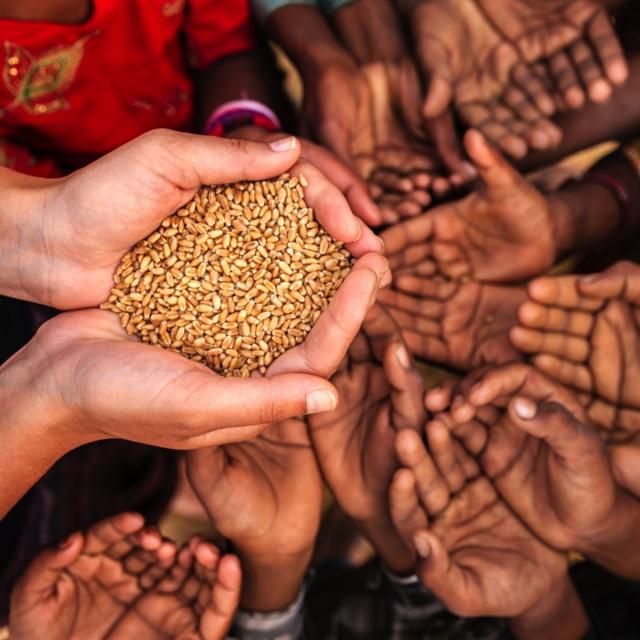
Our society depends on the availability of food and accessibility to it. According to the United Nations nearly 800 million people are hungry and on the other hand, over 650 million people are obese. While many people in developing countries experience food shortage, in industrialized countries people are throwing food away. These facts show how paradoxical and complex the world’s food problem is.

Nov 1st 2026
5-12 Weeks
Diagnosing Health Behaviors for Global Health Programs (Coursera) Coursera
Johns Hopkins University

Diagnosing Health Behaviors for Global Health Programs (Coursera)

Health behavior lies at the core of any successful public health intervention. While we will examine the behavior of individual in depth in this course, we also recognize by way of the Ecological Model that individual behavior is encouraged or constrained by the behavior of families, social groups, communities, organizations and policy makers. We recognize that behavior change is not a simplistic process but requires an understanding of dimensions like frequency, complexity and cultural congruity. Such behavioral analysis is strengthened through the use of a toolkit of theoretical models and practical frameworks.

Oct 26th 2026
4 Weeks
Take the Lead on Healthcare Quality Improvement (Coursera) Coursera
Case Western Reserve University

Take the Lead on Healthcare Quality Improvement (Coursera)

In this course you will learn about the importance of quality in healthcare and how you can contribute by implementing a quality improvement (QI) project to improve processes of care and patient outcomes. You will learn about powerful tools to add to your QI ‘toolbox’ during short lectures and reflective exercises. You will apply these tools to the implementation of a QI project in your own practice setting or an area of personal improvement. At the completion of the course, you will have a storyboard that captures your QI project success to share with others.

Oct 26th 2026
5-12 Weeks
Innovating with the Business Model Canvas (Coursera) Coursera
University of Virginia

Innovating with the Business Model Canvas (Coursera)

Have you ever gotten really excited about reading or writing a business plan? You might have started out excited, but I’m going to bet you didn’t stay that way. Let’s be honest- business plans are boring and mostly ignored. In this course, you’ll learn key tools from the worlds of design thinking and Lean Startup to approach the Canvas with thoughtfulness, focus, and above all a test-driven approach to business model innovation.

Oct 26th 2026
2 Weeks
The exposome: cracking the science about what makes us sick (Coursera) Coursera
Universiteit Utrecht

The exposome: cracking the science about what makes us sick (Coursera)

What are the causes of disease? We know that most diseases result from a combination of genes and environment (nature and nurture). Our genes alone do not determine our fate. For most complex diseases, externalities - environmental factors in the broad sense - are more important. This includes our living and working environments, diet, social support and stress, pollution, and exposure to infectious agents. Exposome research is about discovering the non-genetic drivers of health and disease.

Nov 1st 2026
5-12 Weeks
Regulated Competition in Healthcare Systems: Theory & Practice (Coursera) Coursera
Erasmus University Rotterdam

Regulated Competition in Healthcare Systems: Theory & Practice (Coursera)

In this MOOC you will learn about the theory and practice of 'regulated competition' (also known as 'managed competition') in healthcare systems. Many countries have implemented or consider implementation of regulated competition in healthcare. Examples include Australia, Belgium, Chile, Colombia, Germany, Ireland, Israel, The Netherlands, Switzerland and the United States.

Oct 26th 2026
5-12 Weeks
An Introduction to the U.S. Food System: Perspectives from Public Health (Coursera) Coursera
Johns Hopkins University

An Introduction to the U.S. Food System: Perspectives from Public Health (Coursera)

A food system encompasses the activities, people and resources involved in getting food from field to plate. Along the way, it intersects with aspects of public health, equity and the environment. In this course, we will provide a brief introduction to the U.S. food system and how food production practices and what we choose to eat impacts the world in which we live. Through several case studies, we will discuss some key historical and political factors that have helped shape the current food system and consider alternative approaches from farm to fork.

Oct 26th 2026
5-12 Weeks
Living with Dementia: Impact on Individuals, Caregivers, Communities and Societies (Coursera) Coursera
Johns Hopkins University

Living with Dementia: Impact on Individuals, Caregivers, Communities and Societies (Coursera)

Health professionals and students, family caregivers, friends of and affected individuals, and others interested in learning about dementia and quality care will benefit from completing the course. Led by Drs. Nancy Hodgson and Laura Gitlin, participants will acquire foundational knowledge in the care of persons with Alzheimer’s Disease and other neurocognitive disorders.

Oct 26th 2026
5-12 Weeks
Major Depression in the Population: A Public Health Approach (Coursera) Coursera
Johns Hopkins University

Major Depression in the Population: A Public Health Approach (Coursera)

Public Mental Health is the application of the principles of medicine and social science to prevent the occurrence of mental and behavioral disorders and to promote mental health of the population. This course illustrates the principles of public health applied to depressive disorder, including principles of epidemiology, transcultural psychiatry, health services research, and prevention. It is predicted that by 2020 depressive disorder will be the most important cause of disease burden in the entire world! Every human being suffers from feeling depressed at some point or other, but only about one fifth of the population will experience an episode of depressive disorder over the course of their lives.

Oct 26th 2026
5-12 Weeks
The New Nordic Diet - from Gastronomy to Health (Coursera) Coursera
University of Copenhagen

The New Nordic Diet - from Gastronomy to Health (Coursera)

The New Nordic Diet is a new food culture developed in 2009-13 with key emphasis on gastronomy, health, and environment. Major research in its effect on acceptability, behaviour and learning skills, and disease prevention have been conducted by the OPUS centre at the University of Copenhagen and the people behind the award-winning restaurant Noma in Copenhagen. This course will give the participants the opportunity to experience a healthy and palatable new food and eating concept diet “The New Nordic Diet” and an understanding of how food and diets can affect mental and physical health and ensure the foundation for a healthier life style for future generations with a regional based diet and food culture.

Oct 26th 2026
5-12 Weeks