EdX

Groundwater Contamination (edX)

Offered by Purdue University, PurdueX,
Groundwater Contamination (edX)

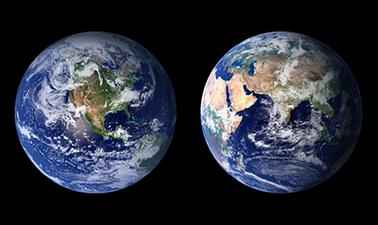
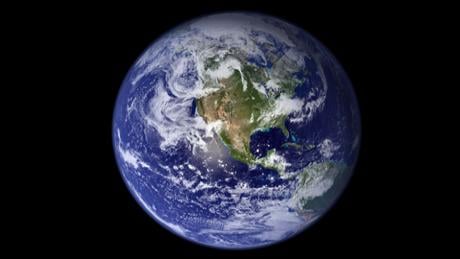
The Earth is blue for its oceans and green for its groundwater. Access to clean freshwater is essential yet human activities deteriorate water quality. This unit describes contaminant transport in aquifers. Groundwater is the water beneath the ground surface. It is a vast freshwater reservoir often overlooked because invisible, yet 1000 times greater than all lakes and rivers. The Earth is blue for its oceans, but green for the freshwater under our feet.

Class Deals by MOOC List - Click here and see EdX's Active Discounts, Deals, and Promo Codes.

Half of the world’s population rely on groundwater for drinking. Inadequate access to safe freshwater contributes to social, economic and political instability. Human activities can affect the quality of underground freshwater. Storage tanks and sceptic systems can leak, old landfills can seep, road salts can infiltrate the ground.
This course describes the principles of transport in aquifers so that engineers can predict and plan the safe extraction of groundwater for private and public use. Engineers design the treatment of contaminated groundwater in situ or above ground; they understand how to isolate and treat a plume of using the principles of transport processes in porous media. In the United States, the Safe Drinking Water Act directs the Environmental Protection Agency to establish maximum contaminant-level goals (MCLGs) and maximum contaminant levels (MCLs) for drinking water.
How do we know how safe well-water is? How do different contaminants move through aquifers? How do we model contaminant plumes from landfills or other sources?
In this course, we will cover the following topics:
1) The Advection Dispersion Equation: The fluxes of dissolved contaminants are dictated by the mixing of water in the porous media by dispersion and its relocation by advection. We derive and describe these processes both conceptually and mathematically.
2) Methods of Solution: We describe a number of methods to help solve the differential Advection Dispersion Equation. Analytical solutions can help with heuristics, but often more practical numerical methods such as particle tracking and finite differences can help understand the behavior in more complicated, heterogenous formations.
3) Issues with Dimensions (and Boundaries): Unlike streams and channels, aquifers cannot be modeled with one dimensional equation. We focus on two dimensional schemes that treat aquifers as plane from a top view.
4) Notions of Reactive transport: Aquifers process nutrients and other contaminants. The fate of a chemical may be complex but is often described as a simple upscaled process. We describe the assumptions tied to the bulk behavior.
5) Applications: In this last topic, we provide examples of landfill and well contamination and walk through an example of a MODFLOW model

What you'll learn

  • Describe the advection and dispersion transport processes in porous media
  • Explain the difference between diffusion and dispersion
  • Derive the diffusion equations from mass balance
  • Explain advective mass fluxes
  • Define the notion of representative elementary volume
  • Solve the advection and dispersion
  • Explain the difference between a differential equation and its solution
  • Select the appropriate method to estimate transport parameters
  • Compare and contrast the various methods of solution
  • Outline the principle of superposition and convolution
  • Calculate the velocity and dispersion coefficient from observations using the moments method
  • Solve reactive transport problems
  • Contrast the behavior of conservative and reactive solutes
  • Explain linear and non-linear sorption
  • Define the notion of chemical equilibrium and reaction kinetics
  • Sketch the evolution of concentration vs time for a zero and first order reaction
  • Explain why Monod kinetics describe biological remediation better than first order models
  • Apply Transport models to real world problems
  • Illustrate groundwater contamination for different scenarios
  • Model iron oxidation when contacting the atmosphere
  • Use a finite difference scheme to model a heterogeneous aquifer with a landfill and a particle tracking scheme to illustrate a leak.
  • Explain how wells operations can interfere with contaminant transport

Syllabus

Week 1: The Advection Dispersion Equation
The fluxes of dissolved contaminants are dictated by the mixing of water in the porous media by dispersion and its relocation by advection. We derive and describe these processes both conceptually and mathematically.

Week 2: Methods of Solution
We describe a number of methods to help solve the differential Advection Dispersion Equation. Analytical solutions can help with heuristics, but often more practical numerical methods such as particle tracking and finite differences can help understand the behavior in more complicated, heterogenous formations.

Week 3: Issues with Dimensions
Unlike streams and channels, aquifers cannot be modeled with one-dimensional equation. We focus on two-dimensional schemes that treat aquifers as plane from a top view.

Week 4: Notions of Reactive transport
Aquifers process nutrients and other contaminants. The fate of a chemical may be complex but is often described as a simple upscaled process. We describe the assumptions tied to the bulk behavior.

Week 5: Applications
In this last topic, we provide examples of landfill and well contamination and walk through an example of a MODFLOW model.
Go to Class
MOOC List is learner-supported. When you buy through links on our site, we may earn an affiliate commission.

Related Courses

Water and Wastewater Treatment Engineering: Biochemical Technology (edX) EdX
Tsinghua University,TsinghuaX

Water and Wastewater Treatment Engineering: Biochemical Technology (edX)

Learn the basic principles and characteristics of biochemical technology in water and wastewater treatment engineering. Biochemical technology in water and wastewater treatment engineering is essential in the field of water treatment. In this environmental studies course you will learn the basic principles and characteristics of biochemical technology.

Self Paced
Self-Paced
Water Works: Activating Heritage for Sustainable Development (edX) EdX
Delft University of Technology,DelftX

Water Works: Activating Heritage for Sustainable Development (edX)

Address contemporary challenges from a socio-spatial and cultural perspective, and activate water heritage for decision-making in water management. Water has served and sustained societies throughout history. Understanding the complex and diverse water systems of the past is key to devising sustainable development for the future with regard to socioeconomic structures, policies, and cultures. Today, past systems form the framework for preservation and reuse as well as for new proposals.

Self Paced
Self-Paced
The Water Cycle (Coursera) Coursera
PepsiCo

The Water Cycle (Coursera)

In this course, spread over ten modules, participants will learn about: the water cycle; hydrology; groundwater models; human impacts on freshwater ecosystems; water governance; water law; the economics of water infrastructure and scenario planning and municipal water.

Jun 15th 2026
4 Weeks
Ecosystems of California (Coursera) Coursera
University of California, Santa Cruz

Ecosystems of California (Coursera)

This course surveys the diversity, structure and functioning of California’s ecosystems through time and the ways they have influenced and responded to human activities and stewardship. Topics include ecosystem drivers such as climate, soils, and land use history; human and ecological prehistory of the state; comparative marine, freshwater, and terrestrial ecosystem dynamics; and managed ecosystems such as range, fisheries and agriculture in California.

Jun 15th 2026
5-12 Weeks
Agricultural Water Management: Water,-Society and Technology Interactions (edX) EdX
Wageningen University,WageningenX

Agricultural Water Management: Water,-Society and Technology Interactions (edX)

Optimize water governance- and technologies to meet increasing food demands around the world. Learn the fundamentals of agricultural water management from a social and technical approach. Enrol now and find out how the Nr. 1 agricultural university of the world explains agricultural water management at different spatial levels (farm, scheme, river basin) and from different technical and institutional perspectives. Wageningen University & Research is actively involved in debates around water and food with an important focus on the combination of both technical and social factors, creating a unique socio-technical approach.

Self Paced
Self-Paced
Groundwater Cycle (edX) EdX
Purdue University,PurdueX

Groundwater Cycle (edX)

The Earth is blue for its oceans but green for the blankets of groundwater under our feet. This course explores the water cycle from under the ground. How much groundwater do we use and what for? How much do the trees? How do we model water fluxes? This course explores the water cycle from an underground perspective. We start with the description of groundwater as a resource: How much is there? Where is it? How do we use it? How much groundwater do plants and trees use every year? How much water do aquifers lose during droughts? How much do they gain during rain events or in a typical year?

Jan 10th 2022
5-12 Weeks
The Biology of Water and Health - Sustainable Interventions (edX) EdX
OECx,Open Education Consortium - OEC

The Biology of Water and Health - Sustainable Interventions (edX)

Tufts University presents how to promote safe water conservation and implement sustainable solutions in order to improve public health. This water sustainability course from Tufts University focuses on the engineering and public health components needed to achieve the conservation of safe water locally and globally. Together, we will explore how to create sustainable interventions geared towards improving population health.

No sessions available
4 Weeks
Water quality and the biogeochemical engine (edX) EdX
École Polytechnique Fédérale de Lausanne,EPFLx

Water quality and the biogeochemical engine (edX)

Learn about how the quality of water is a direct result of complex bio-geo-chemical interactions, and about how to use these processes to mitigate water quality issues. Interested in environmental issues, but unsure where to start? This is the course for you! High quality water, to be provided for drinking and irrigation purposes to the world’s ever-growing population, is one Great Challenge in the near future.

No sessions available
5-12 Weeks
Powering Resilient Communities: A Holistic Approach to Food, Energy, and Water Security (edX) EdX
University of Alaska Fairbanks,AlaskaX

Powering Resilient Communities: A Holistic Approach to Food, Energy, and Water Security (edX)

A research-based course on resilient renewable energy solutions, with an emphasis on microgrids, and Food, Energy, and Water (FEW) security. This course provides research-based and on-the-ground tools for community planners, grid designers, and business leaders to improve and implement stronger and more resilient renewable energy systems in Arctic communities.

Self Paced
Self-Paced
L’eau et les sols - Hydrodynamique des milieux poreux (edX) EdX
LouvainX,Université Catholique de Louvain - UCL

L’eau et les sols - Hydrodynamique des milieux poreux (edX)

Ce cours de spécialisation vous donnera les clés pour comprendre, modéliser et mesurer les processus de transferts de l’eau dans le sol. Comment l’eau de pluie s'infiltre-t-elle dans le sol (et quelle partie ruisselle) ? Quelle est la recharge d’une nappe ? Quelle quantité d’eau un sol peut-il retenir ? Quelle sont les directions des flux de polluants dans un sol ?

Self Paced
Self-Paced
Backyard Meteorology: The Science of Weather (edX) EdX
HarvardX,Harvard University

Backyard Meteorology: The Science of Weather (edX)

Learn to forecast the weather just by looking out your window. The weather forecasts we see every day are based on an army of meteorological sensing networks and intensive computer modeling. Before the rise of these technologies, predictions were made by methods like discerning cloud formations and wind directions.

Self Paced
Self-Paced
New Zealand Landscape as Culture: Wai (Water) (edX) EdX
Victoria University of Wellington,WellingtonX

New Zealand Landscape as Culture: Wai (Water) (edX)

Come and learn about the water systems and the ocean of New Zealand and their complex geological and cultural histories. In this course, you will learn about New Zealand’s water, or 'wai', and the cultural identities attached to them. We'll explore the lives and identities of Indigenous Māori people who can trace their ancestry to their awa, or river, as well as the European, Pākehā perspectives on water. Discussing how the different cultures interpret and relate to water.

No sessions available
4 Weeks