Fundamentals of electron and ion microscopy (Coursera)

Fundamentals of electron and ion microscopy (Coursera)

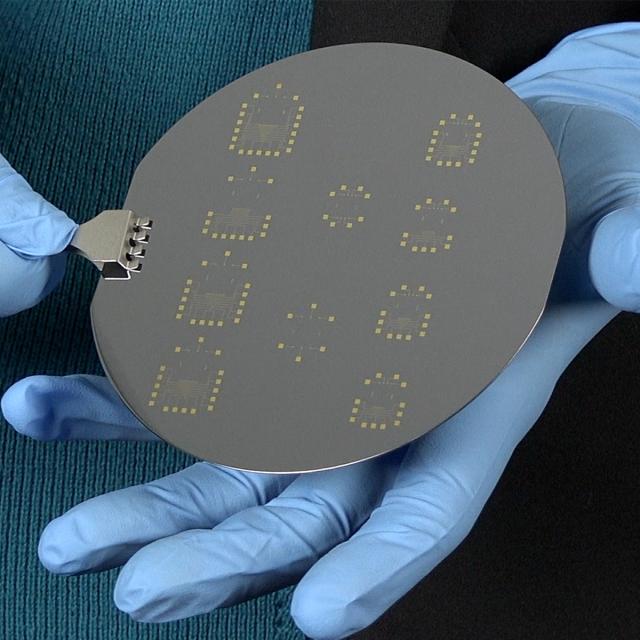
Electron and ion microscopy techniques are the most widespread tools for imaging and investigation of structural and functional properties of solid and soft matter on micro- and nanoscale, which applications are very broad : material science, microelectronics, nanotechnology, biology, forensics science and many others. This course represents the fundamentals on the working principles of all main components of the modern microscopes such as electron and ion optics as well as diverse signal detectors, on the physics of the particle interaction with the matter and of the image formation in different operation modes.

Class Deals by MOOC List - Click here and see Coursera's Active Discounts, Deals, and Promo Codes.

The obtained knowledge will serve as basics for future practical usage of electron and ion microscopy as well as focused ion beam systems in various fields from basic research to industrial applications. A distinguished feature of the course is the consideration of both electron and ion beam technologies, which started to be rapidly growing due to the availability of recently industrially developed dual beam equipment, where these technologies are used jointly.

Syllabus

WEEK 1: General Topics in Electron and Ion Microscopy
WEEK 2: Scanning Electron Microscopy
WEEK 3: Transmission Electron Microscopy
WEEK 4: Scanning Ion Microscopy and Focused Ion Beams
WEEK 5: Analysis in Electron Microscopy
Go to Class
MOOC List is learner-supported. When you buy through links on our site, we may earn an affiliate commission.

Related Courses

Materials Science and Engineering (edX) EdX
NUST MISIS,MISISx

Materials Science and Engineering (edX)

Gain a fundamental understanding of materials, its structures on different levels (from crystal cell to macrostructure), phase transformations and how it influences its mechanical, electrical, optical and magnetic properties from common science perspective. This course will introduce you to the various properties and structures of materials and lay a strong foundation for your further study of engineering and its related disciplines.

No sessions available
5-12 Weeks
Internet of Things Capstone: Build a Mobile Surveillance System (Coursera) Coursera
University of California, San Diego

Internet of Things Capstone: Build a Mobile Surveillance System (Coursera)

In the Capstone project for the Internet of Things specialization, you will design and build your own system that uses at least 2 sensors, at least 1 communication protocol and at least 1 actuator. You will have a chance to revisit and apply what you have learned in our courses to achieve a robust, practical and/or fun-filled project. We absolutely encourage you to design whatever you can think up! This is your chance to be creative or to explore an idea that you have had. But if you don’t have your own idea, we provide the description of a surveillance system, for you to build.

Sep 14th 2026
4 Weeks
Histology: Using Microscopy to Study Anatomy and Identify Disease (FutureLearn) FutureLearn
The Open University

Histology: Using Microscopy to Study Anatomy and Identify Disease (FutureLearn)

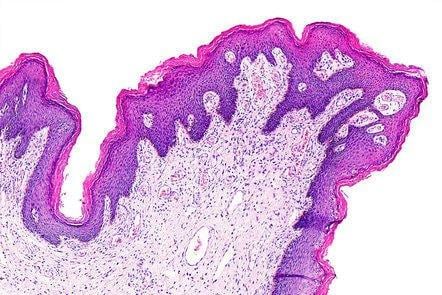
Get an introduction to histology – the study of anatomy at a microscopic level – and find out how it is used to identify disease. Histology is a key part of modern medicine – it helps us study cells and tissues at a microscopic level, and accurately diagnose diseases such as cancer. This online course introduces the field. It starts with the basic principles of light microscopy, before focussing on the structure and function of human tissues, and the relationships between them.

No sessions available
4 Weeks
Astro 101: Black Holes (Coursera) Coursera
University of Alberta

Astro 101: Black Holes (Coursera)

What is a black hole? Do they really exist? How do they form? How are they related to stars? What would happen if you fell into one? How do you see a black hole if they emit no light? What’s the difference between a black hole and a really dark star? Could a particle accelerator create a black hole? Can a black hole also be a worm hole or a time machine? In Astro 101: Black Holes, you will explore the concepts behind black holes. Using the theme of black holes, you will learn the basic ideas of astronomy, relativity, and quantum physics.

Sep 14th 2026
5-12 Weeks
Frontier Physics, Future Technologies (FutureLearn) FutureLearn
University of York

Frontier Physics, Future Technologies (FutureLearn)

Expand your understanding of modern physics and discover how we can solve societal problems by developing future technologies. Explore the mysteries of the universe through cutting-edge physics. Physics is the most fundamental of the sciences. By studying the properties of energy and matter, physicists aim to explain the many mysteries of the universe.

Self Paced
3 Weeks
Fundamentals of Nanomaterials and Nanotechnology (edX) EdX
Purdue University,PurdueX

Fundamentals of Nanomaterials and Nanotechnology (edX)

Learn about the application of nanomaterials in civil and environmental engineering. This course will introduce students to the field of nanotechnology with a special emphasis on nanomaterials synthesis, characterizations and their applications in civil and environmental engineering. The specific applications will include, but not limited to, tailoring mechanical property, durability, self-cleaning, self-sealing, self-sensing, energy harvesting and other multi-functionality.

Aug 22nd 2022
5-12 Weeks
ImageInLife - Imaging the Vertebrate embryo: from biological material to modelling (FUN) FUN
Université de Montpellier

ImageInLife - Imaging the Vertebrate embryo: from biological material to modelling (FUN)

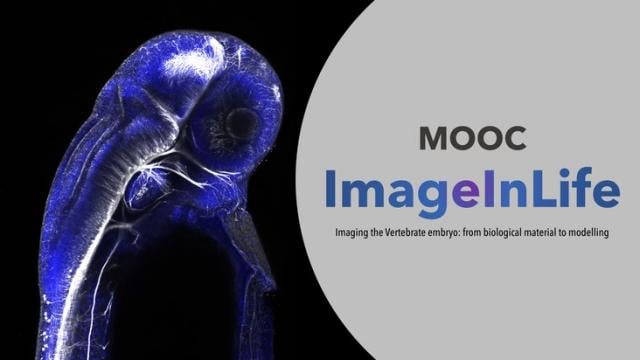
Microscopy technologies have progressed to such a point that it is now possible to image a developing vertebrate at the single cell resolution. Two main model species are being used for such studies, the zebrafish and the mouse. The present MOOC introduces the trainees to these two animal models, to the most modern microscopy technologies, to the use of high volume of data (images) and to the modelling of the studied processes. Trainees will also be introduced to the intravital study of viral infections.

Aug 24th 2021
5-12 Weeks
The Finite Element Method for Problems in Physics (Coursera) Coursera
University of Michigan

The Finite Element Method for Problems in Physics (Coursera)

This course is an introduction to the finite element method as applicable to a range of problems in physics and engineering sciences. The treatment is mathematical, but only for the purpose of clarifying the formulation. The emphasis is on coding up the formulations in a modern, open-source environment that can be expanded to other applications, subsequently.

Sep 7th 2026
13-24 Weeks
Introduction to Acoustics (Part 2) (Coursera) Coursera
Korea Advanced Institute of Science and Technology - KAIST

Introduction to Acoustics (Part 2) (Coursera)

Learners might have learned the basic concepts of the acoustics from the ‘Introduction to Acoustics (Part 1).’ Now it is time to apply to the real situation and develop their own acoustical application. Learners will analyze the radiation, scattering, and diffraction phenomenon with the Kirchhoff –Helmholtz Equation. Then learners will design their own reverberation room or ducts that fulfill the condition they have set up.

Sep 7th 2026
5-12 Weeks
Física: Vectores, Trabajo y Energía (Coursera) Coursera
Tecnológico de Monterrey

Física: Vectores, Trabajo y Energía (Coursera)

Este curso provee al estudiante con conceptos y herramientas matemáticas para modelar problemas en física, que al aplicar podrá enfrentar con éxito los cursos de física universitarios. Así pues, la filosofía de este curso consiste en cubrir temas conceptuales relativos a la Física y desarrollar tu capacidad de aprender y aplicarlos en tu vida profesional.

Sep 14th 2026
5-12 Weeks