Nanotechnology: A Maker’s Course (Coursera)

Nanotechnology: A Maker’s Course (Coursera)

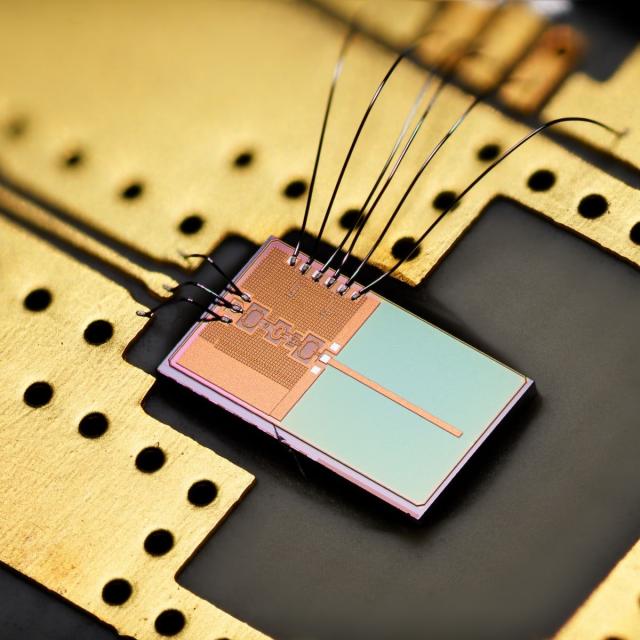
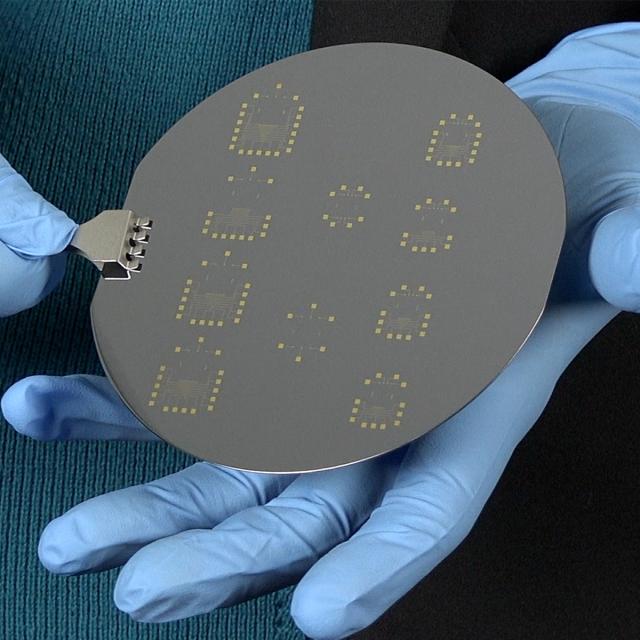
How can we create nano-structures that are 10,000 times smaller than the diameter of a human hair? How can we “see” at the nano-scale? Through instruction and lab demonstrations, in this course you will obtain a rich understanding of the capabilities of nanotechnology tools, and how to use this equipment for nano-scale fabrication and characterization.

Class Deals by MOOC List - Click here and see Coursera's Active Discounts, Deals, and Promo Codes.

The nanoscale is the next frontier of the Maker culture, where designs become reality. To become a Nanotechnology Maker pioneer, we will introduce you to the practical knowledge, skills, and tools that can turn your nanotechnology ideas into physical form and that enable you to image objects at the nano-scale.
This course has been developed by faculty and staff experts in nano-fabrication, electron beam microscopy, and nano-characterization through the Research Triangle Nanotechnology Network (RTNN). The RTNN offers training and use of the tools demonstrated in this course to schools and industry through the United States National Nanotechnology Coordinated Infrastructure program. The tools demonstrated in this course are available to the public through the RTNN.

Syllabus

WEEK 1
Introduction to Nanotechnology
Welcome to Nanotechnology! In this module, you will learn some of the basics of nanofabrication and nanocharacterization techniques as well as specific applications of nanotechnology in commercial products. You’ll be able to explain why a cleanroom and vacuum environment are necessary for creating nanotechnology products. Finally, you will be able to explain how we use light, x-rays, and electron beams to characterize objects at the nanoscale. For more detailed learning objectives for each video, please see the first reading.

WEEK 2
Nano Measurement and Characterization Tools: Scanning Electron Microscopy and Energy-Dispersive X-ray Spectroscopy
After this module, you will be able to explain sample preparation and imaging techniques used in scanning electron microscopy. You will also be able to explain the benefits of environmental scanning electron microscopy. Furthermore, you will discover how energy-dispersive x-ray spectroscopy can be paired with scanning electron microscopy to gain elemental information about samples.

WEEK 3
Nano Measurement and Characterization Tools: Transmission Electron Microscopy
In this module, we will look at transmission electron microscopy and cryo-transmission electron microscopy. You will learn to describe the basic function of the equipment as well as how samples are prepared and imaged using these techniques.

WEEK 4
Nano Measurement and Characterization Tools: X-ray and Optical Characterization
In this module, we will see demonstrations of micro-computed tomography, X-ray photoelectron spectroscopy, and optical spectroscopy. You will learn the basic function of the equipment and how samples are prepared and measured.

WEEK 5
Nanofabrication: Vacuum Pumps and Thin Film Vacuum Deposition
In this module, we will discover how and why a vacuum environment is required in nanofabrication, compare the operation of three types of vacuum pumps, and look at vacuum deposition of thin films using three different methods: sputter evaporation, e-beam evaporation and thermal evaporation.

WEEK 6
Nanofabrication: Vapor Deposition
We will look at some techniques for making things with nanotechnology using thin film techniques; in this module you will learn to describe and compare atomic layer deposition, chemical vapor deposition, and plasma-enhanced chemical vapor deposition.

WEEK 7
Nanofabrication: Patterning and Self-Assembly
In this module, we will investigate 5 different methods used in nanotechnology for patterning. You will be able to explain the basic processes of photolithography, e-beam lithography, ion beam lithography, hot embossing, and self-assembly.

WEEK 8
Nanofabrication: Etching
In this module, you will learn to describe and compare wet and dry etching processes. These processes are used to selectively remove material in nanofabrication.
Closing

Go to Class
MOOC List is learner-supported. When you buy through links on our site, we may earn an affiliate commission.

Related Courses

Fundamentals of Engineering Exam Review (Coursera) Coursera
Georgia Institute of Technology

Fundamentals of Engineering Exam Review (Coursera)

The purpose of this course is to review the material covered in the Fundamentals of Engineering (FE) exam to enable the student to pass it. It will be presented in modules corresponding to the FE topics, particularly those in Civil and Mechanical Engineering. Each module will review main concepts, illustrate them with examples, and provide extensive practice problems.

Jun 15th 2026
5-12 Weeks
Spacecraft Dynamics Capstone: Mars Mission (Coursera) Coursera
University of Colorado Boulder

Spacecraft Dynamics Capstone: Mars Mission (Coursera)

The goal of this capstone spacecraft dynamics project is to employ the skills developed in the rigid body Kinematics, Kinetics and Control courses. An exciting two-spacecraft mission to Mars is considered where a primary mother craft is in communication with a daughter vehicle in another orbit. The challenges include determining the kinematics of the orbit frame and several desired reference frames, numerically simulating the attitude dynamics of the spacecraft in orbit, and implementing a feedback control that then drives different spacecraft body frames to a range of mission modes including sun pointing for power generation, nadir pointing for science gathering, mother spacecraft pointing for communication and data transfer. Finally, an integrated mission simulation is developed that implements these attitude modes and explores the resulting autonomous closed-loop performance.

Jun 22nd 2026
5-12 Weeks
Writing Skills for Engineering Leaders (Coursera) Coursera
Rice University

Writing Skills for Engineering Leaders (Coursera)

Engineering leaders must write extensively for their jobs, and their writing needs to be professional, reader-focused, and error-free. What leaders write in particular can affect productivity and the bottom line, so the written communication that leaders create must be clear and concise. In this course, you’ll learn essential writing skills that you can apply in your daily activities on the job as an engineering leader.

Jun 22nd 2026
4 Weeks
Major Engineering Projects: Governance, Risk and Scope (Coursera) Coursera
University of Leeds

Major Engineering Projects: Governance, Risk and Scope (Coursera)

Gain confidence when dealing with stakeholders of major projects by learning to identify and manage those that are involved in the project planning and delivery. This course will enable you to explore project governance in theory and practice. Through real life examples you’ll understand how the critical challenges of the governance in major projects are resolved.

Jun 15th 2026
5-12 Weeks
MBSE: Model-Based Systems Engineering (Coursera) Coursera
University at Buffalo,The State University of New York

MBSE: Model-Based Systems Engineering (Coursera)

This Model-Based Systems Engineering (MBSE) course and the Digital Thread courses featured earlier in this specialization bring together the concepts from across digital manufacturing and design, forming a vision in which the geometry of a product is just one way of describing it. MBSE is where the model resulting from the evolution of system requirements, design, analysis, verification and validation activities is the focus of design and manufacturing.

Jun 22nd 2026
4 Weeks
Engineering of Structures: Tension (Coursera) Coursera
Dartmouth College

Engineering of Structures: Tension (Coursera)

This course deals with tension. Tension is one of the easiest forces to understand. It is a pulling force. When we tend to pull an object, it is in tension. Different elements that resist tension in buildings are ropes, cables, and funicular forms. You will study different structures and identify what role tension plays in their designs. The first module explores tension and its importance in building structures.

Jun 22nd 2026
3 Weeks
Optical and X-Ray Characterization (Coursera) Coursera
Arizona State University

Optical and X-Ray Characterization (Coursera)

Optical and X-ray techniques are powerful ways to characterize semiconductor thin films. They can be used to measure film thickness, purity and crystalline quality, and for compositional analysis. Modern techniques are fast, turn-key, and generally non-destructive, allowing for rapid assessment of material properties. This course describes the fundamentals of optical and X-ray characterization and provides real-world examples of how they are used in semiconductor manufacturing.

Jun 22nd 2026
5-12 Weeks
Thermodynamique : fondements (Coursera) Coursera
École Polytechnique Fédérale de Lausanne

Thermodynamique : fondements (Coursera)

Ce cours vous apportera une compréhension des concepts fondamentaux de la thermodynamique du point de vue de la physique, de la chimie et de l’ingénierie. Il est scindé un deux MOOCs. Dans la première partie, le Professeur J.-Ph. Ansermet de l’EPFL et son collaborateur le Dr. Sylvain Bréchet ont rassemblé en quatre leçons tous les principes fondamentaux de la thermodynamique. La deuxième partie du MOOC illustre l’approche thermodynamique par une série d’applications présentées par des spécialistes provenant de diverses institutions partenaires du réseau RESCIF.

Jun 22nd 2026
4 Weeks
Introduction to Systems Engineering (Coursera) Coursera
UNSW Sydney - University of New South Wales

Introduction to Systems Engineering (Coursera)

"Introduction to Systems Engineering" uses a structured yet flexible approach to provide a holistic, solid foundation to the successful development of complicated systems. The course takes you step by step through the system life cycle, from design to development, production and management. You will learn how the different components of a system interrelate, and how each contributes to a project’s goals and success.

Jun 15th 2026
5-12 Weeks