Applied Computational Fluid Dynamics (Coursera)

Offered by Siemens,
Applied Computational Fluid Dynamics (Coursera)

If you’re reading this, you’re likely interested in exploring applied computational fluid dynamics (CFD) using the Simcenter STAR-CCM+ software or another CFD tool. This course can be a first step in improving your job performance and furthering your career or educational trajectory.

Class Deals by MOOC List - Click here and see Coursera's Active Discounts, Deals, and Promo Codes.

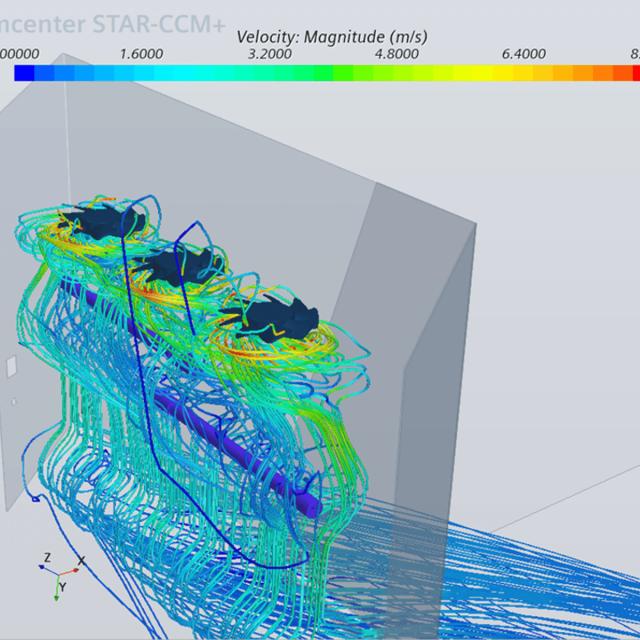
We’ve created this course to help you use the knowledge of flow physics and computational fluid dynamics to obtain quality solutions of flow and heat transfer problems most efficiently. This course is not about instructions on how to use a particular software. Simcenter STAR-CCM+ was used exclusively for all simulations presented in this course. Still, the learning outcomes would be the same if another public or commercial software were used, as long as it has the same capabilities.

Syllabus

WEEK 1
Introduction to Applied Computational Fluid Dynamics
In Week 1, we'll explore flow in a channel with a semi-circular obstacle on the bottom wall is used to introduce the basic flow models (Euler, Navier-Stokes, and Reynolds-averaged Navier-Stokes equations), the basic features of most flows in engineering applications (boundary layer, shear layer, flow separation, recirculation zone), and the approaches to simulate flows including these phenomena. The distinction between inviscid, laminar, and turbulent flows is explained, as well as how the flow features can be visualized and analyzed and how the knowledge of the flow regime affects the design of the computational grid and the choice of physics models and simulation parameters. Finally, the ways of increasing the efficiency of simulation and the estimation of discretization errors are presented.

WEEK 2
Flows in Diffusors and Nozzles
In Week 2, we'll explore flows in diffusors and nozzles are studied. They are generic representations of diverging or converging cross-sections of flow paths found in many engineering applications. In both diffusors and nozzles flow separation and recirculations occurs if diverging/converging angles are high enough. In symmetric diffusor geometries the flow is often asymmetric, and in nozzles vena contracta may occur. These phenomena and the evaluation of efficiency of energy conversion as well as the energy losses are explained. The effects of geometrical details (variation of expansion/contraction angle, rounding of corners by different radii) and suction through diffusor walls are also analyzed. Detailed studies of grid-dependence of solutions are performed and the effect of the order of discretization for convection fluxes is analyzed.

WEEK 3
Secondary and Vortex Flows
In Week 3, we'll explore pressure or turbulence induced flow in directions other than the primary flow path are studied. First three-dimensional pressure-driven secondary flows in duct or pipe bends are analyzed in detail, followed by the analysis of turbulence-driven secondary flow in ducts with non-circular cross-sections. The physics behind these phenomena is described and the ways of simulating them are explained. Next, horseshoe vortex and tip vortex flows are analyzed; they too are generic representations of flows resulting in many practical applications with body junctions and free tips. The flow physics, computational details (design of an optimal grid and its local refinement, the choice of physics models and the simulation approach) are explained.

WEEK 4
Flows Around a Circular Cylinder
In Week 4, we'll explore flows around a circular cylinder at Reynolds numbers between 5 and 5 million are studied. Circular cylinder is a generic representation of a slender body exposed to a cross-flow; such situations are found in many practical applications. Depending on the Reynolds number, the flow may be creeping, steady or unsteady laminar, or turbulent. The flow separation and recirculation can have many different forms, leading to vortex shedding (the von Karman vortex street), transition to turbulence in the wake, in shear layers, or in boundary layers on cylinder surface. Both the drag crises on a cylinder at the critical Reynolds number and the Magnus effect on a rotating cylinder are described. Different techniques of simulating turbulent flows - direct numerical simulation, large-eddy simulation or solution of the Reynolds-averaged Navier-Stokes equations using different turbulence models are presented and it is explained which technique is appropriate for which type of flow.

WEEK 5
Flows with Heat Transfer
In Week 5, we'll explore heat transfer, including conduction in solids, natural and forced convection in fluids, and conjugate heat transfer. I’ll explain how the heat is transferred between continua at the solid-fluid interface, what is different in laminar and turbulent flows, which properties of a computational grid are desirable at the fluid-solid interface, and why are prism layers at walls important. The difference between stable and unstable stratification in natural convection flows and the importance of accounting for the correct dependence of fluid properties on temperature are emphasized. Finally, it is explained how to optimally simulate simultaneous heat transfer across multiple flow streams separated by solid bodies.
Go to Class
MOOC List is learner-supported. When you buy through links on our site, we may earn an affiliate commission.

Related Courses

Mathematics for Engineers: The Capstone Course (Coursera) Coursera
The Hong Kong University of Science and Technology - HKUST

Mathematics for Engineers: The Capstone Course (Coursera)

Mathematics for Engineers: The Capstone Course provides a capstone project for students who are completing the Mathematics for Engineers specialization. Students will first learn some basic concepts in computational fluid dynamics, and then apply these concepts to compute the fluid flow around a cylinder. Access to MATLAB online and the MATLAB grader is given to all students who enroll.

Jun 29th 2026
3 Weeks
Introduction to Thermodynamics: Transferring Energy from Here to There (Coursera) Coursera
University of Michigan

Introduction to Thermodynamics: Transferring Energy from Here to There (Coursera)

This course provides an introduction to the most powerful engineering principles you will ever learn - Thermodynamics: the science of transferring energy from one place or form to another place or form. We will introduce the tools you need to analyze energy systems from solar panels, to engines, to insulated coffee mugs. More specifically, we will cover the topics of mass and energy conservation principles; first law analysis of control mass and control volume systems; properties and behavior of pure substances; and applications to thermodynamic systems operating at steady state conditions.

Jun 29th 2026
5-12 Weeks
Advanced Fluid Mechanics 3: Potential Flows & Boundary Layers (edX) EdX
MIT,MITx

Advanced Fluid Mechanics 3: Potential Flows & Boundary Layers (edX)

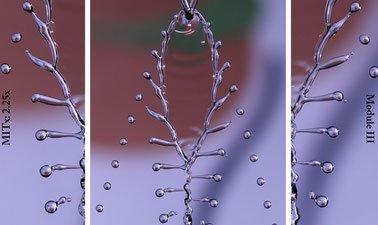
Learn to analyze the structure of high Reynolds number inviscid flows using potential flow theory, the roles of vorticity generation in viscous boundary layers, circulation and lift, flow separation, and transition to turbulence. A separate final short module briefly introduces the role of surface tension in engineering fluid mechanics. This course features lecture and demo videos, lecture concept checks, practice problems, and extensive problem sets.

Self Paced
Self-Paced
Global Postharvest Loss Prevention: Fundamentals, Technologies, and Actors (Coursera) Coursera
University of Illinois at Urbana-Champaign

Global Postharvest Loss Prevention: Fundamentals, Technologies, and Actors (Coursera)

This course provides an overview of the issue of postharvest loss of grains by exploring essential physical, technical, and social dimensions of postharvest supply chains and loss prevention methods globally. Each year, estimates suggest that 1/3 of all food produced is lost or wasted, making postharvest loss a critical global food security and sustainability issue of today. Key knowledge areas are presented including: an overview of postharvest loss; supply chain activities such as harvesting, drying, and storage; economics and markets; an introduction to the network of actors working in this field.

Jun 29th 2026
4 Weeks
Converter Circuits (Coursera) Coursera
University of Colorado Boulder

Converter Circuits (Coursera)

This course introduces more advanced concepts of switched-mode converter circuits. Realization of the power semiconductors in inverters or in converters having bidirectional power flow is explained. Power diodes, power MOSFETs, and IGBTs are explained, along with the origins of their switching times. Equivalent circuit models are refined to include the effects of switching loss. The discontinuous conduction mode is described and analyzed. A number of well-known converter circuit topologies are explored, including those with transformer isolation.

Jun 29th 2026
4 Weeks
Organic Solar Cells - Theory and Practice (Coursera) Coursera
Technical University of Denmark - DTU

Organic Solar Cells - Theory and Practice (Coursera)

The goal of the course is to give students awareness of the largest alternative form of energy and how organic / polymer solar cells can harvest this energy. The course provides an insight into the theory behind organic solar cells and describes the three main research areas within the field i.e. materials, stability and processing.

Jun 29th 2026
5-12 Weeks
Electric Industry Operations and Markets (Coursera) Coursera
Duke University

Electric Industry Operations and Markets (Coursera)

This is a two week course. In the first week you will learn about the core activities that the Industry executes to bring electricity to customers. We will review what electricity is, how it is generated, how it is transmitted, how it comes into buildings, and how consumption of electricity instantly feeds back on the transmission and generation of electricity.

Jun 29th 2026
2 Weeks
Intro to Acoustics (Part 1) (Coursera) Coursera
Korea Advanced Institute of Science and Technology - KAIST

Intro to Acoustics (Part 1) (Coursera)

This course introduces acoustics by using the concept of impedance. In the previous part, the course starts with vibrations and waves, demonstrating how vibration can be envisaged as a kind of wave, mathematically and physically. They are realized by one-dimensional examples, which provide mathematically simplest but clear enough physical insights. Then the part 1 ends with explaining waves on a flat surface of discontinuity, demonstrating how propagation characteristics of waves change in space where there is a distributed impedance mismatch.

Jun 29th 2026
5-12 Weeks
System Dynamics (Coursera) Coursera
FIA Business School

System Dynamics (Coursera)

This course equips learners with the skills to analyze dynamic relationships within systems, create causal loop diagrams, and simulate the behavior of interconnected variables. Participants gain insights into system behavior, enabling them to make informed decisions and design effective interventions in diverse contexts.

Jun 29th 2026
5-12 Weeks
Intelligent Machining (Coursera) Coursera
University at Buffalo,The State University of New York

Intelligent Machining (Coursera)

Manufacturers are increasingly utilizing machine tools that are self-aware – they perceive their own states and the state of the surrounding environment – and are able to make decisions related to machine activity processes. This is called intelligent machining, and through this course students will receive a primer on its background, tools and related terminology.

Jun 29th 2026
4 Weeks
MRI Fundamentals (Coursera) Coursera
Korea Advanced Institute of Science and Technology - KAIST

MRI Fundamentals (Coursera)

Welcome! In this course learners will develop expertise in basic magnetic resonance imaging (MRI) physics and principles and gain knowledge of many different data acquisition strategies in MRI. In particular, learners will get to know what is magnetic resonance phenomenon, how magnetic resonance signals are generated, how an image can be formulated using MRI, how soft tissue contrast can change with imaging parameters.

Jun 29th 2026
5-12 Weeks
Wind Energy (Coursera) Coursera
Technical University of Denmark - DTU

Wind Energy (Coursera)

How tall is a modern wind turbine and how can it possibly generate power from the wind? This course gives an overview of key aspects in wind energy engineering. Whether you are looking for general insight in this green technology or your ambition is to pursue a career in wind energy engineering, 'Wind Energy' is an excellent starting point. Experts located in the wind pioneering country of Denmark will take you on a tour through the most fundamental disciplines of wind energy research such as wind measurements and resource assessment, aerodynamics, wind turbine technology, structural mechanics, materials, financial and electrical systems.

Jul 1st 2026
5-12 Weeks