Histology: Using Microscopy to Study Anatomy and Identify Disease (FutureLearn)

Offered by The Open University,
Histology: Using Microscopy to Study Anatomy and Identify Disease (FutureLearn)

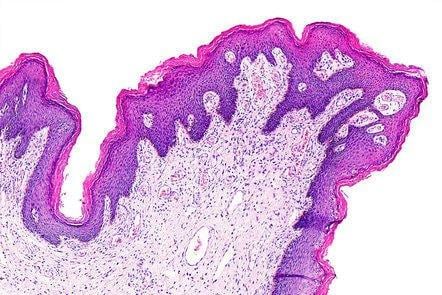
Get an introduction to histology – the study of anatomy at a microscopic level – and find out how it is used to identify disease. Histology is a key part of modern medicine – it helps us study cells and tissues at a microscopic level, and accurately diagnose diseases such as cancer. This online course introduces the field. It starts with the basic principles of light microscopy, before focussing on the structure and function of human tissues, and the relationships between them.

Class Deals by MOOC List - Click here and see FutureLearn's Active Discounts, Deals, and Promo Codes.

You’ll use a virtual microscope to compare normal tissues with pathological (or diseased) ones, and use histopathology to identify and diagnose each disease.
The course was produced with the kind support of Dangoor Education.

What topics will you cover?

  • An introduction to histology and the role or histopathology in diagnosis of disease
  • Development of skills in using a light microscope and understanding the potentials and limits of the instrument
  • Description of how histological slides are produced, stained and interpreted
  • Development of the ability to identify a number of cell types and tissues from their histological appearance
  • Description of the structures of a number of tissues with relationship to their functions
  • Description of some major pathological changes and their histological appearance
  • Development of the ability to identify histopathological changes and their relationship to the underlying disease processes

What will you achieve?
By the end of the course, you'll be able to...

  • Apply and understand the basic principles of microscopy
  • Identify a number of the more common tissues from their histological appearance
  • Assess and understand the relationship between the structure of some tissues seen under the microscope and their function
  • Identify gross histological abnormalities, such as neurodegeneration, inflammation and cancer

Go to Class
MOOC List is learner-supported. When you buy through links on our site, we may earn an affiliate commission.

Related Courses

Nanotechnology: A Maker’s Course (Coursera) Coursera
Duke University,University of North Carolina,North Carolina State University

Nanotechnology: A Maker’s Course (Coursera)

How can we create nano-structures that are 10,000 times smaller than the diameter of a human hair? How can we “see” at the nano-scale? Through instruction and lab demonstrations, in this course you will obtain a rich understanding of the capabilities of nanotechnology tools, and how to use this equipment for nano-scale fabrication and characterization.

Jun 15th 2026
5-12 Weeks
Exploring Anatomy: The Human Abdomen (FutureLearn) FutureLearn
University of Leeds

Exploring Anatomy: The Human Abdomen (FutureLearn)

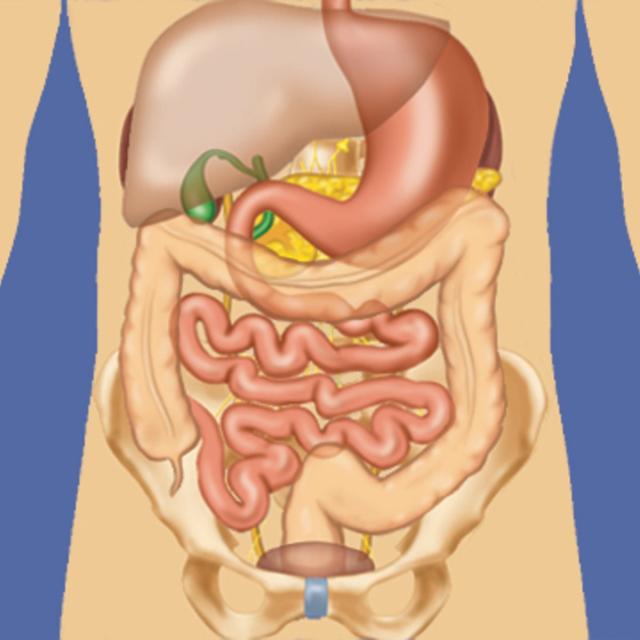
Explore the anatomy of the human abdomen and appreciate its clinical importance. You will be introduced to the human abdomen and its many complex structures through stimulating discussions on common surgical scenarios and current research. Each week, we will focus on a specific area of the abdomen; starting at the anterior abdominal wall and be able to detail the anatomy of numerous organs including the stomach and liver.

Sep 23rd 2024
3 Weeks
Mini Medical School: Introduction to Medical Science (FutureLearn) FutureLearn
University of Colorado System

Mini Medical School: Introduction to Medical Science (FutureLearn)

Discover the science underpinning modern medical practice today and how to maintain and promote good physical and mental health. Master the basics of medicine with the University of Colorado School of Medicine. This three-week course offers you a fascinating and informative introduction to modern medicine.

Jul 5th 2021
3 Weeks
Visualizing the Living Body: Diagnostic Imaging (Coursera) Coursera
Yale University

Visualizing the Living Body: Diagnostic Imaging (Coursera)

This course teaches learners the underlying principles behind conventional radiography, computerized axial tomography (CT), magnetic resonance imaging (MRI), and ultrasound. The radiology of chest, abdomen, pelvis, extremities, spine and brain are taught in this course using a combination of lectures and extensive practical activities and assessments.

Jun 15th 2026
5-12 Weeks
Human Anatomy: Musculoskeletal Cases (edX) EdX
HarvardX,Harvard University

Human Anatomy: Musculoskeletal Cases (edX)

Learn the anatomy basic to understanding five musculoskeletal injuries commonly seen in primary care medicine and orthopedic clinical specialty practice. Follow hypothetical patients from injury to operating room. Human Anatomy: Musculoskeletal Cases invites students to join medical and basic science faculty at Harvard Medical School (HMS) to learn about musculoskeletal injuries commonly seen in clinical practice.

Self Paced
Self-Paced
Anatomie du Bois (FUN) FUN
Université de Lorraine

Anatomie du Bois (FUN)

Par ses multiples expériences, l’homme a découvert quelles étaient les meilleures essences de bois pour répondre à chacun de ses besoins en matériaux ou en sources d’énergie. Le premier objectif de ce MOOC est de relier le bois en tant que tissu dans l’arbre et le bois en tant que matériau dans la vie des hommes. A la croisée de ces deux mondes, se trouve l’anatomie, c’est-à-dire la structure cellulaire, qui permet de comprendre presque toutes les propriétés du bois.

Jan 10th 2022
5-12 Weeks
Birds 101: Introduction to Pet Birds (edX) EdX
The University of Tennessee

Birds 101: Introduction to Pet Birds (edX)

Learn to care for your pet birds, from parrots to finches, by studying nutrition & husbandry, behavioral characteristics, and common veterinary procedures. Birds are amazing animals! They are extremely intelligent, quite social, and some can make ideal companions! From parrots to parakeets, chickens to canaries and cockatoos, there are many species of birds to choose from when considering these feathered friends as pets.

No sessions available
4 Weeks
ImageInLife - Imaging the Vertebrate embryo: from biological material to modelling (FUN) FUN
Université de Montpellier

ImageInLife - Imaging the Vertebrate embryo: from biological material to modelling (FUN)

Microscopy technologies have progressed to such a point that it is now possible to image a developing vertebrate at the single cell resolution. Two main model species are being used for such studies, the zebrafish and the mouse. The present MOOC introduces the trainees to these two animal models, to the most modern microscopy technologies, to the use of high volume of data (images) and to the modelling of the studied processes. Trainees will also be introduced to the intravital study of viral infections.

Aug 24th 2021
5-12 Weeks
Developing the SIR Model (Coursera) Coursera
Imperial College London

Developing the SIR Model (Coursera)

Compartmental modelling is a cornerstone of mathematical modelling of infectious diseases and this course will introduce some of the basic concepts in building compartmental models, including how to interpret and represent rates, durations and proportions. You'll learn to place the mathematics to one side and concentrate on gaining intuition into the behaviour of a simple epidemic, and be introduced to further basic concepts of infectious disease epidemiology, such as the basic reproduction number (R0) and its implications for infectious disease dynamics.

Jun 15th 2026
4 Weeks
Anatomy of the Chest, Abdomen, and Pelvis (Coursera) Coursera
Yale University

Anatomy of the Chest, Abdomen, and Pelvis (Coursera)

Human structure is important to all of us as it has been for millennia. Artists, teachers, health care providers, scientists and most children try to understand the human form from stick figure drawings to electron microscopy. Learning the form of people is of great interest to us – physicians, nurses, physician assistants, emergency medical services personnel and many, many others. Learning anatomy classically involved dissection of the deceased whether directly in the laboratory or from texts, drawings, photographs or videos. There are many wonderful resources for the study of anatomy. Developing an understanding of the human form requires significant work and a wide range of resources.

Jun 8th 2026
4 Weeks