EdX

Electrochemistry (edX)

Electrochemistry (edX)

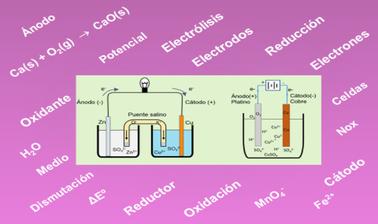
Learn the significance of electrochemistry, understanding how electrical, chemical, and mechanical energy are linked. What is the chemistry and mechanics behind an electric car versus a gas-powered car — and why do you feel a difference driving them? The discipline of electrochemistry is not new, but it has regained prominence due to the emergence of energy production, energy storage, and technological innovations driven by both science and public policy. Given the rise of global energy demand, research and inventions aim to meet these challenges.

Class Deals by MOOC List - Click here and see EdX's Active Discounts, Deals, and Promo Codes.

To understand electrochemistry, you will combine the concepts of Gibbs Free Energy, electron flow, and chemical transformation. In this course, you will explore key concepts of acid-base reactions and their relation to chemical equilibrium. You will learn the significance of electrochemistry, understanding how electrical, chemical, and mechanical energy are linked.
By the end of the course, you will be able to identify differences in efficiencies between renewable energy sources and fossil fuel-based ones, including which battery types are leading the transition away from fossil fuels.
This course is part of the University Chemistry MicroBachelors Program.

What you'll learn

  • Describe key concepts of acid-base chemistry and equilibrium reactions involving acids and bases
  • Understand the significance of electrochemistry, how it relates to other fields of science, and how it is applied in real life
  • Understand what it means for an element to be "oxidized" or "reduced"
  • Identify the differences in efficiency between renewable primary energy from electrochemical energy sources with primarily fossil fuel-based energy ones
  • Describe the reactions occurring in an electrochemical (voltaic) cell

Identify how different types of batteries differ in their energy storage efficiency

Go to Class
MOOC List is learner-supported. When you buy through links on our site, we may earn an affiliate commission.

Related Courses

Solid State Devices 1 (edX) EdX
Purdue University,PurdueX

Solid State Devices 1 (edX)

Semiconductor are everywhere in human activities, from your credit card to space exploration. This graduate-level introduction brings aspects of physics, chemistry, and engineering together to understand, analyze, and design transistors and solar cells. This course provides the graduate-level introduction to understand, analyze, characterize and design the operation of semiconductor devices such as transistors, diodes, solar cells, light-emitting devices, and more.

Jan 9th 2023
13-24 Weeks
Quantum Mechanics (edX) EdX
Georgetown University,GeorgetownX

Quantum Mechanics (edX)

Learn the quantum mechanics needed to prepare you for the second quantum revolution (focused on quantum sensing). We use a new way to teach quantum for undergraduates by focusing on conceptual ideas and operator manipulations. This allows us to discuss more applications to experiment usually done. You need a background in the full calculus sequence and in math methods. Freshman physics and modern physics is recommended. This course is appropriate for physicists, chemists and engineers.

Aug 21st 2023
13-24 Weeks
Introduction to Solid State Chemistry (edX) EdX
MIT,MITx

Introduction to Solid State Chemistry (edX)

Learn chemical principles by examining materials with examples from energy generation and storage to emerging technologies. This first-year University chemistry course explores the basic principles of the chemical bond by studying the properties of solids. Properties such as stiffness, electrical conductivity, thermal expansion, strength, and optical properties are the vehicle by which you can learn a great deal of practical chemistry.

Sep 6th 2023
13-24 Weeks
Synchrotrons and X-Ray Free Electron Lasers (part 2) (edX) EdX
École Polytechnique Fédérale de Lausanne,EPFLx

Synchrotrons and X-Ray Free Electron Lasers (part 2) (edX)

The first MOOC to provide an extensive introduction to synchrotron and XFEL facilities and associated techniques and applications. Are you interested in investigating materials and their properties with unsurpassed accuracy and fidelity? Synchrotrons and XFELs count as Science’s premier microscopic tool in scientific endeavours as diverse as molecular biology, environmental science, cultural heritage, catalytical chemistry, and the electronic properties of novel materials, to name but a few examples.

Self Paced
Self-Paced
Effects of Radiation: An Introduction to Radiation and Radioactivity (edX) EdX
OECx,Open Education Consortium - OEC

Effects of Radiation: An Introduction to Radiation and Radioactivity (edX)

There are many practical applications of radiation and radioactivity in various fields, including medical, scientific, and industrial activities. In some parts of Japan, people continue to experience environmental radioactivity caused by the nuclear accident at the Fukushima Daiichi Nuclear Power Plant on a daily basis. Understanding the basic science of radiation and radioactivity will form the base of the course, with specific examples from Japan and elsewhere in the world to illustrate concepts.

No sessions available
4 Weeks
Big Bang and the Origin of Chemical Elements (edX) EdX
Seoul National University,SNUx

Big Bang and the Origin of Chemical Elements (edX)

Discover the ultimate origin of all chemical elements essential for life. Explore the Big Bang through Nobel Lectures and scientific papers in part 2 of Life in the Universe. This course will start with the nuclear structure of atoms and discuss the creation of hydrogen in the big bang universe and the fusion of hydrogen to make heavier elements in stars. Three pillars of the big bang cosmology will be elaborated.

This course is archived
4 Weeks
Cement Chemistry and Sustainable Cementitious Materials (edX) EdX
École Polytechnique Fédérale de Lausanne,EPFLx

Cement Chemistry and Sustainable Cementitious Materials (edX)

Learn the basics of cement chemistry and laboratory best practices for assessment of its key properties. Every day, we see concrete used all around us – to build our houses, offices, schools, bridges, and infrastructure. But few people actually understand what gives concrete its strength, resistance, and utility. The aim of this course is to offer basic cement chemistry to practitioners, as well as new students in the fields of chemistry and engineering.

Self Paced
Self-Paced
Entropy and Equilibria (edX) EdX
HarvardX,Harvard University

Entropy and Equilibria (edX)

Expand your learning of chemistry and thermodynamics by exploring entropy, free energy, and equilibrium. Nature is driven by spontaneity — processes that move forward without external intervention. In this course, Entropy and Equilibria , you will explore the Second Law of Thermodynamics and get an introduction to the concepts of entropy and equilibrium states.

Self Paced
Self-Paced