EdX

Food Fermentation: The Science of Cooking with Microbes (edX)

Food Fermentation: The Science of Cooking with Microbes (edX)

In Food Fermentation: The Science of Cooking with Microbes, explore the history of food and beverage fermentations and how tiny microbes change and enhance flavors, aromas, and tastes in our food. What’s living in your food? Many of the foods that we consume daily owe their distinct characteristics and flavors to microbes, specifically through a biochemical process of fermentation (using bacteria, fungi, and other microorganisms to produce diverse foods).

Class Deals by MOOC List - Click here and see EdX's Active Discounts, Deals, and Promo Codes.

Gourmands and everyday consumers can quickly name some of the most popular fermented foods we consume—beer, yogurt, pickles—but, what about that coffee you drank this morning, or the chocolate bar you are saving for later?
Through hands-on, at-home exercises, you will experiment with your food to grow your own microbial environments to make mead, sourdough, tempeh, and more—and discover the important role science plays in food fermentation. In Food Fermentation: The Science of Cooking with Microbes, you will explore the history of food and beverage fermentations and how it changes and enhances flavors, aromas, and tastes. You will engage with your peers in kitchen science, discussing how and why fermentation does or does not happen and what conditions you should consider to create the right growth opportunities.
From chemistry to microbiology to your dinner plate, this course will analyze the role of microbes in production, preservation, and enhancement of diverse foods across a variety of culinary traditions.
Ignore the old adage. Are you ready to play with your food?

What you'll learn

  • Have a greater understanding and appreciation of fermented foods and their history, culture and science
  • Have a deeper knowledge of beneficial microbes to preserve food and harmful microbes that can contaminate food
  • Have examined the underlying chemistry and microbiology of different kinds of fermentation through hands-on experiments— and honed your skills in experimental design, data analysis, and interpretation.
  • Learned the scientific principles and application of instruments used for chemical and microbial characterization
  • Explored the chemistry of flavor molecules including the physiology of flavor and the microbial reactions that produce flavor molecules and other metabolites

Syllabus

  • Fermentation basics: simple fermentations starting with carbohydrates (bread and mead)
  • Fermenting with lactic acid bacteria: pickles, sauerkraut, yogurt, and fresh cheese
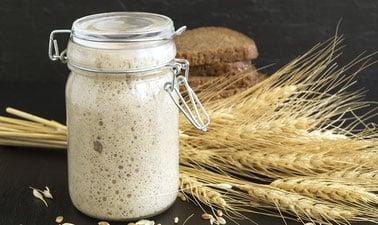
  • Microbial communities: beer, sourdough, kefir and kombucha
  • Flavor production, with a focus on wine and vinegar
  • Fermenting with filamentous fungi: amazake, soy sauce, and tempeh
  • Aged meat and cheese
  • Ecological succession in fermentation: chocolate and coffee
Go to Class
MOOC List is learner-supported. When you buy through links on our site, we may earn an affiliate commission.

Related Courses

Modern Biotechnologies for Wastewater Treatment (edX) EdX
Purdue University,PurdueX

Modern Biotechnologies for Wastewater Treatment (edX)

This course introduces modern biotechnologies for wastewater treatment. Modern biotechnologies have been widely used in clinical diagnosis, food production, and the pharmaceutical industry. Their applications in wastewater treatment have greatly improved the accuracy and efficiency of characterizing biological systems in biological wastewater treatment plants and the natural environment.

Mar 27th 2023
5-12 Weeks
Nutrition and Health: Food Risks (edX) EdX
Wageningen University,WageningenX

Nutrition and Health: Food Risks (edX)

Learn about bacteria, pesticides and health hazards present in food. Everyday reports of food scandals and recalls are published. One day it’s scary bacteria in meat, and another day it’s dangerous pesticides in fruits. According to some, meat needs to be cooked well to prevent food-borne illness while others warn not to heat food to prevent the formation of poisonous substances.

Self Paced
Self-Paced
Chemical Thermodynamics I: Thermodynamics and Statistical Mechanics (edX) EdX
MIT,MITx

Chemical Thermodynamics I: Thermodynamics and Statistical Mechanics (edX)

Based on 5.601 Thermodynamics I, this course introduces learners to fundamental concepts in thermodynamics and statistical mechanics. Learners will develop an understanding of fundamental thermodynamic principles and how they arise from molecular scale system properties. This course is the first in a series of two thermodynamics courses that together, cover chemical thermodynamics, statistical mechanics, phase equilibria, and kinetics.

Apr 14th 2022
5-12 Weeks
Thermodynamics (edX) EdX
IIT Bombay,IITBombayX

Thermodynamics (edX)

Introduction to basic concepts and applications of thermodynamics in mechanical engineering. ME209x is a basic course in thermodynamics, designed for students of mechanical engineering. We will study the terms and concepts used in thermodynamics, with precise definitions. The three laws of thermodynamics (zeroth, first, and second) will be explored in detail, and the properties of materials will be studied.

No sessions available
5-12 Weeks
Science & Cooking: From Haute Cuisine to Soft Matter Science (chemistry) (edX) EdX
HarvardX,Harvard University

Science & Cooking: From Haute Cuisine to Soft Matter Science (chemistry) (edX)

Top chefs and Harvard researchers explore how everyday cooking and haute cuisine can illuminate basic principles in chemistry, physics, and engineering. Learn about food molecules and how chemical reactions can affect food texture and flavor. During each module of this course, chefs reveal the secrets behind some of their most famous culinary creations — often right in their own restaurants. Inspired by such cooking mastery, the Harvard team will then explain the science behind the recipe.

Self Paced
Self-Paced
Solid State Devices 1 (edX) EdX
Purdue University,PurdueX

Solid State Devices 1 (edX)

Semiconductor are everywhere in human activities, from your credit card to space exploration. This graduate-level introduction brings aspects of physics, chemistry, and engineering together to understand, analyze, and design transistors and solar cells. This course provides the graduate-level introduction to understand, analyze, characterize and design the operation of semiconductor devices such as transistors, diodes, solar cells, light-emitting devices, and more.

Jan 9th 2023
13-24 Weeks