Climate Adaptation in Africa (Coursera)

Climate Adaptation in Africa (Coursera)

This course explores why climate change adaptation is important in the African context. Africa is considered one to be one of the most vulnerable regions to climate change. Historically, climate-related hazards such as drought, flooding, pest and disease outbreaks, coastal storms and heat waves have had devastating impacts on people and the environment in which they live.

Class Deals by MOOC List - Click here and see Coursera's Active Discounts, Deals, and Promo Codes.

Often the damage knocks back progress that has been made in social and economic development, slowing down the achievement of development goals. Climate models suggest that many of these climatic hazards will intensify as the global climate warms. Building resilience to climate risks, through adaptation, is critically important for future development in Africa.
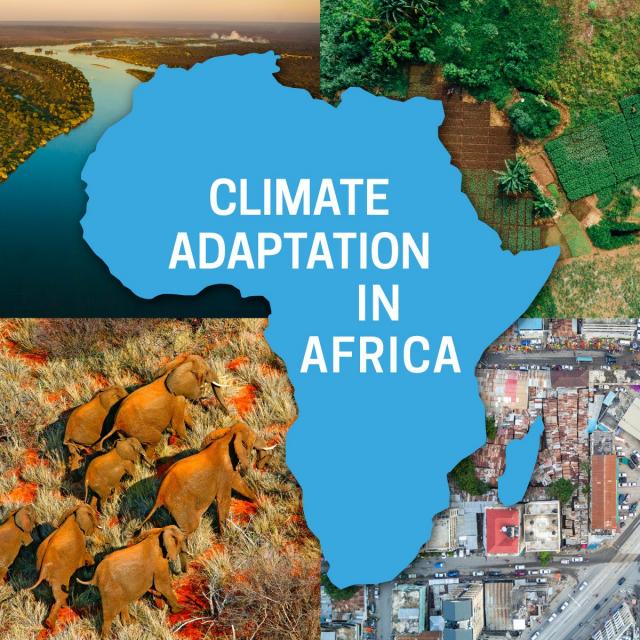
The course will examine adaptation in theory and in practice, through a focus on four sectors that are critically important for climate resilient development in Africa: Water Security, Agriculture and Food Security, Ecosystems and Ecosystem Services and Resilient Cities.

Syllabus

Week 1
Climate, Vulnerability and Development in Africa
We start by exploring the linkages between social and economic development in Africa and climate change. We look at the anticipated changes in the future climate of the region and how this could impact on the development trajectory. I cover both contemporary climate risks and future climate change and how those interact with development. I also introduce the key concepts around climate adaptation that this course in based on.

Week 2
Water Security
We'll start by examining the nature of risks to water security and the approaches to adaptation to changes in water supply - whether it is dealing with greater scarcity or more extreme weather events such as flooding. Water security is a key factor in social and economic development. Responding involves investigating climate adaptation strategies, especially at a regional level, not just at a global scale. The cases this week, presented by experts working on water security issues, are from Lesotho and South Africa.

Week 3
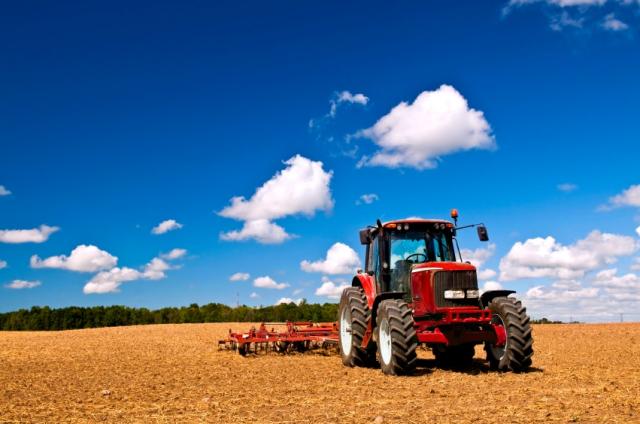
Agriculture and Food Security
We’ll start off looking at the nature of agriculture across regions in Africa and the current situation of food security. Eradicating poverty through creating food security is a key sustainable development goal. We will analyse food security in terms of availability, access and utilisation - and how each of these aspects can be affected by climate change. I’ll be providing some information about the projected impacts of climate change on agriculture before moving onto look at adaptative strategies. The cases this week offer a rich variety of contextual examples from smart agriculture in Mauritius to changes being made by Namibian livestock farmers.

Week 4
Ecosystems and Ecosystem Services
This week we’ll examine the mechanisms which make ecosystems vulnerable to climate change and other human-driven impacts. Ecosystems and the services they provide play a significant role for the livelihoods of people living across Africa. We will also look at the observed and projected impacts of the changing climate. We look at adaptation strategies from Tanzania as cases that illustrate some of the important issues.

Week 5
Cities and the Urban Environment
With the higher concentrations of population in cities, comes a higher exposure to risk from climate change impacts. In African cities, many people live in informal settlements, which make them particularly at risk. Cities have many assets - such as transport, telecommunications, building and critical infrastructure - that are vulnerable to damage from extreme weather events. As cities serve as economic and political hubs, damage or disruption in cities can often have a larger impact on the region or even entire country. Adaptation measures for cities is a complex as there are intersecting issues. Our cases this week look at three cities - Maputo, Cape Town and Durban - which illustrate the adaptations being adopted.

Week 6
Planning for Climate Change
In this final week, we move from assessing risk to making adaptation plans. There are adaptation planning tools which are especially helpful for identifying the key steps in making an adaptation plan. An early stage of such processes is to assess the current vulnerabilities which for African contexts means we look at the deficits and begin implementing adaptation right away. This can have both an immediate valuable outcome as well as an anticipated positive impact in the future. Later adaptation planning stages involve identifying key stakeholders and building partnerships, as well as mobilising resources to make it happen. Having the resources and organisational capacity is key as seen in our cases from across a variety of socio-political contexts, resources and levels of governance.

Go to Class
MOOC List is learner-supported. When you buy through links on our site, we may earn an affiliate commission.

Related Courses

An Introduction to the U.S. Food System: Perspectives from Public Health (Coursera) Coursera
Johns Hopkins University

An Introduction to the U.S. Food System: Perspectives from Public Health (Coursera)

A food system encompasses the activities, people and resources involved in getting food from field to plate. Along the way, it intersects with aspects of public health, equity and the environment. In this course, we will provide a brief introduction to the U.S. food system and how food production practices and what we choose to eat impacts the world in which we live. Through several case studies, we will discuss some key historical and political factors that have helped shape the current food system and consider alternative approaches from farm to fork.

Jun 22nd 2026
5-12 Weeks
How Do We Manage Climate Change? (Coursera) Coursera
University of Colorado Boulder

How Do We Manage Climate Change? (Coursera)

In this course, learners will identify the types of actions that we can pursue to address climate change. These actions fall into two broad categories: 1) mitigation, which refers to efforts to reduce greenhouse gas emissions or enhance carbon sinks, and 2) adaptation, which refers to our preparations for climate impacts. We will explore the technologies, programs, and policies related to both mitigation and adaptation. Learners should leave the course with an improved ability to identify and evaluate climate actions undertaken by communities, governments, and businesses.

Jun 29th 2026
3 Weeks
Population, Food, and Soil (Coursera) Coursera
Dartmouth College

Population, Food, and Soil (Coursera)

This course explores the population-environment relationship. In this course, you will learn about the human population and the ways in which changes in the population affect the environment. Agriculture, soils, and the environmental implications of eating meat, vegetables, local, organic, sustainable, industrial, and other types of food are discussed too.

Jun 29th 2026
4 Weeks
Sustainability and the Circular Economy (Coursera) Coursera
University of Colorado Boulder,Siemens

Sustainability and the Circular Economy (Coursera)

As the world’s population continues to rise toward an expected 10 billion citizens by 2050, it is imperative that business practices change to ensure a high quality of life is possible for all of us, both human and non-human. Today’s learners are very aware of this. Moreover, they are highly motivated and have the extraordinary capacity to create a future that provides both economic success and a more enduring, resilient, and sustainable planet. If you are one of these learners, then Sustainability and the Circular Economy is a course for you.

Jun 29th 2026
5-12 Weeks
Planetary Health for Nurses (Coursera) Coursera
Yale University

Planetary Health for Nurses (Coursera)

Nurses can play a central role in mitigating and adapting to current and future health threats from climate change. This course provides nurses with tailored information about climate change related stressors and how they impact the health of populations and communities around the world. This course will also provide actionable steps, focused primarily on adaptation, that nurses can take to address and prepare for these health impacts at the individual level, the health-system level, and the community level.

Jun 29th 2026
5-12 Weeks
Science and Engineering of Climate Change (Coursera) Coursera
EDHEC Business School

Science and Engineering of Climate Change (Coursera)

Global warming is one of the most significant challenges of the century and tackling it in the most effective way requires a good understanding of its physical, social and financial aspects. The Science and Engineering of Climate Change course offers an introduction to the science of climate change and to the existing technologies to mitigate its effects. Are we sure that the climate is changing? How confident are we that climate change is anthropogenic? Are we heading for a climate catastrophe? Why are greenhouse gases associated with global warming?

Jun 29th 2026
4 Weeks
Constitutional Struggles in the Muslim World (Coursera) Coursera
University of Copenhagen

Constitutional Struggles in the Muslim World (Coursera)

Learn what motivates the restive Muslim youth from Tunis to Tehran, what political positions Islamists from Mali to Chechnya are fighting for, where the seeming obsession with Islamic law comes from, where the secularists have vanished to, and whether it makes sense to speak of an Islamic state. This course is a survey of the constitutional ideas and institutions that have developed since the mid 19th century throughout predominantly Muslim countries, but its focus will lie on the actors that have dominated this discourse and shaped its outcomes. We will look at the large body of classical writings on the Islamic state only in so far as it is necessary to understand the contemporary debate, but concentrate on the legal and political developments of the 20th and 21st centuries.

Jun 22nd 2026
5-12 Weeks
Driving business towards the Sustainable Development Goals (Coursera) Coursera
Erasmus University Rotterdam

Driving business towards the Sustainable Development Goals (Coursera)

Extreme weather events, wars, famine and environmental destruction are just a few of the wicked problems faced by humanity. That’s why in 2015 the United Nations adopted the 2030 Agenda for Sustainable Development. This agenda includes 17 Sustainable Development Goals (SDGs) that target the big challenges such as how to eliminate poverty, how to protect the environment and how to bring about peace. Every member state committed to achieving these goals by 2030. What can businesses do to counter climate change and create a sustainable business culture? Why is this relevant for business anyway? Explore how business can contribute to a better future for people AND the planet without giving up profits.

Jun 29th 2026
5-12 Weeks
Explorando la Energía Sustentable (Coursera) Coursera
Pontificia Universidad Católica de Chile

Explorando la Energía Sustentable (Coursera)

Este curso introductorio aborda conceptos de energía sustentable y describe tecnologías avanzadas que pueden sustituir progresivamente las actuales dominadas por el carbón, el petróleo y gas natural, cuyas emisiones está perturbando progresivamente el clima, lo que puede afectar el desarrollo y la convivencia internacional.

Jun 29th 2026
4 Weeks
Climate Change Mitigation in Developing Countries (Coursera) Coursera
University of Cape Town

Climate Change Mitigation in Developing Countries (Coursera)

This course challenges you to consider how one might lift societies out of poverty while also mitigating greenhouse gas emissions. We explore the inherent complexity of developing country governments wanting to grow their economies in a climate friendly way. You will be introduced to an approach with which to address this challenge. The approach consists of a facilitated process whereby academic researchers and high-level influential actors within society co-produce knowledge. You will track this process in four Latin American countries - Brazil, Chile, Colombia, Peru, and South Africa. You will hear from various professionals about their contexts and the different challenges and opportunities the process includes.

Jun 29th 2026
5-12 Weeks
Sustainability Challenges for the Planet and Employers (Coursera) Coursera
Arizona State University

Sustainability Challenges for the Planet and Employers (Coursera)

This course builds on the foundational knowledge gained in the first course in the series. Learners will continue to shape their understanding of global problems like climate change while developing their skills in using sustainability indicators, managing waste streams, addressing challenges, and providing green building recommendations.

Jun 29th 2026
5-12 Weeks