EdX

Exploring Volcanoes and Their Hazards: Iceland and New Zealand (edX)

Exploring Volcanoes and Their Hazards: Iceland and New Zealand (edX)

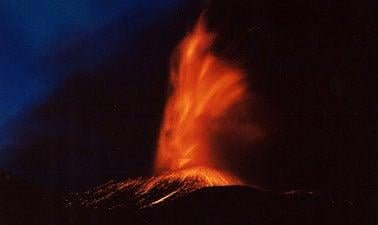
Experience the science of volcanology whilst learning the skill set of a volcanologist on a virtual fieldtrip to volcanoes in Iceland and New Zealand. In this course, you will learn the scientific terminology and skills of a field volcanologist. Unlike most courses, we will be taking you outside of the classroom. These field experiences are where volcanologists get their hands dirty and really learn the tools of the trade.

Class Deals by MOOC List - Click here and see EdX's Active Discounts, Deals, and Promo Codes.

We will take you on an interactive tour around Icelandic volcanoes where we will be talking to experts on location, digging holes to discover past eruptions, and hearing amazing stories of survival. We will discuss how to better manage volcanic hazards, using examples in New Zealand drawing on Māori knowledge. You will also get to explore rocks and landscapes while navigating around 360° videos and 3D landscapes and rock samples. You will gauge your learning all along the way, building knowledge and skills, and thinking about why volcanoes matter to you.

What you'll learn

  • Describe why volcanoes erupt in Iceland and New Zealand.
  • Use the field skills of a volcanologist to describe volcanic rocks and landscapes.
  • Explain why different volcano types have different eruption hazards.
  • Apply field data and historic eruption stories to discuss volcanic hazard implications in different locations in Iceland and New Zealand.
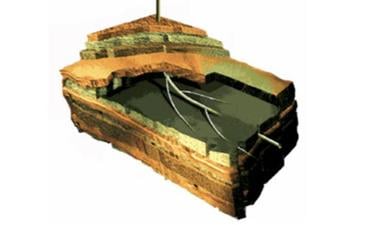
  • Evaluate a plan to drill into a magma chamber, weigh up the societal benefits such as renewable geothermal energy and better eruption prediction with risks and costs.
Go to Class
MOOC List is learner-supported. When you buy through links on our site, we may earn an affiliate commission.

Related Courses

Energy Within Environmental Constraints (edX) EdX
HarvardX,Harvard University

Energy Within Environmental Constraints (edX)

A quantitative introduction to the energy system and its environmental impacts. Humanity faces an immense challenge: providing abundant energy to everyone without wrecking the planet. If we want a high-energy future while protecting the natural world for our children, we must consider the environmental consequences of energy production and use. But money matters too: energy solutions that ignore economic costs are not realistic, particularly in a world where billions of people currently can’t afford access to basic energy services. How can we proceed?

Self Paced
Self-Paced
Risk Communication (KTU) Other Providers
Kaunas University of Technology - KTU

Risk Communication (KTU)

This MOOC provides practical tips, hands-on tools and the most recent examples for the effective risk communication. Course is open for everyone who is interested in individual, national or global risks in contemporary world and would like to acquire skills in designing, visualising and using media for risk messages. This course is based on the Erasmus+ project "Risk and Security Governance Studies within Baltic – Nordic Academic Community of Practice".

No sessions available
5-12 Weeks
Volcanology field science and society (edX) EdX
University of Canterbury,UCx

Volcanology field science and society (edX)

In this introductory course, you will use interactive technologies to learn the science of how volcanoes work and the skills of a field volcanologist. You will explore the intersection of field volcanology and society, by looking into cultural perspectives of volcanoes, hazard mapping and communication using examples in Aotearoa New Zealand and drawing on Mātauranga Māori (Māori knowledge).

Self Paced
Self-Paced
Smart Cities: Social Change Through Technology (FutureLearn) FutureLearn
University of Canterbury

Smart Cities: Social Change Through Technology (FutureLearn)

Learn from New Zealand’s inspirational smart city projects, and see how you can apply these principles to your own context. Gain insights into smart cities from the experts at the University of Canterbury. Smart cities harness the power of digital technology. Through innovative data collection, cities can use these insights to manage resources and operations more efficiently, and promote sustainable development.

Jan 31st 2022
5-12 Weeks
Monitoring the Oceans from Space (FutureLearn) FutureLearn
EUMETSAT

Monitoring the Oceans from Space (FutureLearn)

Explore our oceans from space. Discover how Earth observation allows us to monitor ocean health, and inform policy and planning. This free online course will provide an introduction to ocean monitoring Earth Observation (EO) satellite data, and its uses, types and challenges. It will explain how the data is acquired and used, the range of data types available, and the terminology and techniques involved.

No sessions available
5-12 Weeks
Volcanic hazards (edX) EdX
University of Canterbury,UCx

Volcanic hazards (edX)

In this course, we will take you on an interactive tour around Icelandic volcanoes where we will be talking to experts on location, digging holes to discover past eruptions, and hearing amazing stories of survival. We will discuss how to better manage volcanic hazards, using examples of volcanoes in Iceland and Aotearoa New Zealand.

Self Paced
Self-Paced
Plasma Physics: Introduction (edX) EdX
École Polytechnique Fédérale de Lausanne,EPFLx

Plasma Physics: Introduction (edX)

Learn the basics of plasma, one of the fundamental states of matter, and the different types of models used to describe it, including fluid and kinetic. Plasma, the fourth state of matter, is by far the most abundant form of known matter in the universe. Its behavior is very different from the other states of matter we are usually familiar with.

Self Paced
Self-Paced
Introduction to Environmental Science (edX) EdX
DartmouthX,Dartmouth College

Introduction to Environmental Science (edX)

A scientific study of the natural world and how it is influenced by people. Major topics include: food, energy, human population, biodiversity and global change. Environmental science is the study of patterns and processes in the natural world and their modification by human activity. To understand current environmental problems, we need to consider physical, biological and chemical processes that are often the basis of those problems.

Self Paced
4 Weeks
Solar Energy: Photovoltaic (PV) Technologies (edX) EdX
Delft University of Technology,DelftX

Solar Energy: Photovoltaic (PV) Technologies (edX)

Explore the main PV technologies in the current market. Get in-depth knowledge on the design and processing methods of solar cells. The technologies used to produce solar cells and photovoltaic modules are advancing to deliver highly efficient and flexible solar panels. In this course you will explore the main PV technologies in the current market.

Self Paced
5-12 Weeks