The Oral Cavity: Portal to Health and Disease (Coursera)

The Oral Cavity: Portal to Health and Disease (Coursera)

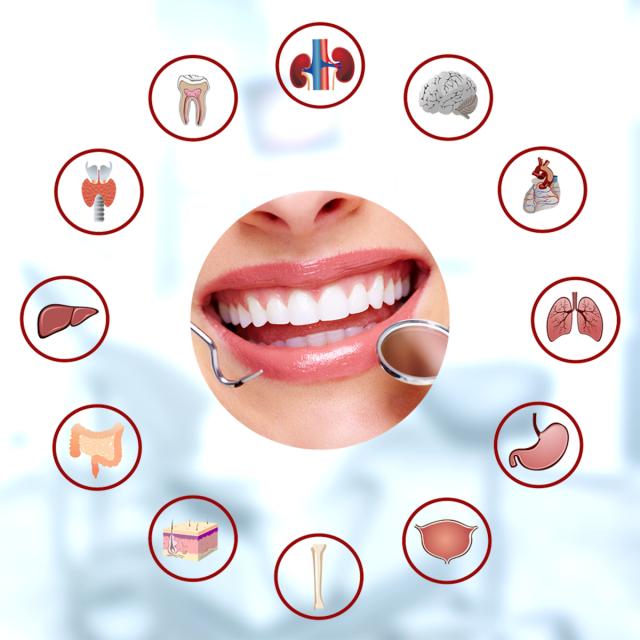
This course will focus on the interprofessional realtionship of dentistry and medicine. For each session, the medical specialist will present a broad overview of specific disease entity which will be followed by a dental educator discussing the relevant oral manifestations and implications. The final module of each session will be devoted to the interaction between the dental and other health care professionals.

Class Deals by MOOC List - Click here and see Coursera's Active Discounts, Deals, and Promo Codes.

Syllabus

WEEK 1
The Interplay Between Medicine and Dentistry
This course will use the expertise of specialists from both medicine and dentistry to provide perspectives on a wide range of topics that significantly impact both fields. By explaining each field and the ways in which dental and medical specialists work together to manage affected patients, these specialists highlight the interdisciplinary nature of health care today using a particular example each week. In our introductory videos, we introduce the importance of these topics and of the interplay between medicine and dentistry through the lens of the specialty of oral medicine.

WEEK 2
Pain management: approaches and challenges
In Week 2, we will discuss pain, both as a general concept and as it relates to certain conditions. This will include defining pain and its types, discussing multiple treatment modalities, and explaining some pains specific to the head and neck region. From both an oral medicine and pain management perspective, this difficult topic will be examined and expert diagnosis and treatment opinions will be provided.

WEEK 3
Diabetic patients and their care
Week 3 focuses on diabetes, a very prevalent, but often not well understood disease that materially impacts both medicine and dentistry. Our discussion of this topic will include an in depth description of types of diabetes, treatments and how they differ based on type, and lifestyle management of these patients. It will also deal with dental management of the diabetic patient specifically, including recommendations for how to approach treatment of patients with diabetes.

WEEK 4
Endocrine disorders: understanding thyroid cancer and osteoporosis
In week 4, we will continue our discussion of endocrine diseases by covering two other relatively common conditions, thyroid cancer and osteoporosis. Both of these diseases present significant challenges to dental management of patients as well as presenting interesting and difficult medical challenges. For both diseases, the epidemiology, diagnosis, and treatment will be covered and related to the impact of the disease on dental care and some important negative effects to be aware of in the oral cavity.

WEEK 5
Care of cardiovascular diseases and infections
This week will review management of cardiac conditions, both generally and specifically in dental medicine. This will include explanations of some of the most prevalent cardiac conditions as well as discussion on the difficulties of treating select patients. This provides a widely applicable but also specific overview of risks to patients generally and in the dental office, management and treatment, and ways that providers and patients can work together to ensure positive outcomes for all.

WEEK 6
Dermatologic conditions of the oral cavity
Week 6 presents an explanation of common dermatologic conditions that can frequently affect the oral cavity. The lectures in this module focus on the three most prevalent autoimmune reactions to occur in the mouth; lichen planus, pemphigoid, and pemphigus. The lectures in this week explain these conditions, comment on some possible treatments, and discuss the importance of co-management between the fields of dentistry and medicine, not to mention some specific examples of interdisciplinary division of treatment.

WEEK 7
Blood and bone marrow cancers
In this section, we will discuss blood and bone marrow cancers. This is a complex topic and our lectures will explain some of the differences between each type of these cancers in both disease characteristics and management. For management, we will review both traditional and cutting edge modalities used in certain cases. We will also discuss the importance of the oral cavity in both diagnosis and treatment of these cancers. Whether as the first sign of disease, an area affected by treatment, or a potential cause of complications, the oral cavity can truly in leukemia be a portal to health and disease.

WEEK 8
Understanding head and neck cancers
Our last section deals with a very serious and important topic, that of cancers of the head and neck region. Our lectures will explain some types of head and neck cancer, but will focus on oral squamous cell carcinoma, the most common of these. We will discuss diagnosis and management of these patients, paying attention to the important role of all providers in cancer while also providing a video of transoral robotic surgery for cancer. In this way, we will address all aspects of oral cancer treatment, from initial diagnosis to thorough treatment.

WEEK 9
Final Exam
Go to Class
MOOC List is learner-supported. When you buy through links on our site, we may earn an affiliate commission.

Related Courses

Case Studies in Personalized Medicine (Coursera) Coursera
Vanderbilt University

Case Studies in Personalized Medicine (Coursera)

Learn how advances in biomedicine hold the potential to revolutionize drug development, drug treatments, and disease prevention: where are we now, and what does the future hold? This course will present short primers in genetics and mechanisms underlying variability in drug responses. A series of case studies will be used to illustrate principles of how genetics are being brought to bear on refining diagnoses and on personalizing treatment in rare and common diseases. The ethical and operational issues around how to implement large scale genomic sequencing in clinical practice will be addressed.

Oct 12th 2026
5-12 Weeks
Interprofessional Healthcare Informatics (Coursera) Coursera
University of Minnesota

Interprofessional Healthcare Informatics (Coursera)

Interprofessional Healthcare Informatics is a graduate-level, hands-on interactive exploration of real informatics tools and techniques offered by the University of Minnesota and the University of Minnesota's National Center for Interprofessional Practice and Education. We will be incorporating technology-enabled educational innovations to bring the subject matter to life. Over the 10 modules, we will create a vital online learning community and a working healthcare informatics network.

Oct 12th 2026
5-12 Weeks
Principles of fMRI 1 (Coursera) Coursera
Johns Hopkins University

Principles of fMRI 1 (Coursera)

Functional Magnetic Resonance Imaging (fMRI) is the most widely used technique for investigating the living, functioning human brain as people perform tasks and experience mental states. It is a convergence point for multidisciplinary work from many disciplines. Psychologists, statisticians, physicists, computer scientists, neuroscientists, medical researchers, behavioral scientists, engineers, public health researchers, biologists, and others are coming together to advance our understanding of the human mind and brain. This course covers the design, acquisition, and analysis of Functional Magnetic Resonance Imaging (fMRI) data, including psychological inference, MR Physics, K Space, experimental design, pre-processing of fMRI data, as well as Generalized Linear Models (GLM’s).

Oct 12th 2026
4 Weeks
Disease Screening in Public Health (Coursera) Coursera
University of Geneva

Disease Screening in Public Health (Coursera)

Current and future public health is characterized by the increase of chronic and degenerative diseases, corresponding to the worldwide ageing of the population. The increasing prevalence of these conditions together with the long incubation period of the chronic diseases and the restless technological innovations, offer new opportunities to develop strategies for early diagnosis.

Oct 12th 2026
5-12 Weeks
Dopage : Sports, Organisations et Sciences (Coursera) Coursera
University of Lausanne

Dopage : Sports, Organisations et Sciences (Coursera)

L'objectif du cours est de permettre une compréhension distanciée du dopage. C’est pour atteindre cet objectif que le cours s’appuie sur une approche pluridisciplinaire qui constitue une opportunité d'observer comment diverses disciplines abordent un même objet, selon différents angles et de manière complémentaire. Il s'agit également de donner des repères permettant d'appréhender le dopage dans sa complexité.

Oct 12th 2026
4 Weeks
Confronting Gender Based Violence: Global Lessons for Healthcare Workers (Coursera) Coursera
Johns Hopkins University

Confronting Gender Based Violence: Global Lessons for Healthcare Workers (Coursera)

This course introduces participants from the healthcare sector to gender based violence (GBV), including global epidemiology of GBV; health outcomes; seminal research; and clinical best practices for GBV prevention, support, and management. A core curriculum is supplemented by lectures that contextualize the content with specific examples and programs from around the world.

Oct 12th 2026
4 Weeks
Psychology of Popularity (Coursera) Coursera
University of North Carolina

Psychology of Popularity (Coursera)

The level of popularity you experienced in childhood and adolescence is still affecting you today in ways that you may not even realize. Learn about how psychologists study popularity and how these same concepts can be used in adulthood to be more successful at work, become better parents, and have a happier life.

Oct 12th 2026
5-12 Weeks
Epidemics (Coursera) Coursera
University of Hong Kong

Epidemics (Coursera)

“If history is our guide, we can assume that the battle between the intellect and will of the human species and the extraordinary adaptability of microbes will be never-ending.” Despite all the remarkable technological breakthroughs that we have made over the past few decades, the threat from infectious diseases has significantly accelerated. In this course, we will learn why this is the case by looking at the fundamental scientific principles underlying epidemics and the public health actions behind their prevention and control in the 21st century.

Oct 12th 2026
5-12 Weeks
Preventing Chronic Pain: A Human Systems Approach (Coursera) Coursera
University of Minnesota

Preventing Chronic Pain: A Human Systems Approach (Coursera)

Chronic pain is at epidemic levels and has become the highest-cost condition in health care. This course uses both creative and experiential learning to better understand chronic pain conditions and how they can be prevented through self-management in our cognitive, behavioral, physical, emotional, spiritual, social, and environmental realms.

Oct 12th 2026
5-12 Weeks
Career 911: Your Future Job in Medicine and Healthcare (Coursera) Coursera
Northwestern University

Career 911: Your Future Job in Medicine and Healthcare (Coursera)

This course aims to help high school students, recent graduates, and those considering career transitions explore health care career options and learn strategies for entry into the health care workforce and health related fields. There are lots of amazing job opportunities in medicine and healthcare! Join us, as we share the strategies and secrets for getting those jobs.

Oct 12th 2026
5-12 Weeks
Curanderismo: Traditional Healing Using Plants (Coursera) Coursera
University of New Mexico

Curanderismo: Traditional Healing Using Plants (Coursera)

As one of four courses on Curanderismo, the art of Hispanic/Latino traditional medicine, this course focuses specifically on the use of plants in traditional healing. As an educational and cultural platform, this course will share the history, influences, and contributions of traditional medicine. Trained traditional healers will share their knowledge of the healing properties of plants commonly found in the Southwestern United States and Mexico through practical applications that can still be used today.

Oct 19th 2026
5-12 Weeks
PrEParing: PrEP for Providers and Patients (Coursera) Coursera
Johns Hopkins University

PrEParing: PrEP for Providers and Patients (Coursera)

Pre-Exposure Prophylaxis (PrEP) using the antiretroviral medication emtricitibine/tenofovir approved in countries around the world is a highly effective means of reducing transmission of HIV through sexual encounters and needle sharing. This Johns Hopkins University course PrEPares you with essential information, concepts and practical advice regarding PrEP from leaders in the field. A first of its kind learning opportunity, both providers and patients learn from the same experts through content that meets the needs of both audiences, while facilitating the opportunity for a shared community space.

Oct 12th 2026
5-12 Weeks