Enteral Nutrition in Preterm Infants: ESPGHAN Recommendations (FutureLearn)

Enteral Nutrition in Preterm Infants: ESPGHAN Recommendations (FutureLearn)

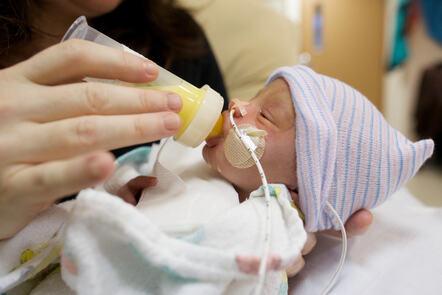
Improve your clinical practice as you discover the evidence-based ESPGHAN recommendations for effective enteral nutrition. Gain an introduction to ESPGHAN. ESPGHAN is the leading global authority on neonatal and infant nutrition. On this four-week course, their experts will help you gain knowledge of nutrient intake based on the latest evidence. You can then use this knowledge to develop a safer and more effective clinical practice.

Class Deals by MOOC List - Click here and see FutureLearn's Active Discounts, Deals, and Promo Codes.

The ESPGHAN CoN (Committee of Nutrition) provides key recommendations that you can take into practice and use to improve clinical care.
You’ll hear directly from neonatal specialists through a variety of media, including case studies, to ensure you finish the course with a sound understanding of enteral nutrition in preterm infants.

Delve into nutrient intake requirements
You’ll start by exploring nutrient intake recommendations including energy, protein, electrolytes, and vitamins.
Whilst investigating the evidence base for nutrient groups, you’ll also be introduced to other common practices, such as feeding modes and growth assessment..

Explore case studies in neonatal care
Unpacking further case studies, you’ll develop the skills to help you compare and contrast your own clinical practice, supported by expert input and the ESPGHAN CoN recommendations.
With this knowledge, you’ll be able to explain areas of uncertainty, such as where evidence-based is too limited to make a firm recommendation.

Develop your understanding of infant nutrition
During the final week of the course, you’ll discover the importance of involving parents and carers in preterm nutrition.
Hearing from personal experiences, you’ll explore breast milk fortification, donor human milk, supplemental bionutrients, and learn how to conduct a holistic assessment of nutritional status.
By the end of the course, you’ll have the knowledge and skills to deliver more effective care in your clinical neonatal practice.

Syllabus

Week 1: Macronutrients
Week 2: Vitamins, minerals and micronutrients
Week 3: Water-soluble vitamins, feeding mode and growth
Week 4: Working with parents and carers

What will you achieve?
By the end of the course, you‘ll be able to...

  • Debate areas of uncertainty e.g., where evidence base is too limited to make firm recommendations.
  • Describe the risks and benefits of nutrient intakes.
  • Demonstrate interpretation of growth and a practical approach to assessment of nutritional status in the clinic.
  • Describe how the level of evidence and grade of recommendation are defined and applied to the evidence base.
  • Discuss how to adopt a practical approach to clinical challenges.
  • Demonstrate factual understanding of recommended nutritional intakes and acceptable ranges.

Who is the course for?
This course is designed for doctors and dieticians working in neonatal units.
It will also be useful for medical staff, students, nursing staff, pharmacists, and dietetic students.


Go to Class
MOOC List is learner-supported. When you buy through links on our site, we may earn an affiliate commission.

Related Courses

Liver Transplant: the Ins and Outs (FutureLearn) FutureLearn
University of Birmingham

Liver Transplant: the Ins and Outs (FutureLearn)

Learn about the science behind having a liver transplant with this free online course from the Centre for Liver Research. In this free, three-week course, we will teach you about the fascinating field of liver transplantation. We will cover the history of liver transplantation - from early experiments in the late 1960s to exciting new technological advances in organ preservation happening today.

Self Paced
3 Weeks
Global Updates on HIV (AME) AME
Virology Education

Global Updates on HIV (AME)

This Online Education Activity is accredited by the European Accreditation Council for Continuing Medical Education (EACCME) for 1 European CME credit (ECMEC®). Welcome to the Global Updates of HIV edition of the Online Meeting Highlights. Here you will learn about the latest updates on novel HIV drugs and their formulation for HIV prevention and treatment.

Self Paced
Self-Paced
Confronting Gender Based Violence: Global Lessons for Healthcare Workers (Coursera) Coursera
Johns Hopkins University

Confronting Gender Based Violence: Global Lessons for Healthcare Workers (Coursera)

This course introduces participants from the healthcare sector to gender based violence (GBV), including global epidemiology of GBV; health outcomes; seminal research; and clinical best practices for GBV prevention, support, and management. A core curriculum is supplemented by lectures that contextualize the content with specific examples and programs from around the world.

Aug 17th 2026
4 Weeks
Foundations of Client Care 3: Client Care (edX) EdX
Osmosis,OsmosisFromElsevier

Foundations of Client Care 3: Client Care (edX)

A review of the needs of daily living and related care activities, basic client care, and more advanced skills for working with clients with different needs. This is the third, and final, course in the Foundations of Client Care program offered by Osmosis from Elsevier. The Client Care course reviews with learners the principles and guidelines for performing daily care activities with/for clients in an effective and compassionate way. Additional focus will be given to skills needed for working with special client populations, restorative care, and psychosocial care.

Self Paced
Self-Paced
Managing Patients with Limited Treatment Options (AME) AME
Virology Education

Managing Patients with Limited Treatment Options (AME)

This Online Education Activity is accredited by the European Accreditation Council for Continuing Medical Education (EACCME) for 1 European CME credit (ECMEC®).
 Welcome to the Managing Patients with Limited Treatment Options edition of the Online Meeting Highlights. Here you will learn how to define multiclass HIV resistance and interpret resistance test results, understand what are the available treatment options including drugs with novel modes of action, and which basic principle should be followed when selecting a new regimen.

Self Paced
Self-Paced
Health Care and Promotion for Infants and Toddlers (Coursera) Coursera
Peking University

Health Care and Promotion for Infants and Toddlers (Coursera)

The course Health Care and Promotion for Infants and Toddlers provides a comprehensive and detailed overview of cutting-edge knowledge, new concepts and practical skills in early childhood health care, including the growth and development of newborns, infants, and toddlers, daily parenting, and early childhood development and education.

Aug 10th 2026
5-12 Weeks
Machine Learning for Healthcare (edX) EdX
MIT,MITx

Machine Learning for Healthcare (edX)

An introduction to machine learning for healthcare, ranging from theoretical considerations to understanding human consequences of deploying technology in the clinic, through hands-on Python projects using real healthcare data. Machine learning methods have revolutionized many aspects of healthcare, from new models that help clinicians make more informed decisions to new technologies that enable individual patients to better manage their own health.

No sessions available
13-24 Weeks
From State Control to Remote Control: Warfare in the 21st Century (FutureLearn) FutureLearn
University of Bath

From State Control to Remote Control: Warfare in the 21st Century (FutureLearn)

Explore the impact and ethics of using drones, special ops units and private security firms, with this free online course. States are increasingly using remote control methods, such as drones, private military companies and special operations units, to engage in activities traditionally performed by conventional armed forces.

Self Paced
4 Weeks
Dysphagia: Swallowing Difficulties and Medicines (FutureLearn) FutureLearn
University of East Anglia

Dysphagia: Swallowing Difficulties and Medicines (FutureLearn)

This course will enhance the knowledge of any person involved in the administration of medicines to patients with dysphagia. The course offers an opportunity to network with other learners and with the creators of the course through discussions, graphs and social networking features and to share knowledge with other learners and professionals.

Self Paced
5-12 Weeks
Clinical Supervision with Confidence (FutureLearn) FutureLearn
University of East Anglia

Clinical Supervision with Confidence (FutureLearn)

Supervise undergraduate and postgraduate learners effectively with this online course for clinical and educational supervisors. This online course will help you become a more effective clinical supervisor or educator. It is mapped to competences within the Academy of Medical Educators’ framework for professional development, as used by the General Medical Council and Health Education England.

Self Paced
2 Weeks
Introduction to Translational Research: Connecting Scientists and Medical Doctors (FutureLearn) FutureLearn
Taipei Medical University

Introduction to Translational Research: Connecting Scientists and Medical Doctors (FutureLearn)

Understand the emerging discipline of translational medicine and the process of taking research from ‘benchside’ to ‘bedside'. Translational medicine, also known as translational science or translational research, is a new, growing discipline in medicine that aims to ensure research flows from ‘benchside’ to ‘bedside’.

Self Paced
5-12 Weeks