EdX

Climate Change Education (edX)

Climate Change Education (edX)

Learn how to work with your students to help them explore climate change through the use of interactive and engaging activities. These activities are designed for students at the primary and secondary levels. Our climate is changing rapidly, and now more than ever we need to be ready to act and prepare the next generation to take care of our planet. This course explores the basic science behind climate change and presents the tools to teach it in a positive, engaging and participatory way. The course also introduces some of the ethical and social issues around climate change.

Class Deals by MOOC List - Click here and see EdX's Active Discounts, Deals, and Promo Codes.

This course makes use of videos, lesson plans and online games developed by the IDB's "Rise-Up: Education Against Climate Change" initiative. The aim is to prepare primary and secondary teachers to teach about climate change and promote actions to mitigate and adapt to climate change in within the school community.

What you'll learn:

  • Basic science behind climate change
  • Main social and ethical issues behind climate change
  • Main consequences of climate change to water, energy, environment, soil and our health
  • What we can do individually, as a school and as a community to live a more sustainable and healthy life
  • How to use games, debates, experiments, role-playing, newspapers and other tools to support and enhance learning

Course Syllabus

Module 1: Our climate is changing
Introduction to climate change, including what it is, difference between climate and weather and causes of the greenhouse effect.
Presentation of the use of images and newspapers in class activities.

Module 2: Energy and the climate change
Introduction to the energy cycle, the different types of energies and the existing renewable and nonrenewable sources of energies.
Presentation of the use of comics and the school’s space to support learning.

Module 3: Water and the climate change
Introduction to the importance of water to our lives and the main consequences of climate change to the water cycle.
Presentation of the use of offline games and videos in class activities.

Module 4: Soil and the climate change
Introduction to the different types of farming practices, it’s social, economic and environmental impact and the effect of climate change on food availability and quality.
Presentation of the use of experiments and debates in class activities.

Module 5: Landscape and the climate change
Introduction to the factors that shape our landscape, including natural disasters and human actions and the importance of forests and wetlands to the Earth ecosystem.
Presentation of the use of case studies and of community integration strategies to support learning.

Module 6: Sustainable environments
Introduction to the effect of the megacities to the environment and how we can mitigate it through intelligent consumption and sustainable cities.
Presentation of the use of mockups and role-playing in class activities.

Module 7: Healthy environments
Introduction to the elements that make up a healthy environment, the risks of climate change to our health and what we can do to ensure a healthy and safe environment in the school and the community.


Go to Class
MOOC List is learner-supported. When you buy through links on our site, we may earn an affiliate commission.

Related Courses

Classroom Strategies for Inquiry-Based Learning (edX) EdX
University of Texas at Austin,UTAustinX

Classroom Strategies for Inquiry-Based Learning (edX)

Learn inquiry-based classroom practices to engage students in education through exploration. Inquiry-based learning aims to increase student engagement by helping learners develop hands-on, minds-on skills. This education and teacher training course explores the 5E instructional model and its uses in the classroom. You will have the opportunity to learn from videos of classroom teachers modeling a 5E lesson and access teacher commentary as they use inquiry-based strategies with their students. As a result, you will develop the skills and strategies needed to implement inquiry-based instruction in your own classroom.

Self Paced
Self-Paced
Introduction to Data Wise: A Collaborative Process to Improve Learning & Teaching (edX) EdX
HarvardX,Harvard University

Introduction to Data Wise: A Collaborative Process to Improve Learning & Teaching (edX)

Learn what is involved in using data wisely to build a culture of collaborative inquiry. Educators have an ever-increasing stream of data at their fingertips, but knowing how to use this data to improve learning and teaching — how to make it less overwhelming, more useful, and part of an effective collaborative process — can be challenging.

Self Paced
Self-Paced
Deep Learning through Transformative Pedagogy (edX) EdX
University of Queensland,Microsoft,UQx

Deep Learning through Transformative Pedagogy (edX)

How can powerful teaching strategies and effective learning activities enhance deep learning? This education course has been developed for educators and education leaders. It explores deep learning by bringing together the most up-to-date research from cognitive psychology, contemporary educational theories, and neuro-scientific perspectives.

Self Paced
4 Weeks
Using Photovoltaic (PV) Technology in Desert Climates (edX) EdX
Hamad Bin Khalifa University - HBKU,HBKUx

Using Photovoltaic (PV) Technology in Desert Climates (edX)

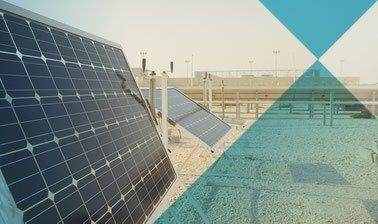
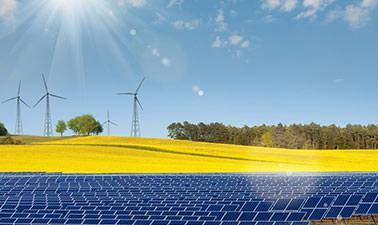
Learn how to mitigate the challenges related to PV technology and enhance the performance of solar cells and PV modules in desert climates. The high insolation in desert regions can result in a lower cost of solar energy. While this may be a key motivation to deploying PV in desert climates, there are also several challenges related to the technology that must be considered.

Self Paced
Self-Paced
Introduction to Environmental Science (edX) EdX
DartmouthX,Dartmouth College

Introduction to Environmental Science (edX)

A scientific study of the natural world and how it is influenced by people. Major topics include: food, energy, human population, biodiversity and global change. Environmental science is the study of patterns and processes in the natural world and their modification by human activity. To understand current environmental problems, we need to consider physical, biological and chemical processes that are often the basis of those problems.

Self Paced
4 Weeks
Salmon, People, and Place (edX) EdX
University of Alaska Fairbanks,AlaskaX

Salmon, People, and Place (edX)

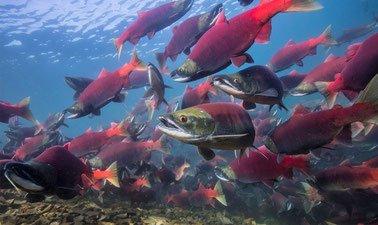
This course explores the relationships between salmon and people with an emphasis on the special ties of salmon to Indigenous peoples and to Alaska Natives in particular. No wild animal has more profoundly influenced the cultures and well-being of societies in North America than salmon. Salmon and people have been entwined in a relationship for millennia. This six-week course is an exploration and celebration of this relationship, as well as an examination of the current major issues, including habitat alterations, climate change, and management actions currently straining the relationship between salmon and salmon-dependent people.

Self Paced
Self-Paced
Introduction to Family Engagement in Education (edX) EdX
HarvardX,Harvard University

Introduction to Family Engagement in Education (edX)

Learn about successful collaborations between families and educators and why they lead to improved outcomes for students and schools. In this education course, you will learn what family engagement is and why it matters to the success of students and schools. We will explore the research linking family engagement to better educational outcomes and speak directly with researchers, educators, students, and families about promising practices in the field.

Self Paced
Self-Paced
Sensing Planet Earth - Water and Ice (edX) EdX
Chalmers University of Technology,ChalmersX

Sensing Planet Earth - Water and Ice (edX)

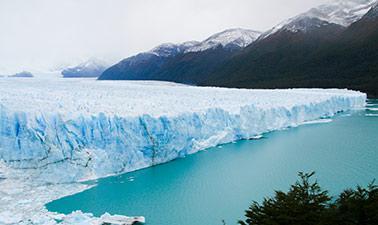
Learn how to measure and monitor the Earth’s water and ice masses to deepen your understanding of global change. Global warming. Rising sea levels. Droughts. Flooding. The melting of the polar ice caps. In this energy and earth science course, you will learn how continental water and ice masses are measured and monitored through remote sensing.

Self Paced
5-12 Weeks
Introduction to Water and Climate (edX) EdX
Delft University of Technology,DelftX

Introduction to Water and Climate (edX)

Water is a crucial element in climate and for society. Find out about the latest engineering interventions for water management in rivers, coasts and the urban environment. Water is essential for life on Earth and of crucial importance for society. Water also plays a major role in affecting climate. Its natural cycle, from ocean to atmosphere by evaporation, then by precipitation back to land returning via rivers and aquifers to the oceans, has a decisive impact on regional and global climate patterns.

Self Paced
Self-Paced