EdX

Electronique I (edX)

Electronique I (edX)

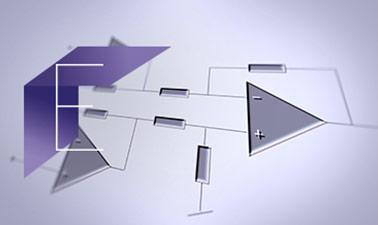
Introduction à l’électronique analogique- première partie. Fonctions de base réalisées à l’aide des amplificateurs opérationnels. Ce cours est un cours d’introduction à la réalisation des fonctions linéaires et non-linéaires de base à l’aide de l’amplificateur opérationnel.


Class Deals by MOOC List - Click here and see EdX's Active Discounts, Deals, and Promo Codes.

Les étudiants appliquent la théorie des circuits, la réaction négative et positive aux amplificateurs opérationnels pour réaliser les fonctions électroniques élémentaires (amplification, filtrage, transposition, addition, soustraction, génération des fonctions périodiques, etc.). Les explications sont illustrées par des exercices au laboratoires avec des démonstrations qui peuvent être reproduite par les élèves par simulation.

What you'll learn

  • Classer les fonctions électroniques linéaires et non linéaires
  • Analyser les circuits électroniques à base d'amplificateurs opérationnels
  • Dimensionner les composants de circuits à base d'amplificateurs opérationnels
  • Composer des systèmes électroniques à l'aide d'un ensemble de fonctions de base
  • Synthétiser des circuits électroniques simples
  • Manipuler des résultats de mesure de circuits électroniques
Go to Class
MOOC List is learner-supported. When you buy through links on our site, we may earn an affiliate commission.

Related Courses

Fundamentals of Audio and Music Engineering: Part 1 Musical Sound & Electronics (Coursera) Coursera
University of Rochester

Fundamentals of Audio and Music Engineering: Part 1 Musical Sound & Electronics (Coursera)

In this course students learn the basic concepts of acoustics and electronics and how they can applied to understand musical sound and make music with electronic instruments. Topics include: sound waves, musical sound, basic electronics, and applications of these basic principles in amplifiers and speaker design.

Jun 8th 2026
5-12 Weeks
Aplicaciones musicales con Arduino (Coursera) Coursera
Universidad Nacional Autónoma de México

Aplicaciones musicales con Arduino (Coursera)

En este curso nos adentraremos en el terreno del hardware. Concretamente, aprenderemos a utilizar la placa de desarrollo de hardware de código abierto, llamada Arduino, enfocándonos en las aplicaciones que esta ofrece para la experimentación musical. De manera más específica, aprenderemos en este curso a construir nuestros propios generadores de sonido, y a partir de ello haremos instalaciones sonoras que nos permitirán expandir nuestra creatividad hacia el terreno de las cosas materiales, y ya no solo de los datos informáticos.

Jun 8th 2026
4 Weeks
Teaching Physical Computing to 5-11 year olds (FutureLearn) FutureLearn
Raspberry Pi Foundation,National Centre for Computing Education

Teaching Physical Computing to 5-11 year olds (FutureLearn)

Teach your young learners how to create electronic circuits, then learn to control them using block-based programming languages. Learn how to create physical computing projects using a Crumble or micro:bit. Physical computing is the process of designing, building, and programming systems that use physical components such as buttons, lights, and motors.

Mar 6th 2023
3 Weeks
Introduction to Semiconductors, PN Junctions and Bipolar Junction Transistors (edX) EdX
The Hong Kong University of Science and Technology - HKUST,HKUSTx

Introduction to Semiconductors, PN Junctions and Bipolar Junction Transistors (edX)

An intuitive approach to operational principles of semiconductor devices. The course covers PN junction diodes, optical sensors, solar cells, LEDs, and Bipolar Junction Transistors. As a topic of study, semiconductor devices offer a unique challenge due to the complex mathematics involved. In this course, we take a more intuitive approach to explore the underlying concepts. Eschewing mathematics, we use engaging animations to help you visualize the working principles of many common semiconductor devices.

Self Paced
Self-Paced
Teaching Physical Computing with Raspberry Pi and Python (FutureLearn) FutureLearn
Raspberry Pi Foundation

Teaching Physical Computing with Raspberry Pi and Python (FutureLearn)

Explore the exciting world of physical computing and create electronic circuits that you can control with code. Learn the benefits of using physical computing with your students. On this course from the Raspberry Pi Foundation, you will be introduced to the world of physical computing. You will use input devices to capture data, process that data with the Python programming language, and then use output devices to get information back out from your computer.

Mar 6th 2023
3 Weeks
Electrones en Acción: Electrónica y Arduinos para tus propios Inventos (Coursera) Coursera
Pontificia Universidad Católica de Chile

Electrones en Acción: Electrónica y Arduinos para tus propios Inventos (Coursera)

Este curso introduce al alumno a la electrónica y los Arduinos, comenzando desde lo más básico de un circuito eléctrico y finalizando con el diseño de circuitos de baja complejidad empleando dispositivos electrónicos programables. Durante el curso los alumnos aprenderán los fundamentos básicos de la electricidad y de la electrónica, conocerán los diferentes bloques empleados en el diseño de un circuito electrónico, aprenderán las bases del diseño de circuitos analógicos y digitales, y serán introducidos a la programación de estos últimos empleando la plataforma Arduino.

Jun 1st 2026
4 Weeks
Recent Advances in Freeform Electronics (Coursera) Coursera
Yonsei University

Recent Advances in Freeform Electronics (Coursera)

In this course, the learners will understand fundamental basic backgrounds of p-n junctions, diodes and MOSFETs (Metal Oxide Semiconductor Field Effect Transistors). Also, recent approaches on flexible / stretchable electronics, transparent optoelectronics, and printed electronics using one dimensional or two dimensional nanomaterials will be introduced.

May 18th 2026
5-12 Weeks
Designing Hardware for Raspberry Pi Projects (Coursera) Coursera
Johns Hopkins University

Designing Hardware for Raspberry Pi Projects (Coursera)

This is course 4 of this specialization (although it can be taken out of order) and focuses on applying experience and knowledge gained in the first three courses to build physical electronics hardware. Specifically, this course focuses on four areas: circuit simulation, schematic entry, PCB layout, and 3D CAD modeling. There are many excellent commercial applications available in these areas, however to give everyone access we'll be using all free and open-source software.

Jun 8th 2026
4 Weeks
Electromagnetic Compatibility Essentials (edX) EdX
Graz University of Technology,TUGrazX

Electromagnetic Compatibility Essentials (edX)

Advance your career by learning the basics of EMC. Explore all the different aspects and challenges every electronics engineer must be aware of. This course is designed to gain essential know-how in today’s world of very high frequencies. For instance, smartphone CPUs already work with clock frequencies above 3 GHz. But did you know that such fast switching disturbs other devices nearby? Such disturbances are either simply annoying or can become a real problem. As a consequence, international regulations exist which demand for emission and immunity tests before selling an electronic device.

Self Paced
Self-Paced