Teaching Physical Computing with Raspberry Pi and Python (FutureLearn)

Teaching Physical Computing with Raspberry Pi and Python (FutureLearn)

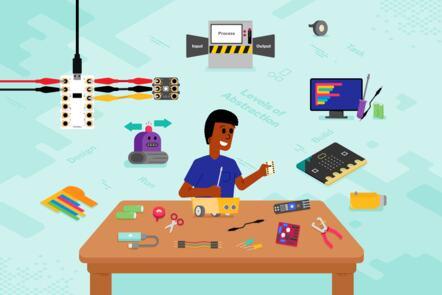
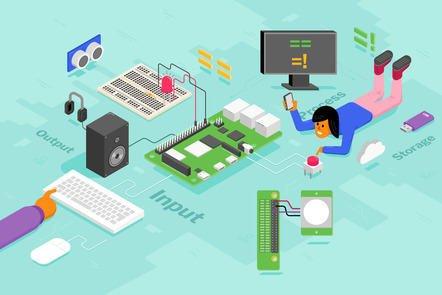
Explore the exciting world of physical computing and create electronic circuits that you can control with code. Learn the benefits of using physical computing with your students. On this course from the Raspberry Pi Foundation, you will be introduced to the world of physical computing. You will use input devices to capture data, process that data with the Python programming language, and then use output devices to get information back out from your computer.

Class Deals by MOOC List - Click here and see FutureLearn's Active Discounts, Deals, and Promo Codes.

Along the way, you will learn how to use the principles of sequence, selection, and iteration in your physical computing programs. You will also learn some foundational electronics to help you create the circuits that you will use.
In the final week, you will create a physical computing project of your own.

Syllabus

Week 1: Physical computing and outputs
Week 2: Inputs
Week 3: Physical computing projects

What will you achieve?
By the end of the course, you'll be able to...

  • Develop understanding of how the Raspberry Pi can be used as a tool for physical computing.
  • Apply knowledge of programming concepts to control digital inputs and outputs.
  • Explore practical applications of inputs and outputs to make a project.
  • Reflect on your learning and create ideas for your classroom practice.
  • Identify ways of engaging learners in physical computing in your learning context.
Go to Class
MOOC List is learner-supported. When you buy through links on our site, we may earn an affiliate commission.

Related Courses

Understanding Maths and Logic in Computer Science (FutureLearn) FutureLearn
Raspberry Pi Foundation

Understanding Maths and Logic in Computer Science (FutureLearn)

Improve your understanding and ability to teach maths and logic in computing while building elements of an escape room. Become more familiar with maths and logic in computer science. The mathematical aspects of computer science can be difficult to understand and teach. On this course, you will be introduced to maths and logic in computing in an engaging way.

Nov 1st 2021
3 Weeks
Understanding Computer Systems (FutureLearn) FutureLearn
Raspberry Pi Foundation

Understanding Computer Systems (FutureLearn)

Understand how the components of a computer system interact with each other on this online course for computing teachers. Learn what really happens when you turn a computer on. Understanding how a computer works after you press the power button is key to working with technology effectively. On this course, you will explore what happens inside the machine and learn how computers turn inputs into outputs.

Nov 1st 2021
3 Weeks
Computer Programming for Everyone (FutureLearn) FutureLearn
University of Leeds,Institute of Coding

Computer Programming for Everyone (FutureLearn)

Discover the art of computer programming and learn what code can do with the Institute of Coding and the University of Leeds. Explore computer programming and complete block-language programming exercises. What are computers good at and how can you get the best out of them? On this course, you’ll find out how and why people program computers.

Sep 4th 2023
2 Weeks
Statistical Shape Modelling: Computing the Human Anatomy (FutureLearn) FutureLearn
University of Basel

Statistical Shape Modelling: Computing the Human Anatomy (FutureLearn)

Learn the technology of modelling, as used in computational face recognition or in surgeries, with this free online course. Statistical shape models are one of the most important technologies in computer vision and medical image analysis. With this technology, the computer learns the characteristic shape variations of an object or organ. The model resulting from this analysis may then be used in implant design, image analysis, surgery planning and many other fields.

Feb 21st 2022
5-12 Weeks
Get Started Teaching Computing in Primary Schools: Preparing to teach 5 - 11 year olds (FutureLearn) FutureLearn
Raspberry Pi Foundation,National Centre for Computing Education

Get Started Teaching Computing in Primary Schools: Preparing to teach 5 - 11 year olds (FutureLearn)

Improve your subject knowledge and develop inclusive lessons to teach computing to primary school pupils (aged 5 to 11 years old). Learn key concepts from the computing curriculum alongside education experts. It’s crucial for young people to develop their computing knowledge and skills so that they can understand and participate in our increasingly digital world - being creators rather than solely consumers. On this four-week course you’ll start by thinking about why it’s important for your primary school students (aged 5-11) to learn computing.

Mar 6th 2023
4 Weeks
Programming 103: Saving and Structuring Data (FutureLearn) FutureLearn
Raspberry Pi Foundation,National Centre for Computing Education

Programming 103: Saving and Structuring Data (FutureLearn)

Learn how to save and structure data in external files, and import files back into your Python programs. Supported by Google. Discover how to save data to use it across multiple runs of your program. On this course, you will learn how to save text and binary files, and how to structure data so that programs can interpret it correctly.

Jan 2nd 2023
3 Weeks
Robotics With Raspberry Pi: Build and Program Your First Robot Buggy (FutureLearn) FutureLearn
Raspberry Pi Foundation,National Centre for Computing Education

Robotics With Raspberry Pi: Build and Program Your First Robot Buggy (FutureLearn)

Build and program your first robot buggy using a Raspberry Pi, learning how to connect motors, add sensors and write algorithms. Learn robotics by building a robot buggy and controlling it with a Raspberry Pi. On this course from the Raspberry Pi Foundation, you’ll build a robot buggy controlled by a Raspberry Pi.

Jan 2nd 2023
3 Weeks
Scratch to Python: Moving from Block- to Text-based Programming (FutureLearn) FutureLearn
Raspberry Pi Foundation

Scratch to Python: Moving from Block- to Text-based Programming (FutureLearn)

Learn how to apply the thinking and programming skills you've learnt in Scratch to text-based programming languages like Python. Discover how you can transition from block to text-based programming. Block-based programming languages like Scratch make it simple to learn and teach programming. But once you and your students have mastered it, it’s time to move on to a text-based programming language such as Python. This online course will show you how.

Mar 6th 2023
4 Weeks
Improving Computing Classroom Practice Through Action Research (FutureLearn) FutureLearn
Raspberry Pi Foundation,National Centre for Computing Education

Improving Computing Classroom Practice Through Action Research (FutureLearn)

Learn how to run your own action research project to improve the computing pedagogy and practices in your classroom. Apply action research to your teaching and become a more reflective practitioner. Through this course, you will become familiar with the process of classroom action research, and plan your own classroom-based investigation.

Feb 7th 2022
2 Weeks
Introduction to Data Analytics with Python (FutureLearn) FutureLearn
FutureLearn

Introduction to Data Analytics with Python (FutureLearn)

Learn the fundamentals of using Python for data analysis and develop skills in two of Python’s core libraries, Pandas and Seaborn. Build your data analytics toolkit with Python. We are in the era of ‘big data’. According to a Forbes article published in 2018, around 2.5 quintillion bytes of data were being generated each day globally. On this four-week course, created in collaboration with Tableau, you’ll gain a foundational knowledge of data science for business applications, acting as a launchpad to help you become a successful data scientist.

Oct 25th 2021
4 Weeks
Prepare for a Software Development Career (FutureLearn) FutureLearn
FutureLearn

Prepare for a Software Development Career (FutureLearn)

Review everything you need to know about Java and Python to start a career as a software developer. Cement your foundational knowledge of Python and Java and kickstart your career in software development. You’ll apply object-oriented programming principles to Java, and go deeper on methods, constructors, strings, inheritance, classes, and collection.

May 23rd 2022
4 Weeks