EdX

Circuits and Electronics 2: Amplification, Speed, and Delay (edX)

Offered by MIT, MITx,
Circuits and Electronics 2: Amplification, Speed, and Delay (edX)

Learn how to speed up digital circuits and build amplifiers in the design of microchips used in smartphones, computers, and the Internet. Want to learn how to construct an amplifier for mobile phones? Wondering how energy storage elements like capacitors and inductors work, or how to make microchips run faster? This free circuit course taught by edX CEO and MIT Professor Anant Agarwal and colleagues is for you.

Class Deals by MOOC List - Click here and see EdX's Active Discounts, Deals, and Promo Codes.

This is the second of three online Circuits and Electronics courses and is taken by all MIT Electrical Engineering and Computer Science (EECS) majors.

Topics covered include: MOSFET large signal and small signal analysis; amplifiers; energy storage elements like capacitors and inductors; and dynamics of first-order networks and circuit speed. Design and lab exercises are also significant components of the course.
Weekly coursework includes interactive video sequences, readings from the textbook, homework, online laboratories, and optional tutorials. The course will also have a final exam.
This is a self-paced course, so there are no weekly deadlines. However, all assignments are due when the course ends.

What you'll learn:

  • How to build amplifiers using MOSFETs.
  • How to use intuition to describe the approximate time and frequency behavior of first-order circuits containing energy storage elements like capacitors and inductors.
  • The relationship between the mathematical representation of first-order circuit behavior and corresponding real-life effects.
  • How to improve the speed of digital circuits
  • Measurement of circuit variables using tools such as virtual oscilloscopes, virtual multimeters, and virtual signal generators.
  • How to compare the measurements with the behavior predicted by mathematical models and explain the discrepancies.

Course Syllabus

Week 1: Amplifiers, MOSFET large signal analysis, MOSFET small signal analysis
Week 2: Capacitors, first-order RC circuits
Week 3: Inductors, first-order step response, first-order circuit analysis, impulses, digital circuit speed
Week 4: Impulse, step, ramp superposition, digital memory, state, ZIR, ZSR


Go to Class
MOOC List is learner-supported. When you buy through links on our site, we may earn an affiliate commission.

Related Courses

Introduction to Semiconductor Process 2 (Coursera) Coursera
Korea Advanced Institute of Science and Technology - KAIST

Introduction to Semiconductor Process 2 (Coursera)

This course aims to provide a general understanding of semiconductor process. This course explores the principles and basic theory of semiconductor device and process. Furthermore, the students will learn the overall semiconductor process such as oxidation, diffusion, ion implantation, lithography, etching, thin film deposition, plasma, metallization, and packaging.

Jul 27th 2026
5-12 Weeks
Powering the Drive: Unveiling EV Electronics (Coursera) Coursera
Coursera Instructor Network

Powering the Drive: Unveiling EV Electronics (Coursera)

In the rapidly advancing world of electric vehicles (EVs), understanding the application of power electronics is essential for both professionals and enthusiasts. Welcome to our comprehensive video course on the "Electric Vehicle Power Electronics " This course explores the pivotal role and significance of power electronics in the EV ecosystem. As EVs become a prominent part of the transportation landscape, understanding the intricacies of power electronics is crucial. This course equips you with the knowledge and skills to comprehend, utilize, and optimize power electronics for efficient and sustainable electric vehicle operation.

Jul 27th 2026
1 Week
Electromagnetic Compatibility Essentials (edX) EdX
Graz University of Technology,TUGrazX

Electromagnetic Compatibility Essentials (edX)

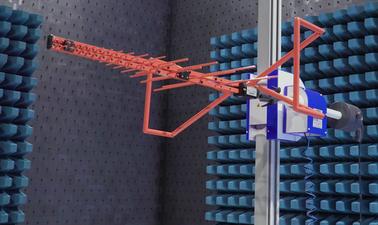
Advance your career by learning the basics of EMC. Explore all the different aspects and challenges every electronics engineer must be aware of. This course is designed to gain essential know-how in today’s world of very high frequencies. For instance, smartphone CPUs already work with clock frequencies above 3 GHz. But did you know that such fast switching disturbs other devices nearby? Such disturbances are either simply annoying or can become a real problem. As a consequence, international regulations exist which demand for emission and immunity tests before selling an electronic device.

Self Paced
Self-Paced
Introduction to Power Electronics (Coursera) Coursera
University of Colorado Boulder

Introduction to Power Electronics (Coursera)

This course introduces the basic concepts of switched-mode converter circuits for controlling and converting electrical power with high efficiency. Principles of converter circuit analysis are introduced, and are developed for finding the steady state voltages, current, and efficiency of power converters. Assignments include simulation of a dc-dc converter, analysis of an inverting dc-dc converter, and modeling and efficiency analysis of an electric vehicle system and of a USB power regulator.

Jul 27th 2026
3 Weeks
AP® Physics 1 - Part 4: Exam Prep (edX) EdX
Rice University,RiceX

AP® Physics 1 - Part 4: Exam Prep (edX)

The fourth of four courses in a dynamic, comprehensive series that provides a solid base in introductory physics and helps prepare you for the AP Physics 1 Exam. Free textbook included! In this four-part series, we will explore AP Physics 1 concepts and prepare for the AP Physics 1 Exam in an exciting and entirely new way. Increase your skills – and your readiness – for the AP Exam though quality videos, inquiry labs, Hollywood-style Concept Trailers™, Direct Measurement Videos, AP problem-solving sessions and more!

No sessions available
4 Weeks
Electronique I (edX) EdX
École Polytechnique Fédérale de Lausanne,EPFLx

Electronique I (edX)

Introduction à l’électronique analogique- première partie. Fonctions de base réalisées à l’aide des amplificateurs opérationnels. Ce cours est un cours d’introduction à la réalisation des fonctions linéaires et non-linéaires de base à l’aide de l’amplificateur opérationnel.


Self Paced
Self-Paced
AC and Switching Circuits (edX) EdX
National University of Singapore,NUS

AC and Switching Circuits (edX)

In this course, you will learn all about circuits with alternating current (AC). The course shows how to design and analyse AC circuits, and concepts like phasors and power factor are explained. We also cover transformers, fuses, relays, and the use of transistors as switches. The course is the second in our series on electronics and a working knowledge of DC circuits is assumed.

Self Paced
Self-Paced
Nanomaterials for Civil and Environmental Applications (edX) EdX
Purdue University,PurdueX

Nanomaterials for Civil and Environmental Applications (edX)

Learn about the field of nanotechnology with a special emphasis on nanomaterials synthesis, characterizations and their applications in civil and environmental engineering. This course will introduce students to the field of nanotechnology with a special emphasis on nanomaterials synthesis, characterizations and their applications in civil and environmental engineering.

Sep 27th 2021
5-12 Weeks
Designing Electronics for Recycling in a Circular Economy (edX) EdX
Delft University of Technology,DelftX

Designing Electronics for Recycling in a Circular Economy (edX)

Discover the latest developments in Design for Recycling (DfR) of electrical and electronic equipment (EEE) and the application of recycled plastics into new products. Electronic products bring countless benefits to society, but their production and waste treatment also lead to numerous negative environmental and economic impacts. Since E-waste is the world’s fastest growing waste stream, governments are setting ambitious targets to help this industry transition towards a circular economy.

Self Paced
4 Weeks