Recent Advances in Freeform Electronics (Coursera)

Offered by Yonsei University,
Recent Advances in Freeform Electronics (Coursera)

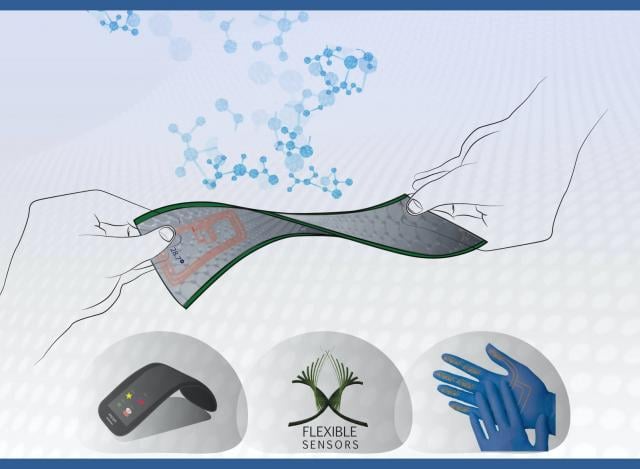
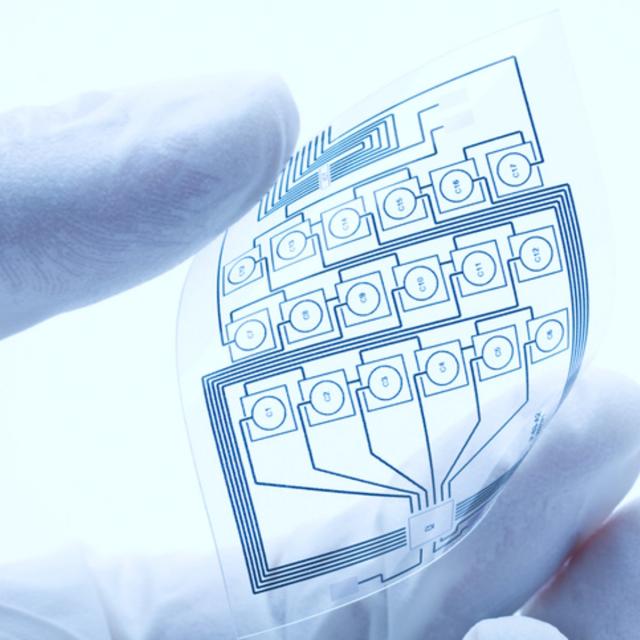
In this course, the learners will understand fundamental basic backgrounds of p-n junctions, diodes and MOSFETs (Metal Oxide Semiconductor Field Effect Transistors). Also, recent approaches on flexible / stretchable electronics, transparent optoelectronics, and printed electronics using one dimensional or two dimensional nanomaterials will be introduced.

Class Deals by MOOC List - Click here and see Coursera's Active Discounts, Deals, and Promo Codes.

Furthermore, the formation of high-performance, transparent thin films or conductors using novel materials such as cellulose nanofibers or metal nanofibers is included for course materials. Examples of device fabrications, including touch screen panels, gas / chemical / bio sensors, smart contact lenses, wireless and transparent antennas, and OLEDs, are also introduced for next generation electronic devices.

Syllabus

WEEK 1
Fundamentals for Electronic Devices
Module 1 is the fundamentals of electronics devices. Solid physics and basic theory of MOSFET are covered.

WEEK 2
Stretchable Electronics
Module 2 is Stretchable Electronics. Various approaches to form stretchable electronic devices are covered.

WEEK 3
Transparent Electrodes
Module 3 is Transparent Electrodes. Conventional materials for transparent electrodes and their alternatives are covered.

WEEK 4
Smart Sensors
Module 4 is the smart sensors. Carbon nanomaterials-based FETs and transparent, wearable electronic devices are covered.

WEEK 5
Printed Electronics
Module 5 is printed electronics. Fundamentals of printing technologies and various electronics using E-jet printing are covered.

WEEK 6
High Reliability for Deformable Electronics
Module 6 is High Reliability for Deformable Electronics. Newly developed materials for better reliability and their properties are covered.
Go to Class
MOOC List is learner-supported. When you buy through links on our site, we may earn an affiliate commission.

Related Courses

Intelligent Machining (Coursera) Coursera
University at Buffalo,The State University of New York

Intelligent Machining (Coursera)

Manufacturers are increasingly utilizing machine tools that are self-aware – they perceive their own states and the state of the surrounding environment – and are able to make decisions related to machine activity processes. This is called intelligent machining, and through this course students will receive a primer on its background, tools and related terminology.

Jun 1st 2026
4 Weeks
Beginning Custom Projects with Raspberry Pi (Coursera) Coursera
Johns Hopkins University

Beginning Custom Projects with Raspberry Pi (Coursera)

In this course you will use a Raspberry Pi 4 to build a complete network-connected project with sensors and motors and access it from your smartphone. We'll explore all the parts which make this work, so you can use this experience as a foundation for your own projects. We'll use the Raspberry Pi as an "embedded system" (as opposed to a desktop computer) so you're ready to build a Raspberry Pi into your projects as the brains that make it all work. Want to build your own Internet of Things (IoT) device? Home automation? Robotics? This is the class to learn how it all works, to get you building on your own.

Jun 8th 2026
4 Weeks
Introduction to Semiconductor Devices 1 (Coursera) Coursera
Korea Advanced Institute of Science and Technology - KAIST

Introduction to Semiconductor Devices 1 (Coursera)

This course aims to provide a general understanding of semiconductor devices. This course explores the principles and the operation mechanism of semiconductor, such as charge transfer, p-n junction, junction capacitors, and Metal-Oxide-Semiconductor Field Effect Transistors(MOSFETs).

Jun 1st 2026
5-12 Weeks
Adding Electronics to Rapid Prototypes (Coursera) Coursera
Arizona State University

Adding Electronics to Rapid Prototypes (Coursera)

Hello, everyone! Welcome to this course on Adding Electronics to Rapid Prototypes. This is part of the Rapid Prototyping and Tooling specialization. In this course, I’ll cover the basics of electric circuits, breadboards, and multimeters. I’ll then discuss different options for connecting electrical components as well as discuss different types of motors and actuators. Finally, I’ll end this course by discussing microcontrollers and how to use them to make even more sophisticated prototypes.

Jun 8th 2026
5-12 Weeks
Internet of Things: Sensing and Actuation From Devices (Coursera) Coursera
University of California, San Diego

Internet of Things: Sensing and Actuation From Devices (Coursera)

Have you wondered how information from physical devices in the real world gets communicated to Smartphone processors? Do you want to make informed design decisions about sampling frequencies and bit-width requirements for various kinds of sensors? Do you want to gain expertise to affect the real world with actuators such as stepper motors, LEDs and generate notifications? In this course, you will learn to interface common sensors and actuators to the DragonBoard™ 410c hardware. You will then develop software to acquire sensory data, process the data and actuate stepper motors, LEDs, etc. for use in mobile-enabled products.

Jun 1st 2026
5-12 Weeks
Introduction to Semiconductor Process 1 (Coursera) Coursera
Korea Advanced Institute of Science and Technology - KAIST

Introduction to Semiconductor Process 1 (Coursera)

This course aims to provide a general understanding of semiconductor process. This course explores the principles and basic theory of semiconductor device and process. Furthermore, the students will learn the overall semiconductor process such as oxidation, diffusion, ion implantation, lithography, etching, thin film deposition, plasma, metallization, and packaging.

May 18th 2026
5-12 Weeks
Sensors and Sensor Circuit Design (Coursera) Coursera
University of Colorado Boulder

Sensors and Sensor Circuit Design (Coursera)

After taking this course, you will be able to: understand how to specify the proper thermal, flow, or rotary sensor for taking real-time process data; implement thermal sensors into an embedded system in both hardware and software; add the sensor and sensor interface into a microprocessor based development kit; create hardware and firmware to process sensor signals and feed data to a microprocessor for further evaluation; study sensor signal noise and apply proper hardware techniques to reduce it to acceptable levels.

Jun 1st 2026
5-12 Weeks
Fundamentals of Audio and Music Engineering: Part 1 Musical Sound & Electronics (Coursera) Coursera
University of Rochester

Fundamentals of Audio and Music Engineering: Part 1 Musical Sound & Electronics (Coursera)

In this course students learn the basic concepts of acoustics and electronics and how they can applied to understand musical sound and make music with electronic instruments. Topics include: sound waves, musical sound, basic electronics, and applications of these basic principles in amplifiers and speaker design.

Jun 8th 2026
5-12 Weeks
Cómo entrenar a tus electrones 2: Diodos y Transistores (Coursera) Coursera
Pontificia Universidad Católica de Chile

Cómo entrenar a tus electrones 2: Diodos y Transistores (Coursera)

La electrónica ha respaldado el desarrollo científico y tecnológico de la humanidad, ostentando un rol clave en los últimos 50 años. Nos admiramos de la capacidad del ser humano de diseñar circuitos integrados que contienen millones de transistores y que nos permiten procesar con gran precisión las señales más débiles provenientes de las antenas de telefonía celular, de las neuronas del cerebro, de una cámara digital, o de la carga depositada por partículas subatómicas que colisionan en el Gran Colisionador de Hadrones en Suiza.

Jun 1st 2026
4 Weeks
Introduction to Power Semiconductor Switches (Coursera) Coursera
University of Colorado Boulder

Introduction to Power Semiconductor Switches (Coursera)

This course can also be taken for academic credit as ECEA 5721, part of CU Boulder’s Master of Science in Electrical Engineering. This course is primarily aimed at first year graduate students interested in engineering or science, along with professionals with an interest in power electronics and semiconductor devices .

Jun 8th 2026
4 Weeks
Electric Vehicle Sensors (Coursera) Coursera
University of Colorado Boulder

Electric Vehicle Sensors (Coursera)

“Electric Vehicle Sensors” starts with a discussion on how electric vehicles work differently from gasoline or diesel fuel powered vehicles and the major types of electric vehicles. It then moves to the unique components of full electric and hybrid electric vehicles, and how in-vehicle and external battery charging systems work. We reference all the sensors that are used for in-vehicle and outside unique components. Then we do a deep dive into how each of these sensors work.

Jun 8th 2026
4 Weeks