EdX

Graphene Science and Technology (edX)

Graphene Science and Technology (edX)

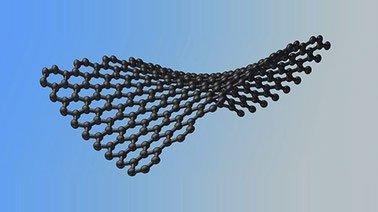
Graphene: its practical applications and how it offers new insights into quantum physics. Graphene is the world’s first 2-dimensional material and is the thinnest, strongest, and most flexible material known to exist. Graphene, a special form of carbon,,can conduct electricity and heat better than anything else.

Class Deals by MOOC List - Click here and see EdX's Active Discounts, Deals, and Promo Codes.

In this electronics course, we will introduce you to the exciting world of graphene science and technology. You will learn about the fundamentals of graphene and how this material offers new insights into nanotechnology and quantum physics. You will also learn about emerging practical applications for graphene. Topics covered include material properties, electronics, physics, physical chemistry, synthesis and device fabrication and application.

Graphene offers a wealth of potential future applications; in composites, solar cells, sensors, superchargers, etc. The list is endless. This course takes a closer look at the particular potential graphene offers within electronics, e.g. optoelectronic devices using graphene produced via chemical vapor deposition (CVD), an industrially compatible technique.
This course content was developed at Chalmers University of Technology who is the coordinator of the Graphene Flagship, EUs biggest research initiative ever. At the Chalmers Graphene Centre research and industry cooperate in the field to achieve interplay and synergies.
In order to benefit fully from this course you should have an adequate knowledge of general physics and university level mathematics.

What you'll learn:

  • How to assess if and how graphene can be used in different electronic products to improve, enhance or add new properties
  • Basic knowledge on how to perform graphene material synthesis experiments
  • How to understand and appreciate scientific articles on graphene research
  • Knowledge of other areas in which graphene has great potential
  • Decide whether or not graphene can contribute to your career advancement – be it in academia or industry
Go to Class
MOOC List is learner-supported. When you buy through links on our site, we may earn an affiliate commission.

Related Courses

Quantum Detectors (edX) EdX
Purdue University,PurdueX

Quantum Detectors (edX)

Learn about quantum sensors and devices that extract maximal information from the world around us. Classical detectors and sensors are ubiquitous around us from heat sensors in cars to light detectors in a camera cell phone. Leveraging advances in the theory of noise and measurement, an important paradigm of quantum metrology has emerged. Here, ultra-precision measurement devices collect maximal information from the world around us at the quantum limit.

Feb 12th 2024
5-12 Weeks
Decision Making in Engineering Design (edX) EdX
Purdue University,PurdueX

Decision Making in Engineering Design (edX)

In this course, you will learn the foundations of decision-making in the design of engineering products, processes, and systems. Decision making is an essential activity in all organizations and teams involved in engineering design and product development. Successful design requires the ability to make good decisions in the presence of risk and uncertainty, and an understanding of how customers and other stakeholders make decisions.

Jan 10th 2022
13-24 Weeks
Management in Engineering: Strategy and Leadership (edX) EdX
MIT,MITx

Management in Engineering: Strategy and Leadership (edX)

Analyze challenging real-life business cases that engineering managers face on a variety of topics. Apply management tools and relevant skills to manage innovation. This course was formerly known as Management in Engineering II. As part of the Principles of Manufacturing MicroMasters program, this course aims to provide exposure to key principles and practices used in engineering management.

Jan 9th 2024
5-12 Weeks
RF Design: Passive and Active Components (edX) EdX
Purdue University,PurdueX

RF Design: Passive and Active Components (edX)

Learn the necessary techniques and tools for designing high-performance passive and active RF components. Following the ‘Primer on RF Design’ course, this class focuses on passive and active components. We use the techniques learnt in the previous course, to design advanced RF devices including couplers, filters and amplifiers. Current research topics are discussed as appropriate.

Nov 1st 2021
5-12 Weeks
Robot Mechanics and Control, Part II (edX) EdX
Seoul National University,SNUx

Robot Mechanics and Control, Part II (edX)

A mathematical introduction to the mechanics and control of robots. This course is Part II of a two-part mathematical introduction to the mechanics and control of robots that can be modeled as kinematic chains. Topics covered include the concept of a robot’s configuration space and degrees of freedom, static grasp analysis, the description of rigid body motions, kinematics of open and closed chains, and the basics of robot control.

No sessions available
4 Weeks
Robot Mechanics and Control, Part I (edX) EdX
Seoul National University,SNUx

Robot Mechanics and Control, Part I (edX)

A mathematical introduction to the mechanics and control of robots. This course provides a mathematical introduction to the mechanics and control of robots that can be modeled as kinematic chains. Topics covered include the concept of a robot’s configuration space and degrees of freedom, static grasp analysis, the description of rigid body motions, kinematics of open and closed chains, and the basics of robot control.

No sessions available
4 Weeks
Nanophotonic Modeling (edX) EdX
Purdue University,PurdueX

Nanophotonic Modeling (edX)

Learn a comprehensive set of simulation techniques to predict the performance of photonic nanostructures. This engineering course is an introduction to photonic materials and devices structured on the wavelength scale. Generally, these systems will be characterized as having critical dimensions at the nanometer scale. These can include nanophotonic, plasmonic, and metamaterial components and systems.

Feb 12th 2024
5-12 Weeks