EdX

Nanomaterials for Civil and Environmental Applications (edX)

Offered by Purdue University, PurdueX,
Nanomaterials for Civil and Environmental Applications (edX)

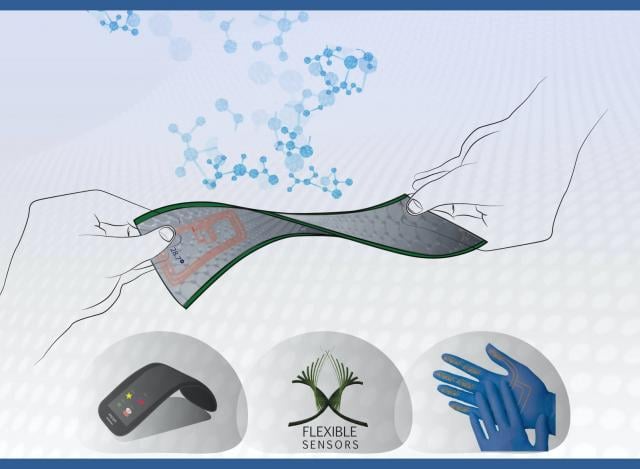
Learn about the field of nanotechnology with a special emphasis on nanomaterials synthesis, characterizations and their applications in civil and environmental engineering. This course will introduce students to the field of nanotechnology with a special emphasis on nanomaterials synthesis, characterizations and their applications in civil and environmental engineering.

Class Deals by MOOC List - Click here and see EdX's Active Discounts, Deals, and Promo Codes.

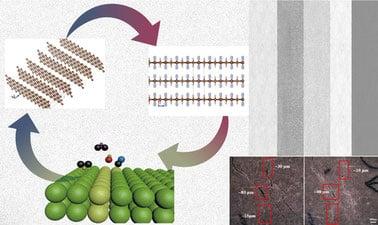
The specific applications will include, but not limited to, tailoring mechanical property, durability, self-cleaning, self-sealing, self-sensing, energy harvesting and other multi-functionality. It integrates the fields of materials science, civil engineering and electrical engineering. The basic concepts will be discussed including nano-scale effect, process-structure-property relationship, nano- and micro-structure property characterizations, multi-functional materials, nano-device fabrication and their applications for energy harvesting, water infiltrations and environmental sensing. lab will be provided to students enrolled in the course to learn nano and micro-structure characterizations skills.
This course is part of the Materials Engineering for Intelligent Infrastructure MicroMasters.

What you'll learn

  • Basic concepts of nanomaterials and nanostructures
  • Nanomaterials fabrication methods
  • Nanotechnology for materials properties modifications

Prerequisites:
Learners in this course should have successfully completed edX course, Fundamentals of Nanomaterials and Nanotechnology or equivalent.

Syllabus

Week 1:

  • Nanomaterials in Civil Application
  • Concrete Mechanical Property
  • Nanomaterials for Improvement of Microstructure and Mechanical Performance
  • Brittle Strengthening Mechanism

Week 2:

  • Concrete Durability
  • Corrosion, FT and Scaling
  • Sulfate Attack and ASR

Week 3:

  • Nanomaterials for Self-Healing Concrete
  • Nanomaterials for Self-Cleaning Concrete
  • Photocatalysis
  • Thermal Energy Harvesting

Week 4:

  • Introduction to NDT Methods
  • Nanomaterials for Early Age Strength Sensing
  • Nanomaterials for Self-Sensing Concrete
  • Nanomaterials for Internal Curing

Week 5:

  • Nanotechnology for Environmental Applications Overview
  • Water and Wastewater Treatment
  • Air Pollution Control
  • Soil Remediation
Go to Class
MOOC List is learner-supported. When you buy through links on our site, we may earn an affiliate commission.

Related Courses

Introducción al Internet de las Cosas (IoT) (edX) EdX
Universitat Politècnica de València,UPValenciaX

Introducción al Internet de las Cosas (IoT) (edX)

Este es un curso en línea preliminar en el que tratamos los conceptos básicos de electronica y programación utilizando placas Arduino y ESP. El internet de las cosas (Internet of things o IoT) es el presente y el futuro de la tecnología. Tanto si tienes algo de experiencia con la electrónica y deseas desarrollar proyectos como si no tienes ninguna, este curso online te dara los conocimientos iniciales necesarios para comenzar a crear dispositivos increibles capaces de medir y controlar señales físicas.

Self Paced
Self-Paced
Adding Electronics to Rapid Prototypes (Coursera) Coursera
Arizona State University

Adding Electronics to Rapid Prototypes (Coursera)

Hello, everyone! Welcome to this course on Adding Electronics to Rapid Prototypes. This is part of the Rapid Prototyping and Tooling specialization. In this course, I’ll cover the basics of electric circuits, breadboards, and multimeters. I’ll then discuss different options for connecting electrical components as well as discuss different types of motors and actuators. Finally, I’ll end this course by discussing microcontrollers and how to use them to make even more sophisticated prototypes.

Jun 8th 2026
5-12 Weeks
Plastic electronics (Coursera) Coursera
École Polytechnique

Plastic electronics (Coursera)

Plastic electronics is a concept that emerged forty years ago, with the discovery of electrically conductive polymers. Ten years later, the first electronic devices using organic solids in place of the ubiquitous inorganic semiconductors were realised. The best achievement of plastic electronics is constituted by Organic Light-Emitting Diodes (OLEDs) that equip the display of many smartphones, and even TV sets.

Jun 8th 2026
5-12 Weeks
AC and Switching Circuits (edX) EdX
National University of Singapore,NUS

AC and Switching Circuits (edX)

In this course, you will learn all about circuits with alternating current (AC). The course shows how to design and analyse AC circuits, and concepts like phasors and power factor are explained. We also cover transformers, fuses, relays, and the use of transistors as switches. The course is the second in our series on electronics and a working knowledge of DC circuits is assumed.

Self Paced
Self-Paced
Introduction to Semiconductors, PN Junctions and Bipolar Junction Transistors (edX) EdX
The Hong Kong University of Science and Technology - HKUST,HKUSTx

Introduction to Semiconductors, PN Junctions and Bipolar Junction Transistors (edX)

An intuitive approach to operational principles of semiconductor devices. The course covers PN junction diodes, optical sensors, solar cells, LEDs, and Bipolar Junction Transistors. As a topic of study, semiconductor devices offer a unique challenge due to the complex mathematics involved. In this course, we take a more intuitive approach to explore the underlying concepts. Eschewing mathematics, we use engaging animations to help you visualize the working principles of many common semiconductor devices.

Self Paced
Self-Paced
Wave-Based NDT Methods (edX) EdX
Purdue University,PurdueX

Wave-Based NDT Methods (edX)

Learn how to use wave-based NDT techniques, ultrasonic testing, acoustic emission, etc, to inspect the structural integrity of civil engineering structures, including highways, bridges, dams, and buildings. Wave-based NDT methods allow for reliable and rapid evaluation of civil engineering infrastructure. These methods are particularly useful in long-range inspection; for example, in pipelines, where the wave-based NDT can provide data on hundreds of meters of piping in a matter of seconds.

Feb 14th 2022
5-12 Weeks
Semiconductor Fundamentals (edX) EdX
Purdue University,PurdueX

Semiconductor Fundamentals (edX)

From smartphones to satellites, semiconductors are everywhere. Tying together physics, chemistry, and electrical engineering, this easy-to-follow introduction provides the background needed to understand devices such as transistors and solar cells. This course provides the essential foundations required to understand the operation of semiconductor devices such as transistors, diodes, solar cells, light-emitting devices, and more.

Jan 9th 2023
5-12 Weeks
Electrical-Based Non-Destructive Testing and Sensing (edX) EdX
Purdue University,PurdueX

Electrical-Based Non-Destructive Testing and Sensing (edX)

Learn how electrical-based nondestructive testing (NDT) methods and emerging infrastructure-sensing technologies are used to predict service life of civil engineering structures. Given that concrete elements are used in critical elements of infrastructure, determining the extent of degradation plays a critical role in managing the long-term performance of the concrete and identifying when to repair or replace it.

This course is archived
5-12 Weeks