Electrical Industry: Production and Economics (FutureLearn)

Offered by University of Padova,
Electrical Industry: Production and Economics (FutureLearn)

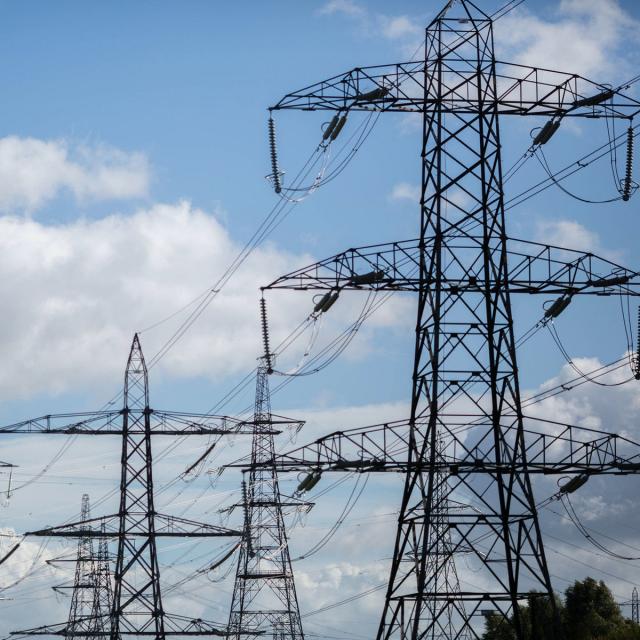
Understand how the electricity system has developed over time, see what the future holds and the need to move to decarbonisation. Discover how electricity is produced and exchanged and the reasons behind it. This innovative, three-week course from the University of Padova is designed to illustrate how electricity is produced, and exchanged, and why.

Class Deals by MOOC List - Click here and see FutureLearn's Active Discounts, Deals, and Promo Codes.

Understand how electrical systems have evolved over time
Firstly, you’ll gain insight into what electricity is, what it is used throughout society for and how the electricity system has been evolving steadily over time.
You’ll then assess the importance of electricity within the modern world and will understand how it is generated and exchanged among the different players active in the entire electricity supply chain.

Discover the need to move towards a decarbonised economy
You’ll then explore the new challenges and perspectives of electricity in the 21st century posed by climate change, such as increases in temperature increasing our energy demand, changing our ability to produce electricity and deliver it reliably. You’ll then identify the need to move towards a decarbonised economy going forward, and will discover the ways in which this can be achieved.
Ultimately, the course will tell you how to understand all the components of your own electricity bill, with the end result being that you’ll be able to make the best economic and money-saving choice when choosing an electricity supplier.

Learn from an environmental and energy economics expert at the University of Padova
You’ll be guided throughout this course by an expert of environmental and energy economics at the University of Padova, who has written the worldwide reference textbook on this specific topic.

What topics will you cover?

  • Electricity production and exchange
  • Electricity system
  • Renewable energy sources
  • Decarbonisation

What will you achieve?
By the end of the course, you‘ll be able to...

  • Develop your ideas about the challenges posed by climate change and understand your own electricity bill and be informed to make the best money-saving choices about electricity suppliers
  • Assess the importance of electricity in modern life
  • Describe how electricity is generated and exchanged among the different players active in the electricity supply chain,
Go to Class
MOOC List is learner-supported. When you buy through links on our site, we may earn an affiliate commission.

Related Courses

Powering Resilient Communities: A Holistic Approach to Food, Energy, and Water Security (edX) EdX
University of Alaska Fairbanks,AlaskaX

Powering Resilient Communities: A Holistic Approach to Food, Energy, and Water Security (edX)

A research-based course on resilient renewable energy solutions, with an emphasis on microgrids, and Food, Energy, and Water (FEW) security. This course provides research-based and on-the-ground tools for community planners, grid designers, and business leaders to improve and implement stronger and more resilient renewable energy systems in Arctic communities.

Self Paced
Self-Paced
Net-Zero Building Fundamentals (Coursera) Coursera
Indian Institute for Human Settlements

Net-Zero Building Fundamentals (Coursera)

Interested in decarbonisation, high performance, and climate resilient buildings? Then this course is for you. Our future is low-carbon, net-zero buildings that are super-efficient and self-sufficient in terms of their energy and water use. Decarbonisation, digitisation, and deglobalisation are driving the infrastructure revolution over the next 20 years. This course, offered jointly by the Alliance for an Energy Efficient Economy (AEEE) and the Indian Institute for Human Settlements (IIHS), will enable you to reap the benefits of this revolution and work on climate change.

Aug 31st 2026
5-12 Weeks
Cybersecurity Policy for Water and Electricity Infrastructures (Coursera) Coursera
University of Colorado System

Cybersecurity Policy for Water and Electricity Infrastructures (Coursera)

This course will examine the drinking water and electricity infrastructures, and various policies that have been developed to help guide and strengthen their cybersecurity programs. The drinking water and electricity infrastructures are two of fourteen subsectors comprising what are known as "lifeline infrastructure". The 2013 National Infrastructure Protection Plan identifies four lifeline infrastructure sectors: 1) water, 2) energy, 3) transportation, and 4) communications. These sectors are designated "lifeline" because many other infrastructures depend upon them.

Aug 24th 2026
4 Weeks
AP® Physics 1 - Part 4: Exam Prep (edX) EdX
Rice University,RiceX

AP® Physics 1 - Part 4: Exam Prep (edX)

The fourth of four courses in a dynamic, comprehensive series that provides a solid base in introductory physics and helps prepare you for the AP Physics 1 Exam. Free textbook included! In this four-part series, we will explore AP Physics 1 concepts and prepare for the AP Physics 1 Exam in an exciting and entirely new way. Increase your skills – and your readiness – for the AP Exam though quality videos, inquiry labs, Hollywood-style Concept Trailers™, Direct Measurement Videos, AP problem-solving sessions and more!

No sessions available
4 Weeks
The Challenge of Clean Growth and Clean Cities (FutureLearn) FutureLearn
Manchester Metropolitan University

The Challenge of Clean Growth and Clean Cities (FutureLearn)

Discover technologies for clean growth, consider clean growth strategy and explore the skills required to meet clean city targets. Explore one of the ten pillars of the industrial strategy. On this course, you’ll explore the latest research that’s contributing to the decarbonisation of the UK. You’ll explore the current targets which are forecast to be met using technologies and solutions such as hydrogen in the gas network and large-scale deployment of fuel cells.

Self Paced
2 Weeks
Transforming Energy Systems: Why Governance Matters (FutureLearn) FutureLearn
University of Exeter

Transforming Energy Systems: Why Governance Matters (FutureLearn)

Tackling climate change demands profound and rapid energy system transformation. Discover how effective governance enables this. Understand the importance of governance for rapid energy system decarbonisation. Energy governance includes the rules, regulations, institutions and politics that affect energy system change. Effective governance is key to the transformation of energy systems in order to tackle climate change with the urgency that’s needed.

Available Now
4 Weeks
Electric Power Systems (Coursera) Coursera
University at Buffalo,The State University of New York

Electric Power Systems (Coursera)

This course familiarizes you with standards and policies of the electric utility industry, and provides you with basic vocabulary used in the business. It introduces the electric power system, from generation of the electricity all the way to the wall plug. You will learn about the segments of the system, and common components like power cables and transformers.

Aug 24th 2026
4 Weeks
Transmisión de energía eléctrica (edX) EdX
Tecnológico de Monterrey,TecdeMonterreyX

Transmisión de energía eléctrica (edX)

Aprende cómo se transmite y se distribuye la electricidad y cómo este conocimiento puede ser aplicado para maximizar la transmisión de energía eléctrica. Caso de estudio en el sistema eléctrico mexicano. El conocer la manera en que funciona el sistema eléctrico mexicano como caso de estudio genera competencias importantes en el mundo actual y permite tener conocimientos de distribución eléctrica que se pueden usar en otros países.

Self Paced
Self-Paced
Renewable Power and Electricity Systems (Coursera) Coursera
University of Colorado Boulder

Renewable Power and Electricity Systems (Coursera)

The energy revolution in underway. Renewable energy is growing at an astounding pace - notably in electricity. Wind turbines and solar photovoltaic (PV) systems account for most new power plants built worldwide, and are essential to building a low-carbon and sustainable energy future. As a result, there are countless new opportunities in renewable electricity.

Aug 31st 2026
5-12 Weeks