EdX

Creating a Pro-Renewables Environment (edX)

Creating a Pro-Renewables Environment (edX)

Understand the policy, regulatory and fiscal measures that can incentivise renewable power and drive cleaner investment along the entire electricity supply chain. This course provides the tools needed to build a low-carbon power sector around the world. By diving into the perspective of different players in the power sector - from investors through to utilities, regulators and project developers - you will be able to choose the right strategies, policies and other levers needed to incentivise a cleaner power mix in your own context.

Class Deals by MOOC List - Click here and see EdX's Active Discounts, Deals, and Promo Codes.

This course explores the mix of approaches that can create a pro-renewables environment. It explores this from a policy, regulatory and supply-chain perspective and examines the incentives and rules available. Key policies are brought to life through case studies, learning from both success and failure.
Key messages of the course include:

  • Ambitions for renewable electricity must be grounded in technical and financial feasibility
  • Pro-renewables environments recognise the needs of energy supply chain actors (e.g. project developers, utilities, regulators, electricity customers) and balances pricing, fiscal and financial and wider policies to incentivise and drive deployment
  • There are multiple ways to encourage deployment of renewables across different scales – these have strengths and weaknesses and must balance rate of deployment, affordability and efficiency of generation
  • Incentives and rules are a package and can be aligned to deliver affordable, efficient renewable electricity - several real-world examples demonstrate this
  • Different countries have succeeded and failed in creating pro-renewables environments – demonstrating that while lessons can be used from these experiences, there is no single route to success and the environment must be bespoke to the circumstances of the country.

This course should help decision makers across the electricity supply chain, in both the public and private sector, understand what mix of incentives is ideal from their perspective.
This course is part of the Clean Power Professional Certificate Program.

What you'll learn

  • Understand how policy and regulation can create a pro-renewables environment
  • Analyse different regulatory and non-regulatory mechanisms and approaches for incentivising renewables deployment
  • Evaluate the drivers for businesses in the renewable electricity supply chain and how this relates to the policy and regulatory environment
  • Explore through case studies how pro-renewables policy and regulatory environment has been implemented

Course Syllabus

Module 1: Establishing a pro-renewables environment – getting the objectives right
Module 2: Pro-renewables supply chain – who are the actors and what do they want?
Module 3: Pro-renewables power sector regulatory and pricing policies
Module 4: Non-regulatory pro-renewables policies and approaches
Module 5: Pulling it all together
Go to Class
MOOC List is learner-supported. When you buy through links on our site, we may earn an affiliate commission.

Related Courses

Supply Chain Management: A Decision-Making Framework (edX) EdX
LouvainX,Université Catholique de Louvain - UCL

Supply Chain Management: A Decision-Making Framework (edX)

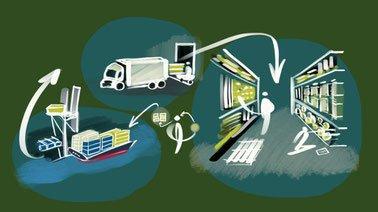
Learn how to make rational and confident supply chain decisions, by understanding how they impact the finance, market and strategy of your company. In this business and management course, you’ll learn how make effective supply chain decisions that take into consideration all aspects of your business.

Self Paced
Self-Paced
Sustainable Energy: Design a Renewable Future (edX) EdX
Delft University of Technology,DelftX

Sustainable Energy: Design a Renewable Future (edX)

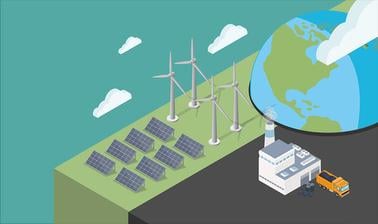
Learn how to make the transition to 100% renewable energy from wind, solar and biomass for electricity, heat and fuels for a sustainable future. A transition to sustainable energy is needed for our climate and welfare. In this engineering course, you will learn how to assess the potential for energy reduction and the potential of renewable energy sources like wind, solar and biomass. You’ll learn how to integrate these sources in an energy system, like an electricity network and take an engineering approach to look for solutions and design a 100% sustainable energy system.

Self Paced
Self-Paced
Circular Economy: An Interdisciplinary Approach (edX) EdX
Wageningen University,WageningenX

Circular Economy: An Interdisciplinary Approach (edX)

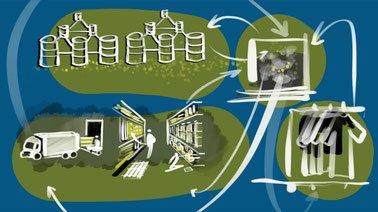
Join the transition towards a circular economy considering economic, supply chain, social, technical, managerial and environmental aspects. Do you want to contribute to a more sustainable society? Tackle the challenges in the transition towards a circular economy? In this course you will analyze what it takes to create a circular economy including sustainable supply chains.

Self Paced
Self-Paced
Incorporating Renewable Energy in Electricity Grids (edX) EdX
Imperial College London,ImperialX

Incorporating Renewable Energy in Electricity Grids (edX)

Learn how to manage high shares of variable renewable electricity sources to achieve cost-effective and reliable electricity supplies. This introductory course, delivered by Ieading academics from Imperial College London, with technical input and contributions from the National Energy Renewable Lab (Golden, Colorado), will discuss what challenges variable output renewables pose to the achievability of a reliable, stable electricity system, how these challenges can be addressed and at what costs.

Self Paced
Self-Paced
Demand Management in a Demand Driven Supply Chain (edX) EdX
ISCEA

Demand Management in a Demand Driven Supply Chain (edX)

Learn how a Make-and-Sell organization can become Demand-Driven through sensing demand signals, analyzing consumer demand data in real time, improving short-term forecast accuracy, and articulating an effective supply network response. By the end of the course, you will also become well versed in demand shaping and automated replenishment programs that reduce shortages and increase profitability.

Self Paced
Self-Paced
Lean Six Sigma Program and Project Management (edX) EdX
ISCEA

Lean Six Sigma Program and Project Management (edX)

Master and apply Lean Six Sigma Methodologies to the basics of Change Management and Sustainability to build Supply Chain. Learners will understand the steps in Project Management related to the Lean Six Sigma Supply Chain process, to reduce the risk of failure in six sigma projects. Gain an understanding of what “Lean” means in Six Sigma and how to drive sustainable process improvement.

Self Paced
Self-Paced
Supply Chains for Manufacturing: Inventory Analytics (edX) EdX
MIT,MITx

Supply Chains for Manufacturing: Inventory Analytics (edX)

Learn about effective supply chain strategies for companies that operate globally, with emphasis on how to plan and integrate supply chain components into a coordinated system. This course was formerly known as Supply Chains for Manufacturing I. A supply chain entails two or more parties that are linked together by material, information and money flows.

Mar 6th 2024
5-12 Weeks