Linear Circuits 1: DC Analysis (Coursera)

Linear Circuits 1: DC Analysis (Coursera)

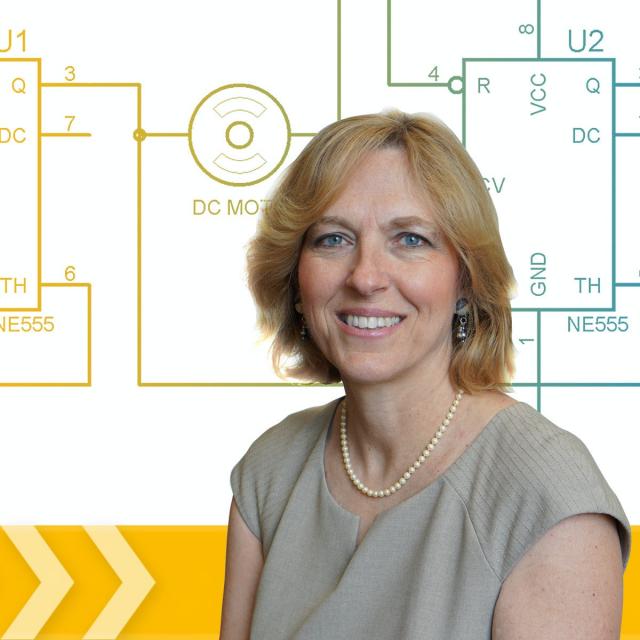
This course explains how to analyze circuits that have direct current (DC) current or voltage sources. A DC source is one that is constant. Circuits with resistors, capacitors, and inductors are covered, both analytically and experimentally. Some practical applications in sensors are demonstrated.

Class Deals by MOOC List - Click here and see Coursera's Active Discounts, Deals, and Promo Codes.

Syllabus

WEEK 1
Introduction
This module reviews background material from physics on the basic properties of electricity and electrical circuits.

WEEK 2
The module describes some basic principles used in circuit analysis.

WEEK 3
This module demonstrates physical resistive circuits and introduces several systematic ways to solve circuit problems.

WEEK 4
This module introduces additional methods for analyzing circuit problems and how resistors are used in sensors.

WEEK 5
This module introduces capacitors and inductors, which are called "reactive" circuit elements.

WEEK 6
This module introduces the transient response behavior of RC and RL circuits after a switch in a circuit is changed.

WEEK 7
This module demonstrates useful applications of capacitors and inductors in real engineering systems and introduces the behavior of second-order reactive circuits.

Go to Class
MOOC List is learner-supported. When you buy through links on our site, we may earn an affiliate commission.

Related Courses

Interfacing with the Arduino (Coursera) Coursera
University of California, Irvine

Interfacing with the Arduino (Coursera)

Arduino senses the environment by receiving inputs from add-on devices such as sensors, and can control the world around it by adjusting lights, motors, and other actuators. In this class you will learn how and when to use the different types of sensors and how to connect them to the Arduino. Since the external world uses continuous or analog signals and the hardware is digital you will learn how these signals are converted back-and-forth and how this must be considered as you program your device. You'll also learn about the use of Arduino-specific shields and the shields software libraries to interface with the real world.

Jun 8th 2026
4 Weeks
Rapid Prototyping of Embedded Interface Designs (Coursera) Coursera
University of Colorado Boulder

Rapid Prototyping of Embedded Interface Designs (Coursera)

Rapid Prototyping is the second of three classes in the Embedded Interface Design (EID) specialization, an online version of the on-campus EID class taught in graduate embedded systems design. This course is focused on rapid prototyping of devices and systems and the related methods, practices, and principles that will help ensure your embedded interface designs are what your users both need and want.

Jun 1st 2026
4 Weeks
Digital Signal Processing 1: Basic Concepts and Algorithms (Coursera) Coursera
École Polytechnique Fédérale de Lausanne

Digital Signal Processing 1: Basic Concepts and Algorithms (Coursera)

Digital Signal Processing is the branch of engineering that, in the space of just a few decades, has enabled unprecedented levels of interpersonal communication and of on-demand entertainment. By reworking the principles of electronics, telecommunication and computer science into a unifying paradigm, DSP is a the heart of the digital revolution that brought us CDs, DVDs, MP3 players, mobile phones and countless other devices.

May 25th 2026
4 Weeks
Physics 102 - Electric Charges and Fields (Coursera) Coursera
Rice University

Physics 102 - Electric Charges and Fields (Coursera)

This course serves as an introduction to the physics of electricity and magnetism. Upon completion, learners will have an understanding of how the forces between electric charges are described by fields, and how these fields are related to electrical circuits. They will gain experience in solving physics problems with tools such as graphical analysis, algebra, vector analysis, and calculus. The course follows the typical progression of topics of a first-semester university physics course: charges, electric forces, electric fields potential, magnetic fields, currents, magnetic moments, electromagnetic induction, and circuits.

Jun 8th 2026
4 Weeks
Real-Time Mission-Critical Systems Design (Coursera) Coursera
University of Colorado Boulder

Real-Time Mission-Critical Systems Design (Coursera)

Upon completion of this course the learner will know the difference between systems you can bet your life on (mission critical) and those which provide predictable response and quality of service (reliable). This will be achieved not only by study of design methods and patterns for mission critical systems, but also through implementation of soft real-time systems and comparison to hard real-time. Methods of verification to determine ability to meet mission critical as well as soft real-time requirements will be learned so that the learner can properly assess risk, reliability and impact of failure in real-time systems.

Jun 1st 2026
4 Weeks
Electric Power Systems (Coursera) Coursera
University at Buffalo,The State University of New York

Electric Power Systems (Coursera)

This course familiarizes you with standards and policies of the electric utility industry, and provides you with basic vocabulary used in the business. It introduces the electric power system, from generation of the electricity all the way to the wall plug. You will learn about the segments of the system, and common components like power cables and transformers.

Jun 1st 2026
4 Weeks
Solar Energy Basics (Coursera) Coursera
The State University of New York

Solar Energy Basics (Coursera)

This course gives you an introduction to the fundamentals of solar power as it applies to solar panel system installations. You will learn to compare solar energy to other energy resources and explain how solar panels, or photovoltaics (PV for short), convert sunlight to electricity. You will be able to identify the key components needed in a basic photovoltaic (solar panel) system, such as is found on a house or building, and explain the function of each component in the system.

Jun 8th 2026
5-12 Weeks
Linux System Programming and Introduction to Buildroot (Coursera) Coursera
University of Colorado Boulder

Linux System Programming and Introduction to Buildroot (Coursera)

This course provides an overview of System Programming for the Linux operating system, or software which is interfacing directly with the Linux Kernel and C library. The basic components of a Linux Embedded System, including kernel and root filesystem details are discussed. The Buildroot build system is introduced, which students use to build their own custom Embedded Linux system through programming assignments.

Jun 1st 2026
4 Weeks
Converter Circuits (Coursera) Coursera
University of Colorado Boulder

Converter Circuits (Coursera)

This course introduces more advanced concepts of switched-mode converter circuits. Realization of the power semiconductors in inverters or in converters having bidirectional power flow is explained. Power diodes, power MOSFETs, and IGBTs are explained, along with the origins of their switching times. Equivalent circuit models are refined to include the effects of switching loss. The discontinuous conduction mode is described and analyzed. A number of well-known converter circuit topologies are explored, including those with transformer isolation.

May 25th 2026
4 Weeks
Physics 102 - Magnetic Fields and Faraday's Law (Coursera) Coursera
Rice University

Physics 102 - Magnetic Fields and Faraday's Law (Coursera)

This course serves as an introduction to the physics of electricity and magnetism. Upon completion, learners will have an understanding of how the forces between electric charges are described by fields, and how these fields are related to electrical circuits. They will gain experience in solving physics problems with tools such as graphical analysis, algebra, vector analysis, and calculus. The course follows the typical progression of topics of a first-semester university physics course: charges, electric forces, electric fields potential, magnetic fields, currents, magnetic moments, electromagnetic induction, and circuits.

Jun 8th 2026
4 Weeks