EdX

Efficient HVAC Systems (edX)

Efficient HVAC Systems (edX)

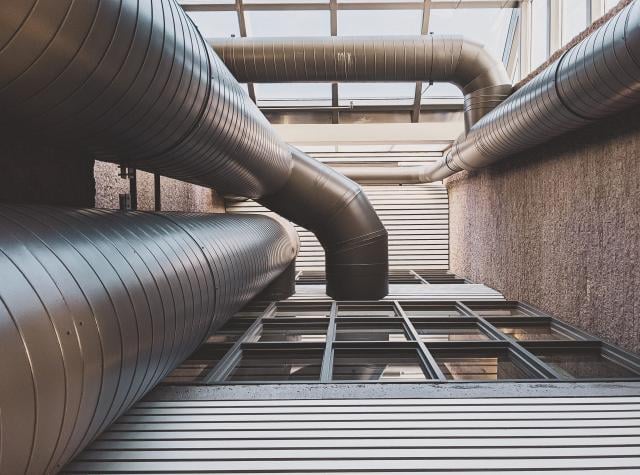
Learn how to decide on efficient combinations of energy conversion systems and how to distribute and control air and energy flows in buildings whilst minimizing carbon emissions and optimizing thermal comfort in close consideration with the architect. In this course you will start by identifying the different steps a HVAC (Heating, Ventilation and Air Conditioning) engineers need to follow to come to a proper design while collaborating with the architect.

Class Deals by MOOC List - Click here and see EdX's Active Discounts, Deals, and Promo Codes.

You will then learn how to distribute heat and cold using air and water systems, what temperature levels to use in both and how that relates to the type of energy supply and to the thermal quality of the building construction. You will further deepen your knowledge on air handling units and how to humidify and dehumidify air when needed and what that does mean for the energy consumption. As ventilation systems are often responsible for local thermal discomfort, you will also discover how different distribution systems lead to different comfort experiences and different indoor air qualities and you will know which simple control techniques can be applied.
Finally you will study a modern complex system consisting of an aquifer thermal storage, heat pump, boiler, solar collector, PV-cells, air handling unit, water and air distribution systems. This will allow you to develop skills to catch the complexity of such HVAC systems and to understand the basic rules of how to control them to get the best out of them and how to use data from the Building Energy Management System to help you in this task.
This course is part of the PCP Buildings as Sustainable Energy Systems. In the other courses in this program you can learn how to design buildings with low energy demand, how to choose low carbon energy supply and how to determine if this will lead to a comfortable indoor environment.
The development of this course is supported by Climate-KIC.
This course is part of the Buildings as Sustainable Energy Systems Professional Certificate.

What you'll learn

  • How air is processed in an air handling unit, and how to distribute it to ensure thermal comfort.
  • How to distribute heat and cold with an air system, and what the associated pressure losses are.
  • How to distribute heat and cold by using a water system or a mixed air-water system.
  • What temperature levels to choose in both types of systems, taking into account efficiency and thermal comfort.
  • How to make complex combinations of (renewable) energy equipment manageable and controllable.
Go to Class
MOOC List is learner-supported. When you buy through links on our site, we may earn an affiliate commission.

Related Courses

Thermodynamics in Energy Engineering (FutureLearn) FutureLearn
Hanyang University

Thermodynamics in Energy Engineering (FutureLearn)

Understand the basic thermodynamic principles widely used in many engineering fields: temperature, free energy and entropy. This free online course introduces the basic thermodynamic principles that are widely used in many engineering fields. It will prepare you for degree-level study, by helping you understand and apply thermodynamic fundamentals through real-world, problem-solving exercises.

No sessions available
5-12 Weeks
History of Chinese Architecture | 中国建筑史 (edX) EdX
Tsinghua University,TsinghuaX

History of Chinese Architecture | 中国建筑史 (edX)

This course explores China's rich and varied architectural history. (In Mandarin with English subtitles.) 体味中国古建筑之美,理解中国建筑的重要内涵 China's architectural history spans thousands of years. In this course, we will explore the ancient cities of Chang'an of Han, Luoyang of Northern Wei, Chang'an and Luoyang of Sui and Tang, Kaifeng of Song and Dadu of Yuan, and delve into the history of the awe-inspiring ancient buildings that still grace the landscape of these bustling cities.

No sessions available
13-24 Weeks
The Rise of Superheroes and Their Impact On Pop Culture (edX) EdX
Smithsonian,SmithsonianX

The Rise of Superheroes and Their Impact On Pop Culture (edX)

EXCLUSIVE! When you complete a verified certificate in this course, you will receive digital artwork from a current comic book artist, digitally signed by Stan Lee and Michael Uslan, and created exclusively for this course! Join the Smithsonian, and comic book industry legend Stan Lee, to explore the history of the comic book and the rise of superheroes.

Self Paced
Self-Paced
Oceanography: a key to better understand our world (Coursera) Coursera
University of Barcelona,Barcelona Foundation for Ocean Sailing - FNOB

Oceanography: a key to better understand our world (Coursera)

The course for a round the world regatta leads the boats through the Mediterranean Sea and the Atlantic, Southern Indian and South Pacific Oceans. On their voyage, the skippers come across a large variety of oceanographic situations: strong currents, floating ice, wave formations of every kind and biological diversity. In this course the student will learn about the foundations of the science of oceanography. You'll learn about the classification and formation of the ocean floor, how current sea satellite analysis systems work, the chemistry of the oceans and the processes that led to its formation.

Jun 8th 2026
5-12 Weeks
Basics of thermodynamics (Coursera) Coursera
Novosibirsk State University

Basics of thermodynamics (Coursera)

Our course on the basics of thermodynamics targeting a wide audience includes only what is absolutely necessary, focusing on the most basic issues, excluding less important specialized topics. However, you will learn about unusual phenomena such as stretched liquid and see interesting experiments. A future competent specialist, whose work should be at least somehow connected with physical phenomena, will find this course in thermodynamics useful and necessary.

Aug 1st 2022
5-12 Weeks
Chinese Thought: Ancient Wisdom Meets Modern Science - Part 1 (edX) EdX
The University of British Columbia,UBCx

Chinese Thought: Ancient Wisdom Meets Modern Science - Part 1 (edX)

An introduction to early Chinese thought, exploring connections among Chinese thought and Western philosophy, modern science and everyday life. This course is designed to give students a thorough introduction to early (pre-221 BCE) Chinese thought, its contemporary implications, and the role of religion in human well-being. Important themes to be discussed include the ideal of wu-wei or “effortless action,” the paradox of how one can consciously try not to try, mindfulness techniques and self-cultivation, models of the self and society, rationality versus emotions, trust and human cooperation, and the structure and impact of different spiritual and political ideals.

No sessions available
5-12 Weeks
Worldviews - From Sustainability to Regeneration (edX) EdX
ETH Zurich,ETHx

Worldviews - From Sustainability to Regeneration (edX)

To deal with sets of environmental and social crises, we need a cultural and mental transformation. This MOOC is the first part of an interconnected series of four MOOCS which bring together science, design and transformative praxis as a fluid, intervention-based and synergistic process for addressing complex challenges. This is explored through broadening worldviews, reframing complexity, designing as nature, activating our minds through physical movement, and connecting with new communities.

May 9th 2022
3 Weeks
Energy Demand in Buildings (edX) EdX
Delft University of Technology,DelftX

Energy Demand in Buildings (edX)

Discover how building design and occupancy determines the energy demand in buildings and learn how to (re)design low energy buildings. Building design strongly influences the quantity of heating, cooling and electricity needed during building operation. Therefore, a correct thermal design is essential to achieve low energy and low carbon buildings, with good indoor air quality.

Self Paced
Self-Paced
Comfort and Health in Buildings (edX) EdX
Delft University of Technology,DelftX

Comfort and Health in Buildings (edX)

Learn how to realize thermally comfortable and healthy buildings and how energy technologies impact comfort. Even in the well-accepted indoor temperature range of 20-24°C (68-75°F), people can experience thermal discomfort. Complaints about the indoor thermal environment are one of the major complaints building and facility managers have to deal with, and they spend a large amount of their time and money to solve them. People spend more than 80% of their time in buildings. Therefore a good thermal comfort and quality of the indoor environment are essential for their wellbeing, health and productivity.

Self Paced
Self-Paced