EdX

Energy Demand in Buildings (edX)

Energy Demand in Buildings (edX)

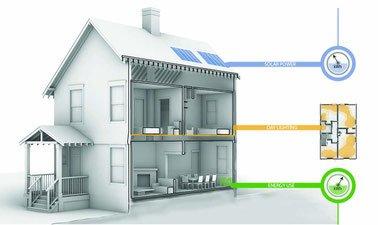
Discover how building design and occupancy determines the energy demand in buildings and learn how to (re)design low energy buildings. Building design strongly influences the quantity of heating, cooling and electricity needed during building operation. Therefore, a correct thermal design is essential to achieve low energy and low carbon buildings, with good indoor air quality.

Class Deals by MOOC List - Click here and see EdX's Active Discounts, Deals, and Promo Codes.

This course will enable you to understand the basic principles of the energy chain: demand, supply and distribution; and how they relate to design principles for sustainable and energy-efficient buildings.
Second, you will discover what type of heat losses and gains take place in buildings’ operations. You will learn how to estimate these flows using simple meteorological data and construction properties. You will acquire knowledge on how to estimate heat transfer through construction, ventilation, solar radiation or caused by internal sources or heat storage in the construction.
Third, you will learn to make estimates of buildings’ energy needs on an hourly basis by using simple static energy balances: how much energy comes in and out and which air temperature is needed? When is there heating or cooling? How much electricity is needed?
Fourth, you will discover how to extend your estimates to yearly energy demand, which is essential to make sure that a building is energy efficient and to estimate energy savings and energy costs. You will then also be able to determine the size of the needed heating and cooling equipment (which determines the costs of equipment).
Finally, you will learn how to optimize building design and will be able to find out the optimal window size or the optimum insulation thickness for your building. You will know why putting windows on the south façade is not always energy-efficient. You will understand the thermal interactions between building components and be able to make informed decisions on how to increase the energy efficiency of new and existing buildings.
This course is part of the PCP Buildings as Sustainable Energy Systems. In the other courses in this program you can learn how to choose low carbon energy supply, how to create a comfortable indoor environment, and how to control and optimize HVAC systems.
The development of this course is supported by Climate-KIC.
This course is part of the Buildings as Sustainable Energy Systems Professional Certificate.

What you'll learn

  • All about the energy chain approach, which is a powerful tool to achieve low energy and low carbon buildings.
  • To estimate the most important heat losses and gains in a building.
  • How to achieve thermal balance of the building and determine its space heating and cooling needs.
  • How to estimate the heating energy demand for hot tap water and the electricity needs for appliances and lighting.
  • How to achieve a low energy demand by optimizing window size, insulation, orientation and ventilation while taking into account building occupancy.

Go to Class
MOOC List is learner-supported. When you buy through links on our site, we may earn an affiliate commission.

Related Courses

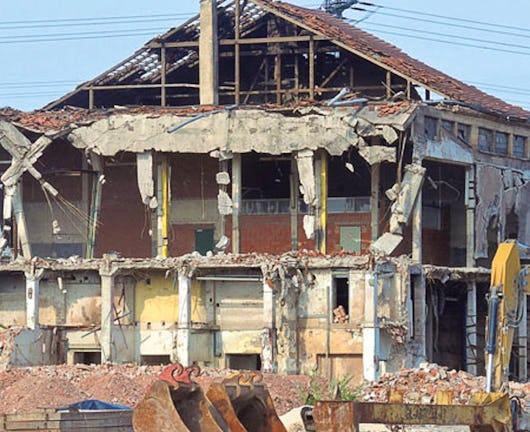
The Engineering of Structures Around Us (edX) EdX
DartmouthX,Dartmouth College

The Engineering of Structures Around Us (edX)

Explore how engineers design bridges and buildings in our communities and iconic structures around the world. In this introductory course, you’ll learn some engineering principles that can be applied to structural systems everywhere: in nature, in furniture, in mechanical and aerospace systems, and in any solid object that resists a load. Together we’ll explore how structures work, why they were designed the way they were designed, how they support loads, and where forces flow through them.

Self Paced
Self-Paced
Sustainable building design in Africa (POK) Polimi OPEN KNOWLEDGE
Politecnico di Milano

Sustainable building design in Africa (POK)

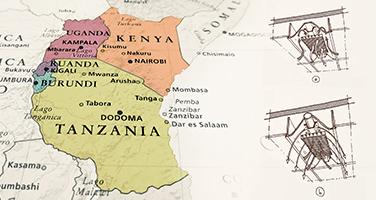
The course provides the main information about technological systems and tools for designing climate responsive buildings in Africa. The building sector is a major CO2 emitter, second only to the industry sector, accounting for 27% of global emissions, deriving both by the fossil fuel burnt for building operations viz. space heating, hot water production and cooking and by the one burnt for producing the electricity consumed. Moreover, almost 40% of the raw materials and energy produced worldwide are used in the building sector.

Available
5-12 Weeks
Net-Zero Building Fundamentals (Coursera) Coursera
Indian Institute for Human Settlements

Net-Zero Building Fundamentals (Coursera)

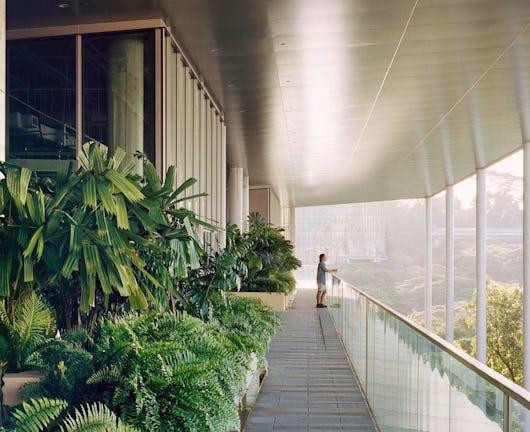
Interested in decarbonisation, high performance, and climate resilient buildings? Then this course is for you. Our future is low-carbon, net-zero buildings that are super-efficient and self-sufficient in terms of their energy and water use. Decarbonisation, digitisation, and deglobalisation are driving the infrastructure revolution over the next 20 years. This course, offered jointly by the Alliance for an Energy Efficient Economy (AEEE) and the Indian Institute for Human Settlements (IIHS), will enable you to reap the benefits of this revolution and work on climate change.

Jun 8th 2026
5-12 Weeks
City Design (Stepic) Other Providers
Stepic

City Design (Stepic)

City Design online course shows the fundamentals of city planning, building and exploitation via funny short video lectures (like the one above) and a variety of brief assignments for self-control. It is ideal for people who want to know about designing the cities before starting professional readings or to draw inspiration.

Mar 1st 2014
5-12 Weeks
Nature Based Metropolitan Solutions (edX) EdX
Wageningen University,Delft University of Technology,DelftX,WageningenX

Nature Based Metropolitan Solutions (edX)

Discover the potential benefits of nature-based solutions (NBS) in metropolitan areas and develop strategies for their implementation. How can ecosystems contribute to quality of life and a more livable, healthier and more resilient urban environment? This course establishes the priorities and highlights the direct values of including principles based on natural processes in urban planning and design.

Oct 27th 2021
5-12 Weeks
Library Advocacy Unshushed (edX) EdX
University of Toronto,University of TorontoX

Library Advocacy Unshushed (edX)

Become a powerful advocate for the values and future of libraries and librarianship. Be informed, strategic, passionate, and unshushed! How can we strengthen libraries and librarians in the advancement of knowledge, creativity, and literacy in the 21st century? Though libraries have been loved for over 3,600 years, their relevance in the digital age is being questioned, and their economic and social impacts are poorly understood.

No sessions available
4 Weeks