EdX

Rethink the City: New approaches to Global and Local Urban Challenges (edX)

Rethink the City: New approaches to Global and Local Urban Challenges (edX)

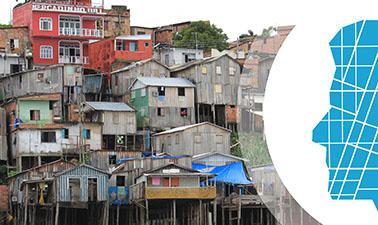
How do you plan future cities? Explore alternative theories and innovative solutions for urban challenges in the global south. You’ll learn about today’s urban challenges focusing on developing countries, referred to as the global south.

Class Deals by MOOC List - Click here and see EdX's Active Discounts, Deals, and Promo Codes.

We will debate the benefits of three pathways, going beyond traditional urban strategies and policies:

  1. Spatial justice

Spatial justice is undoubtedly one of the greatest challenges of urban contexts in emerging economies.

  1. Housing Provision and Management

Increasing demand in the global south calls for alternative approaches in housing provision and management.

  1. Urban Resilience

Understanding resilience not as a mere struggle for survival, but as an opportunity to build better urban environments.

We will discuss question such as:

  • Is the just city framework applicable in cities with extreme socio-economic inequality?
  • Can community-led housing initiatives provide effective solutions for households in need?
  • How can resilience support development instead of perpetuating a disadvantaged condition?

In this architecture and urban planning course, academic urban planning expertise from TU Delft is used to formulate possible answers to these questions, and is applied in a range of challenging case studies from Ghana, Brazil, Malaysia, Chile, and China, among others. This course offers you a new perspective to understand and analyze the urban challenges of the global south.
Through a combination of short theoretical lessons, presentation of case studies, testimonies from practitioners and practical assignments you will also learn how to develop a critical perspective about your own urban environment and how to translate this knowledge into analytical tools and innovative urban solutions.
This course is part of the Inclusive and Sustainable Cities Professional Certificate.

What you'll learn

  • Alternative theories in spatial justice, housing provision and management, and urban resilience.
  • Application of analytical tools and innovative solutions to contemporary urban challenges
  • Develop a critical perspective about your own urban environment.
  • New perspectives to understand and analyze the urban challenges of the global south.

Syllabus

The course is structured as follows:

Week 1: Welcome and Opening
This week is devoted to introducing the course and getting to know each other. This week also contains the first assignment of the course which aims to introduce yourself and the urban challenge in your own context.

Week 2 to 5: Parallel Modules
During these weeks you can choose in which order to take the modules, but there is a fixed sequence of activities inside each module, consisting of lecture videos, quizzes and assignments. In order to keep an appropriate workload, the course team suggests to take one module per week.
Module - Spatial Justice
This module will analyze concrete cases of spatial justice and injustice in emerging economies and discuss how contemporary theories apply in the booming metropolises of the Global South.
Module - Housing Provision and Management
This module will discuss the role of the State, the society and the private sector in housing policies, exploring opportunities for ownership and rental models in different contexts.
Module - Urban Resilience
This module will introduce the topic of urban resilience and shed some light on case studies of resilience and risk management that apply alternative approaches to the topic.
Module - Arabic Cities
This module has the purpose to discuss and analyze the urban challenges identified in the previous modules in some selected Arabic cities through the combination of theoretical lectures, case studies and practitioners’ interviews.
Module - Africa
This module discusses and analyses the urban challenges identified in the previous modules focusing on African countries through the combination of theoretical lectures, case studies and practitioners’ interviews.

Week 6 and 7: Final Assignment and closure
The final assignment is meant for you to develop a critical stance towards the urban challenges in your own context, using the theories and tools presented during the course. You will have one full week to prepare your final assignment. Hot Topics: in these weeks you will also have access to additional videos that discuss hot topics in both the Global South and the urban development discourse. These will complement the content of the modules. They are completely optional and won’t have quizzes or any required practical assignment. However, the “Reading the City” video can help you structure the poster for your final assignment; therefore, we strongly recommend you to watch it.

Prerequisites
This course is designed for undergraduate and master's level students of architecture, urban planning and disciplines related to urban themes. Nevertheless, anyone interested in debating spatial justice, urban resilience, and housing provision and management are welcome.
No previous knowledge in urban planning or the Global South is required, just your eagerness to learn!

Go to Class
MOOC List is learner-supported. When you buy through links on our site, we may earn an affiliate commission.

Related Courses

Risk Management in Development Projects (edX) EdX
Inter-American Development Bank - IDB,IDBx

Risk Management in Development Projects (edX)

Learn to preemptively manage positive and negative events that may affect the execution of a development project. Project teams usually spend a large portion of their time solving problems instead of preventing them. Project risk management seeks to preemptively manage positive and negative events that may affect a project so as to improve its chance of success.

Self Paced
Self-Paced
Critical thinking: reasoned decision making (edX) EdX
Tecnológico de Monterrey,TecdeMonterreyX

Critical thinking: reasoned decision making (edX)

Learn to analyze events with intellectual rigor. Identify how reasoned decisions help cope with change. Making decisions in today's world, a world increasing in complexity, with broad changes and uncertainty, creates the need of approaches that allow us to discern the real problems and the causes that create them. Identifying these problems, in most cases, requires challenging the assumptions on which we base our judgments, regarding the world and its realities.

Self Paced
Self-Paced
Financial Accounting Made Fun: Eliminating Your Fears (edX) EdX
Babson College

Financial Accounting Made Fun: Eliminating Your Fears (edX)

Learn the language of financial accounting and how to use financial statement information to better manage and grow your business. Are financial statements a mystery to you? Do all those terms and metrics make your head spin? Do you avoid conversations with your finance leaders because you are not confident of your finance ability?

Self Paced
Self-Paced
Purchase management (edX) EdX
LOGYCAX,LOGYCA

Purchase management (edX)

On this online course you will find all necessary tools o correctly plan demand, and you will acquire knowledge for forecasting, strategic sourcing, management and provider evaluation. For a company to function properly it must have a permanent supply of raw materials and goods; if sourcing is done efficiently, availability for manufacturing and/or sale will be permanent.

Self Paced
Self-Paced
Industrial Policy in the 21st Century: The Challenge for Africa (edX) EdX
SDGAcademyX,SDG Academy

Industrial Policy in the 21st Century: The Challenge for Africa (edX)

Why is there so little industry in Africa? Does it matter? What can we do about it? Hear from economist John Page about the continent’s options for industrialization and the future of economic growth in Africa. In this course from the United Nations University World Institute for Development Economics Research (UNU-WIDER), brought to you by the SDG Academy, you will hear from researcher John Page and other leading voices in development economics about the range of activities known “industries without smokestacks,” and learn how industrial policy that promotes the growth of these industries presents a win-win scenario for economic development in Africa.

Self Paced
Self-Paced
Critical Thinking & Problem Solving (edX) EdX
Rochester Institute of Technology,RITx

Critical Thinking & Problem Solving (edX)

The most successful professionals are able to assess the environment, analyze a situation, design a solution, and ultimately win in a competitive scenario. In today’s business environment, organizations have identified critical thinking and problem-solving as skills that are integral to an employee’s—and their organization’s—success.

Self Paced
Self-Paced
Applied Scrum for Agile Project Management (edX) EdX
University of Maryland, College Park,University System of Maryland - USM,USMx,UMD

Applied Scrum for Agile Project Management (edX)

Learn the project management processes, roles, mechanics, and philosophies behind Scrum, the simplest and most pure approach to managing work at the team level. Version 2 of this course series delivers beyond the original agile certification. It includes updated content, better audit and verified learner experiences, and bonus videos on key topics.

Self Paced
Self-Paced
An Introduction to Credit Risk Management (edX) EdX
Delft University of Technology,DelftX

An Introduction to Credit Risk Management (edX)

What is credit risk? Why is it so important, in modern economies, to correctly deal with it? This course combines theory with practice to answer these questions. Imagine that you are a bank and a main part of your daily business is to lend money. Unfortunately, lending money is a risky business - there is no 100% guarantee that you will get all your money back. If the borrower defaults, you will face losses in your portfolio.

Self Paced
Self-Paced
Teaching Critical Thinking through Art with the National Gallery of Art (edX) EdX
Smithsonian,SmithsonianX

Teaching Critical Thinking through Art with the National Gallery of Art (edX)

Learn how to integrate works of art using Artful Thinking routines, effective strategies from Project Zero at Harvard University, in this online course for teachers of all levels and subjects. Based on the National Gallery of Art’s popular Art Around the Corner professional development program for teachers in Washington, D.C., this five-part online course provides everything you need to begin creating a culture of critical thinking and collaboration for any classroom, subject, or level.

Self Paced
Self-Paced
Smart Cities, Management of Smart Urban Infrastructures (edX) EdX
École Polytechnique Fédérale de Lausanne,EPFLx

Smart Cities, Management of Smart Urban Infrastructures (edX)

In the era of Smart Cities, learn the principles of urban infrastructure management and find ways to incorporate smart technologies into legacy infrastructures. Over the past few years, advancements in the Information and Communication Technologies (ICTs) have significantly challenged the traditionally stable landscape of urban infrastructure services. The result is an increasing interest in the transitioning of cities towards so-called “smart cities” – an interest expressed both by technology vendors and public authorities.

Self Paced
Self-Paced