Protection of air handling units (HVAC Learning)

Offered by ADEGEB,
Protection of air handling units (HVAC Learning)

Learn how to work with air handling units.

Objective(s) :
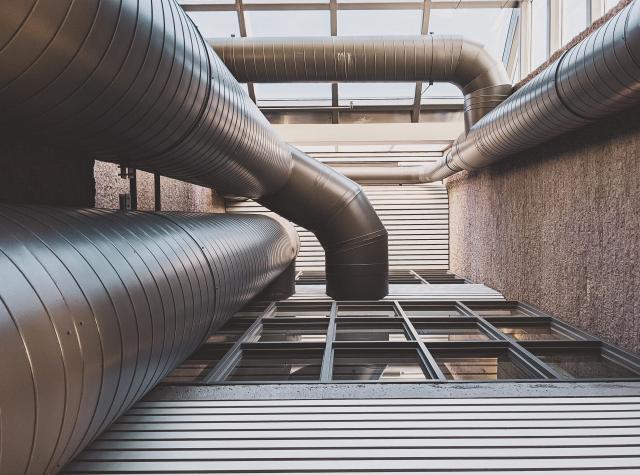
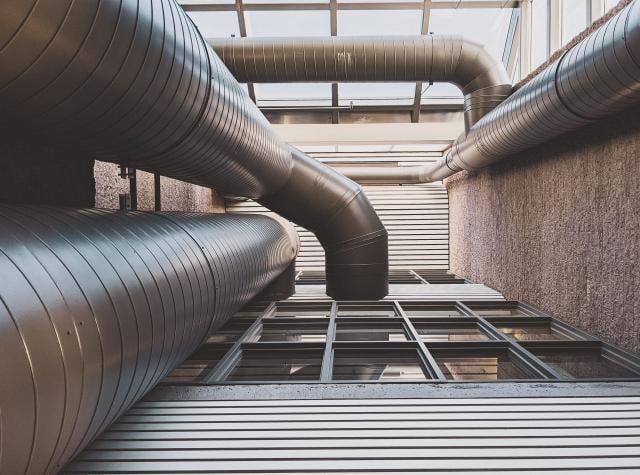
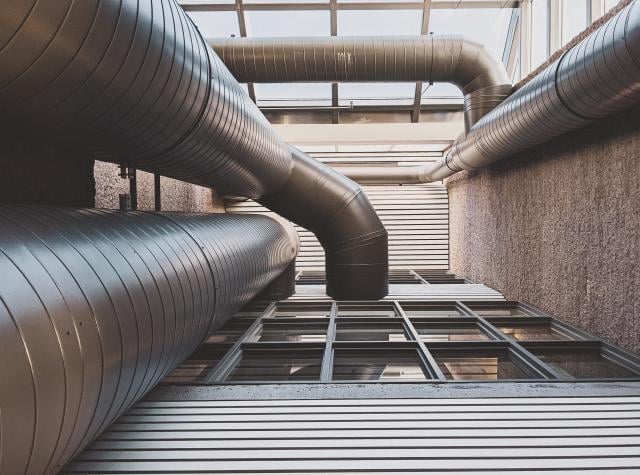
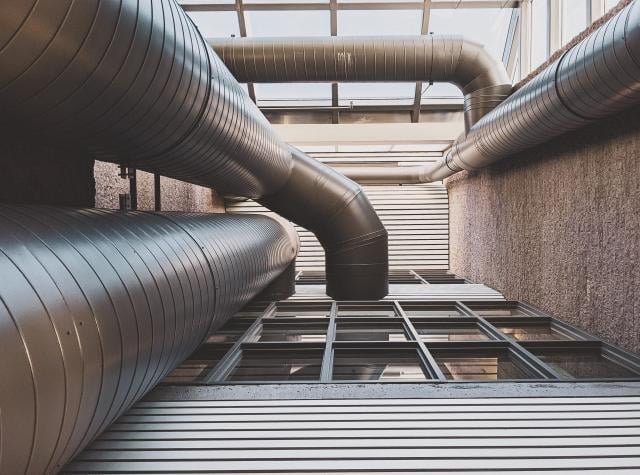
Protection of air handling units online training explains how to install, regulate and control protection devices for air handling units.

Thermostats and pressure switches constitute the first control level for the correct operating of air handling units. Knowledge of their operation and their regulating is therefore very important for all technicians in charge of this type of equipment.

Go to Class
MOOC List is learner-supported. When you buy through links on our site, we may earn an affiliate commission.

Related Courses

Big History - From the Big Bang until Today (Coursera) Coursera
University of Amsterdam

Big History - From the Big Bang until Today (Coursera)

Welcome to this Big History course! In this course, renowned scientists and scholars from the University of Amsterdam and beyond will take you on a journey from the Big Bang until today while addressing key questions in their fields. After completing this journey you will have developed a better understanding of how you and everything around you became the way they are today.

Aug 31st 2026
4 Weeks
Particle Physics: an Introduction (Coursera) Coursera
University of Geneva

Particle Physics: an Introduction (Coursera)

This course introduces you to subatomic physics, i.e. the physics of nuclei and particles. More specifically, the following questions are addressed: What are the concepts of particle physics and how are they implemented?; What are the properties of atomic nuclei and how can one use them?; How does one accelerate and detect particles and measure their properties?; What does one learn from particle reactions at high energies and particle decays?; How do electromagnetic interactions work and how can one use them?; How do strong interactions work and why are they difficult to understand?; How do weak interactions work and why are they so special?; What is the mass of objects at the subatomic level and how does the Higgs boson intervene?; How does one search for new phenomena beyond the known ones?; What can one learn from particle physics concerning astrophysics and the Universe as a whole?

Sep 7th 2026
5-12 Weeks
The Science of Gastronomy (Coursera) Coursera
The Hong Kong University of Science and Technology - HKUST

The Science of Gastronomy (Coursera)

This course introduces a number of basic scientific principles underpinning the methodology of cooking, food preparation and the enjoyment of food. All topics covered have a strong basis in biology, chemistry, and physics application. Among others, they include the consumption of cooked food, the physiological and evolutionary implication of the senses, geographic and cultural influences on food, and the rationale behind food preparation. We will also discuss issues such as coupling of senses to improve sense stimulation; altering flavor by chemical means; and modification of the coloration to improve the appearance of dishes. Following the video demonstrations of the scientific principles of cooking, you will learn to recognize the key ingredients and their combinations for preparing good healthy food.

Sep 1st 2026
5-12 Weeks
Understanding Modern Physics III: Simplicity and Complexity (Coursera) Coursera
The Hong Kong University of Science and Technology - HKUST

Understanding Modern Physics III: Simplicity and Complexity (Coursera)

The 20th century was known as the century of physics. In the past 120 years, concepts such as space, time, energy, entropy and particles were understood to much deeper levels. New paradigms of thinking such as relativity and quantum mechanics emerged. This course is the third course in the Understanding Modern Physics series, which covers an introduction to action principle, fundamental particle physics, entropy & information and complexity.

Sep 7th 2026
4 Weeks
AstroTech: The Science and Technology behind Astronomical Discovery (Coursera) Coursera
University of Edinburgh

AstroTech: The Science and Technology behind Astronomical Discovery (Coursera)

Modern astronomy has made some astonishing discoveries - how stars burn and how black holes form; galaxies from the edge of the universe and killer rocks right next door; where the elements come from and how the expanding universe is accelerating. But how do we know all that? The truth is that astronomy would be impossible without technology, and every advance in astronomy is really an advance in technology. But the technology by itself is not enough. We have to apply it critically with a knowledge of physics to unlock the secrets of the Universe.

Aug 24th 2026
5-12 Weeks
Understanding Modern Physics I: Relativity and Cosmology (Coursera) Coursera
The Hong Kong University of Science and Technology - HKUST

Understanding Modern Physics I: Relativity and Cosmology (Coursera)

The 20th century was known as the century of physics. In the past 120 years, concepts such as space, time, energy, entropy and particles were understood to much deeper levels. New paradigms of thinking such as relativity and quantum mechanics emerged. This course is the first course in the Understanding Modern Physics series, which covers an introduction to special relativity, general relativity and cosmology.

Aug 31st 2026
5-12 Weeks
Foundation of Structural Dynamics (Coursera) Coursera
ISAE-SUPAERO

Foundation of Structural Dynamics (Coursera)

A course with variable geometry where everyone, we hope, will find personal benefits. The parts can be studied sequentially or independently; and inside each part, elementary learning items can be picked up. Globally, this course proposes a deep knowledge of fundamental dynamics, with possible explicit and implicit applications in structural dynamics, but also in physics and control of any dynamic system (automatics, …).

Sep 7th 2026
5-12 Weeks
The Diversity of Exoplanets (Coursera) Coursera
University of Geneva

The Diversity of Exoplanets (Coursera)

In this MOOC, you will have the opportunity to practice several methods of detection and characterisation of exoplanets. You will discover their statistical properties and the current state of knowledge we have in this very recent field of research. You will also understand the limitations and biases of the different detection techniques.

Aug 24th 2026
5-12 Weeks