EdX

Caer o No caer. El secreto de las estructuras (edX)

Caer o No caer. El secreto de las estructuras (edX)

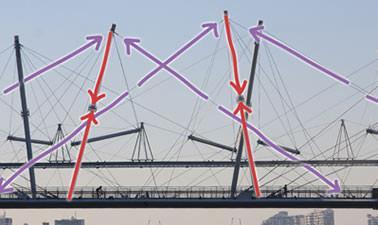
Las estructuras están presentes en todos los sistemas que nos rodean. Descubrirlas y comprender cómo funcionan es sencillo y fascinante. Las estructuras están implicadas en nuestras vidas: las plantas, los animales, casi todo lo que fabrica el ser humano, incluso nuestro propio cuerpo, deben soportar una serie de fuerzas sin romperse, y por lo tanto prácticamente cualquier elemento de nuestro entorno es una estructura de una clase u otra.

Class Deals by MOOC List - Click here and see EdX's Active Discounts, Deals, and Promo Codes.

No cabe duda de que entender cómo se comportan las estructuras es fundamental para entender el mundo que nos rodea, para comprender la naturaleza y para juzgar mejor los progresos que ha hecho la humanidad a lo largo de la historia. Sin embargo, los ingenieros hemos fallado una y otra vez cuando hemos intentado explicar esta materia de forma que los no entendidos puedan entender su importancia.

Este curso pretende saltar esa brecha existente entre los expertos en cálculo de estructuras y los profanos utilizando un lenguaje asequible, empleando ejemplos históricos y proponiendo ensayos sencillos que pueden hacerse en casa. El curso abordará no sólo el problema de por qué los edificios y los puentes se caen sino también otras muchas cuestiones. ¿Por qué las ventanas de los aviones son redondas? ¿Por qué los gusanos tienen esa forma? ¿Por qué los murciélagos pueden volar dentro de un rosal sin rasgarse las alas? ¿Cómo funcionan las arterias? ¿Por qué las catedrales góticas pueden ser tan esbeltas? ¿Por qué hay construcciones romanas que siguen en pie 2000 años después? ¿Qué podemos aprender sobre los constructores de las diferentes estructuras que nos han legado nuestros antepasados?
Muchos contenidos de este curso pueden ser útiles para médicos, biólogos, artistas, historiadores y arqueólogos.

What you'll learn
Lo que aprenderás:

  • Adquirir los conceptos fundamentales relacionados con las estructuras
  • Comprender el comportamiento de las estructuras históricas más importantes
  • Entender la evolución de las estructuras de los seres vivos
  • Conocer las principales tendencias actuales en el diseño de diferentes estructuras como edificios, puentes y vehículos

Syllabus

Semana 1: Las grandes construcciones de la Antigüedad
Los menhires: la construcción más sencilla ¿o no tan sencilla? El dolmen: un gran paso para la humanidad. La piedra: la mejor amiga del constructor en la antigüedad. ¿Qué sabían de ingeniería los constructores de Stonehenge? ¿Qué nos enseña Stonehenge sobre sus constructores? ¿Por qué las primeras civilizaciones construyeron pirámides en todas las partes del mundo? ¿Qué nos enseñan las pirámides sobre sus constructores? ¿Cómo salvar una distancia?

Semana 2: Del humilde Románico al grandioso Gótico
¿Qué materiales utilizar? Puentes colgantes: los puentes más antiguos y los más modernos. ¿Podemos subir a la Luna en ascensor? ¿Por qué no se caen los arcos? Mil ochocientos años transportando agua. ¿Qué nos enseña el acueducto sobre los romanos?. El humilde románico. El grandioso gótico. El genio de Gaudí.

Semana 3: Salvar una distancia
Un momento, por favor. ¿En qué consiste ser flexible? La importancia de la geometría. Sobre Thomas Young. Más allá de Young. Un tipo peligroso: Pandeo. Puentes de récord. Cargas, fuerzas y reacciones ¿son lo mismo?

Semana 4: Un techo sobre nuestras cabezas Las ingeniosas celosías.
Las sencillas bóvedas. ¿Cómo trabajan las bóvedas? Las grandiosas cúpulas. Placas y láminas ¿son lo mismo? ¿Cómo resistir un terremoto? Los secretos de las pagodas japonesas. Alcanzar el cielo.

Semana 5: Estructuras que flotan: los barcos
El mar como fuente de alimento. El genio de Arquímedes. La conquista del mar. Más lejos, más rápido. Más lejos, más rápido aún. La revolución industrial. Luchar contra el agua.

Semana 6: Estructuras que ruedan: los coches
La rueda: un invento redondo. Confort en ruta. Accidentes más seguros. Usa siempre el casco.

Semana 7: Estructuras que vuelan: los aviones
¿Por qué vuela un avión? ¿Cómo hacer unas alas? Cuidado: torsión en las alas. Otras estructuras que vuelan. ¿De qué están hechos los aviones? Estructuras con aberturas.

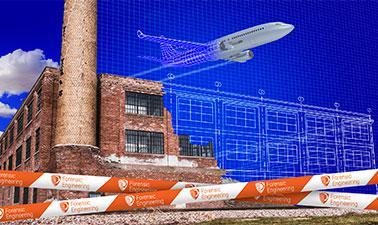
Semana 8: Ingeniería forense
Rompan filas antes de cruzar un puente. Excesos de confianza: RMS Titanic. Puente de Tacoma: divertido mientras duró. Barcos Liberty: luchando con fisuras. El coste del petróleo. Concorde: acumulación de fallos.
Go to Class
MOOC List is learner-supported. When you buy through links on our site, we may earn an affiliate commission.

Related Courses

A System View of Communications: From Signals to Packets (Part 1) (edX) EdX
The Hong Kong University of Science and Technology - HKUST,HKUSTx

A System View of Communications: From Signals to Packets (Part 1) (edX)

Explore the tradeoffs in designing communication systems like mobile phones, and the engineering tools to handle them. Have you ever wondered how information is transmitted using your mobile phone or a WiFi hotspot? This introductory course seeks to enable you to understand the basic engineering tools used and tradeoffs encountered in the design of these systems.

Self Paced
Self-Paced
Design of mound breakwaters for feasibility studies. Cubipod® Manual 2016 (edX) EdX
Universitat Politècnica de València,UPValenciaX

Design of mound breakwaters for feasibility studies. Cubipod® Manual 2016 (edX)

The goal of this course is to provide the tools to create feasible designs of mound breakwaters protected with Cubipod® armors fulfiling the prescribed economic, functional and safety requirements. This course is intended for professionals of coastal and port engineering who work in the preliminary design and feasibility studies of breakwaters.

Self Paced
Self-Paced
Dynamics and Control (edX) EdX
Universitat Politècnica de València,UPValenciaX

Dynamics and Control (edX)

This is an interactive course about the basic concepts of Systems, Control and their impact in all the human activities. First, the basic concepts of systems, dynamics, structure and control are introduced. Then, looking at many examples in Nature and human made devices, we will realize that the dynamic behavior of most systems can be modified by adding a control system. Later we will see how knowing how to evaluate the dynamic behavior of a system and measure its performance will provide the tools to design new controlled systems fulfilling some requirements.

Self Paced
Self-Paced
The Engineering of Structures Around Us (edX) EdX
DartmouthX,Dartmouth College

The Engineering of Structures Around Us (edX)

Explore how engineers design bridges and buildings in our communities and iconic structures around the world. In this introductory course, you’ll learn some engineering principles that can be applied to structural systems everywhere: in nature, in furniture, in mechanical and aerospace systems, and in any solid object that resists a load. Together we’ll explore how structures work, why they were designed the way they were designed, how they support loads, and where forces flow through them.

Self Paced
Self-Paced
The Basics of Transport Phenomena (edX) EdX
Delft University of Technology,DelftX

The Basics of Transport Phenomena (edX)

Learn the basic framework to work on a broad spectrum of engineering problems concerning transfer of heat, mass and momentum. Learn through examples of everyday processes at home, in the lab and in industry. Have you ever wondered why ventilation helps to cool down your hot chocolate? Do you know why a surfing suit keeps you warm? Why iron feels cold, while wood feels warm at room temperature? Or how air is transferred into aqueous liquids in a water treatment plant? How can we sterilize milk with the least amount of energy? How does medicine spread in our tissue? Or how do we design a new cooling tower of a power plant? All these are phenomena that involve heat transfer, mass transfer or fluid flow.

Self Paced
Self-Paced
Introduction to Discrete Choice Models (edX) EdX
École Polytechnique Fédérale de Lausanne,EPFLx

Introduction to Discrete Choice Models (edX)

The course introduces the theoretical foundations to choice modeling and describes the steps of operational modeling. Human behavior is complexand unpredictable. Or is it? The focus of this course is methods for predicting the behavior using mathematical models. More specifically, we'll explore choice modeling in order to obtain disaggregate demand models.

Self Paced
Self-Paced
Water and Wastewater Treatment Engineering: Biochemical Technology (edX) EdX
Tsinghua University,TsinghuaX

Water and Wastewater Treatment Engineering: Biochemical Technology (edX)

Learn the basic principles and characteristics of biochemical technology in water and wastewater treatment engineering. Biochemical technology in water and wastewater treatment engineering is essential in the field of water treatment. In this environmental studies course you will learn the basic principles and characteristics of biochemical technology.

Self Paced
Self-Paced
Modeling and Simulation of Multibody Systems - Part II (edX) EdX
LouvainX,Université Catholique de Louvain - UCL

Modeling and Simulation of Multibody Systems - Part II (edX)

90% of daily life multibody systems contain loops of bodies, e.g. vehicle or bike suspensions, parallel manipulators or robots, and musculoskeletal systems. They can also include joint constraints. In this second course about multibody systems, learn how to model them and how to deal with more advanced numerical analyses.

Self Paced
Self-Paced
Decision-Making for Autonomous Systems (edX) EdX
Chalmers University of Technology,ChalmersX

Decision-Making for Autonomous Systems (edX)

Learn effective tactics for making key decisions when working with autonomous, self-driving vehicles. In autonomous vehicles such as self-driving cars, we find a number of interesting and challenging decision-making problems. Starting from the autonomous driving of a single vehicle, to the coordination among multiple vehicles. This course will teach you the fundamental mathematical model for many of these real-world problems.

Self Paced
Self-Paced
Comfort and Health in Buildings (edX) EdX
Delft University of Technology,DelftX

Comfort and Health in Buildings (edX)

Learn how to realize thermally comfortable and healthy buildings and how energy technologies impact comfort. Even in the well-accepted indoor temperature range of 20-24°C (68-75°F), people can experience thermal discomfort. Complaints about the indoor thermal environment are one of the major complaints building and facility managers have to deal with, and they spend a large amount of their time and money to solve them. People spend more than 80% of their time in buildings. Therefore a good thermal comfort and quality of the indoor environment are essential for their wellbeing, health and productivity.

Self Paced
Self-Paced