Future Technologies Series: 3D printing and digital manufacturing (CanopyLAB)

Offered by CanopyLAB,
Future Technologies Series: 3D printing and digital manufacturing (CanopyLAB)

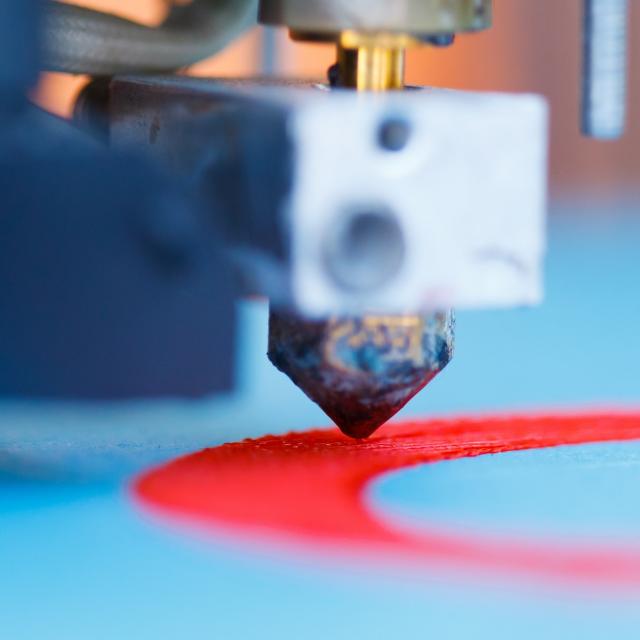
This course is a deep-dive in our “Future Technologies” series, where we explore the basics behind the buzzwords to properly understand the impact of technological developments on society. Will you soon be able to print your own clothes? Your own food? Your own gun? This course dives into the possibilities of Digital Manufacturing, popularly known as 3D printing.

Unit 1: Breaking Down 3D Printing
Unit 2: 3D Printing & Digital Manufacturing: Thürmer Tools Case Study
Unit 3: How Is 3D Printing Transforming the Manufacturing Industry?
Unit 4: New Applications: 3D Bioprinting, 3D-Printed House And 3D-Printed Food
Unit 5: Looking Ahead: The Ethics of 3D Printing

The first unit provides an overview of the 3D printing process from blueprint to object, and everything in between. Throughout the rest of the units, you will be taken on the journey from the traditional to the digital manufacturing industry with CEO Erik Thürmer and R&D Engineer Adam Kazmierczak from Thürmer Tools. Unit 4 provides examples of other types of production that are already adopting 3D printing technologies within the medical and culinary industry. The final unit raises important questions regarding the changes of this emerging technology, and how it is affecting people at an individual and societal level. Who controls the creation, sharing and selling of 3D printing blueprints? What happens when blueprints for guns come into the equation, or when 3D printing parts for vehicles is replacing people’s jobs? That's why we have Aarhus University researcher Jessica Sorensen explaining important considerations and impact of ethics & 3D printing.
Go to Class
MOOC List is learner-supported. When you buy through links on our site, we may earn an affiliate commission.

Related Courses

Becoming a changemaker: Introduction to Social Innovation (Coursera) Coursera
University of Cape Town

Becoming a changemaker: Introduction to Social Innovation (Coursera)

This free 6 week course is for anyone who wants to make a difference. Whether you are already familiar with the field of social innovation or social entrepreneurship, working for an organization that wants to increase its social impact, or just starting out, this course will take you on a journey of exploring the complex problems that surround us and how to start thinking about solutions.

Jun 15th 2026
5-12 Weeks
Greening the Economy: Lessons from Scandinavia (Coursera) Coursera
Lund University

Greening the Economy: Lessons from Scandinavia (Coursera)

How can we live a good life on one planet with over seven billion people? This course will explore greening the economy on four levels – individual, business, city, and nation. We will look at the relationships between these levels and give many practical examples of the complexities and solutions across the levels. Scandinavia, a pioneering place advancing sustainability and combating climate change, is a unique starting point for learning about greening the economy. We will learn from many initiatives attempted in Scandinavia since the 1970s, which are all potentially helpful and useful for other countries and contexts.

Jun 15th 2026
5-12 Weeks
Sustainable Development Goal 11: Sustainable Cities and Communities (CanopyLAB) CanopyLAB
SDG LAB

Sustainable Development Goal 11: Sustainable Cities and Communities (CanopyLAB)

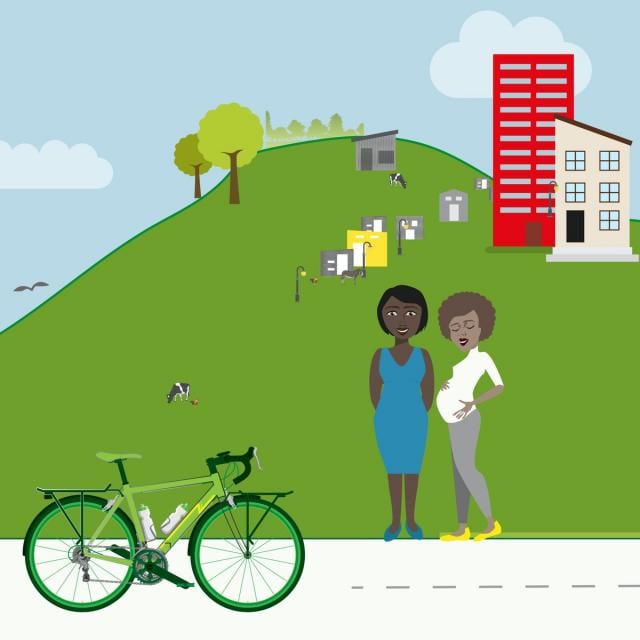
This course aims at providing you with a deeper understanding of the reasons why the United Nations chose to focus on Sustainable Cities and Communities as an important goal for sustainable development. In Unit 1, we look at the issues cities around the world are facing. In Unit 2, we focus on the targets set under this goal and the progress made so far. In Unit 3, we go around the world to see what different countries, cities, and communities are doing to become more sustainable. Finally, in Unit 4 we give you the opportunity to take the reigns and become the champion of Goal 11.

Self Paced
Self-Paced
Wood Science: Beyond Building (Coursera) Coursera
West Virginia University

Wood Science: Beyond Building (Coursera)

The central question of this course: “why study wood?” If “why study wood” is the question, one answer would be that it is the only raw material available to us that is truly renewable in human life span terms. Wood is as important to society today as it ever was, despite the development of many man-made substitute materials, changing resource availability, and the changing needs of society.

Jun 15th 2026
4 Weeks
Beyond the Sustainable Development Goals (SDGs): Addressing Sustainability and Development (Coursera) Coursera
University of Michigan

Beyond the Sustainable Development Goals (SDGs): Addressing Sustainability and Development (Coursera)

We’re excited you’re here! This course, “Beyond the Sustainable Development Goals (SDGs): Addressing Sustainability and Development,” is the first course in the upcoming Sustainability and Development MasterTrack Certificate program (Fall 2020), but you can also take this course as a stand-alone learning opportunity.

Jun 17th 2026
5-12 Weeks
Wind resources for renewable energies (Coursera) Coursera
École Polytechnique

Wind resources for renewable energies (Coursera)

The main goal of this course is to get the necessary knowledge on atmospheric and fluid dynamics in order to quantify the wind resource of a local or regional area. We’ll learn about basic meteorology, the specific dynamics of turbulent boundary layers and some standard techniques to estimate wind resources regardless of the type of turbine used or the level of efficiency achieved.

Jun 15th 2026
4 Weeks
Sustainable Development Goal 4: Quality Education (CanopyLAB) CanopyLAB
SDG LAB

Sustainable Development Goal 4: Quality Education (CanopyLAB)

Quality education encompasses a range of issues: from ensuring primary and secondary education, literacy and numeracy for all, to fighting discrimination and other societal issues that prevent people from receiving education, and many more. We take a special focus on girls' and women's rights to education and examine the layers of obstacles that females may face when it comes to overcoming poverty, violence, and stereotypes in order to receive the education that they are entitled to. Undeterred by the challenges, many female figures and organizations advocating for education and women's' rights have made amazing achievements in advancing their own education and that of females around the world. Part of this course is dedicated to telling their stories and inspiring you to take action to advance Goal 4.

Self Paced
Self-Paced
Sustainable Development Goal 7: Affordable and Clean Energy (CanopyLAB) CanopyLAB
SDG LAB

Sustainable Development Goal 7: Affordable and Clean Energy (CanopyLAB)

This course aims at introducing you to and providing you with a deeper understanding of the Sustainable Development Goal 7: Affordable and Clean Energy. In Unit 1, we will be gaining a deeper understanding of the rationale as to why the United Nations (UN) views Clean and Affordable Energy as an important goal. In Unit 2, we will focus on the targets under this goal and look at real-world examples of how governments and businesses are doing their part to ensure the targets are met. In Unit 3, we will look at past and present agreements and conventions, as well as technological advancements and champions that are assisting with meeting these targets. Finally, in Unit 4 we will give you the opportunity to take the reigns and become the champions of Goal 7.

Self Paced
Self-Paced
Sustainable Food Production Through Livestock Health Management (Coursera) Coursera
University of Illinois at Urbana-Champaign

Sustainable Food Production Through Livestock Health Management (Coursera)

Learn about the impact of infectious disease on sustainable animal-based food production by understanding the science of growth, immunity, and infection and by learning the problem-solving skills needed to advance animal health and food production through optimal management practices. In this course we will explore the effect of infectious disease on sustainable animal-based food production. The content and learning outcomes of this new course will be designed to be relevant across different food production sectors (i.e., beef, dairy, poultry, and pigs).

Jun 15th 2026
5-12 Weeks
Our Earth's Future (Coursera) Coursera
American Museum of Natural History

Our Earth's Future (Coursera)

Our Earth’s Future is about the science of climate change and how to talk about it. You will learn from scientists in the fields of climatology, oceanography, Earth science, and anthropology who study how climate change is affecting people, populations, and ways of life. Explore the multiple lines of evidence for the human-induced climate change that is happening today, and consider what that means for the future of our planet. At the end of this course you will be able to understand key scientific principles, identify and address misconceptions, and contribute confidently to conversations about climate change.

Jun 15th 2026
5-12 Weeks
ROMA: A Discussion of Diversity and the Treatment of Minorities in Europe (CanopyLAB) CanopyLAB
Humanity in Action, Denmark

ROMA: A Discussion of Diversity and the Treatment of Minorities in Europe (CanopyLAB)

Learning about the Roma experience in Europe is not only about learning history. It is about understanding the presence, and it is also an insight into a common European future. Konstanty Gebert analyses the Roma people’s past and present and discusses issues of race, identity, integration and discrimination that are at the forefront of contemporary European politics.

Self Paced
Self-Paced