Sustainable Development Goal 1: No Poverty (CanopyLAB)

Offered by SDG LAB,
Sustainable Development Goal 1: No Poverty (CanopyLAB)

Ending poverty is one of the cross-cutting issues of the 17 Sustainable Development Goals because it is related to many other goals on the list such as decent jobs, quality education, and improving infrastructure and access to health care. It is also a cross-cutting issue in the sense that it concerns every country and every person, no matter rich or poor, young or old and any other differences in conditions of life. This is because poverty is not an isolated phenomenon; rather it is a state that anyone could all fall into if there is not a system to protect them. In this course, you will learn about the various forms that poverty can take, and how it can be battled, by the United Nations, governments, companies, humanitarian organizations, and last but not least, you.

When was the last time you saw a homeless person sleeping on the street or skipped a YouTube ad about donating money to save hungry children? Poverty is more than having no food or money. It is about not having enough resources and that is a problem that concerns every country and every person - whether you are rich or poor, young or old. Even you may be affected by poverty at some point in your life if there isn’t a system in their community to protect you.
There is a reason why this is Goal #1. Poverty affects the other SDG’s on the list like jobs, education, housing and health. By now you may be wondering, how is that even possible? The following units explain this through REAL stories of how teenagers like you experience poverty everyday from the UK and Greece to Myanmar and Canada.
Yes, you should care. Yes, you can do something about it.

Unit 1 - What is Goal 1: No Poverty?
Unit 2 - No Poverty by 2030: What are the Targets?
Unit 3 - New Light on an Old Problem: Rethinking Poverty
Unit 4 - What Can I Do to Promote No Poverty?
Go to Class
MOOC List is learner-supported. When you buy through links on our site, we may earn an affiliate commission.

Related Courses

Sustainable Development Goal 15: Life On Land (CanopyLAB) CanopyLAB
SDG LAB

Sustainable Development Goal 15: Life On Land (CanopyLAB)

Humans rely heavily on agriculture, both as an economic resource and for social development. It is what brings food to the table and it is also an important source of income for many families and countries, especially in Africa and Latin America. At the same time, natural resources such as water, forests and animal life are being threatened by human activities, with consequences ranging from drought and deterioration of land to poaching and trafficking of wildlife. To combat these requires a concerted effort that restore land and wildlife to health and use these resources responsibly going forward for food production and economic development. In this course, you will learn about the challenges facing our land, what is being done around the world, and how you can help protect the Earth and promote Goal 15.

Self Paced
Self-Paced
Circular Economy - Sustainable Materials Management (Coursera) Coursera
Lund University,Delft University of Technology,EIT RawMaterials,VITO,Geological Survey of Denmark and Greenland - GEUS,National Technical University of Athens - NTUA,Ghent University

Circular Economy - Sustainable Materials Management (Coursera)

This course looks at where important materials in products we use every day come from and how these materials can be used more efficiently, longer, and in closed loops. This is the aim of the Circular Economy, but it doesn’t happen on its own. It is the result of choices and strategies by suppliers, designers, businesses, policymakers and all of us as consumers.

Oct 5th 2026
5-12 Weeks
Act on Climate: Steps to Individual, Community, and Political Action (Coursera) Coursera
University of Michigan

Act on Climate: Steps to Individual, Community, and Political Action (Coursera)

Are you concerned about climate change? Would you like to learn how to address and respond to this challenge? If so, this course is for you. Act on Climate: Steps to Individual, Community, and Political Action is intended to help learners understand, address and respond to climate change as individuals and in partnership with their communities and political leaders.

Oct 5th 2026
5-12 Weeks
Sustainable Development Goal 14: Life Below Water (CanopyLAB) CanopyLAB
SDG LAB

Sustainable Development Goal 14: Life Below Water (CanopyLAB)

You might not constantly think about it, but oceans are a crucial part of the ecosystem that makes Earth habitable for humans. More than half of the oxygen we breathe comes from algae, and the oceans absorb a large amount of the carbon dioxide released by human activities, thus mitigating the impact of climate change. The oceans are also a crucial source of food and livelihood for humans. Yet today, the oceans face multiple threats including climate change, environmental degradation, pollution, and overfishing. In this course, you will learn about the important role oceans play, their current state of deterioration, and what you can do to improve it.

Self Paced
Self-Paced
Sustainable Development Goal 10: Reduced Inequalities (CanopyLAB) CanopyLAB
SDG LAB

Sustainable Development Goal 10: Reduced Inequalities (CanopyLAB)

What does "inequality" mean? Goal 10 takes a holistic approach to the concept of inequality, which means that it recognizes inequality not just in terms of income but also in many other aspects of life such as unequal access to decent healthcare, quality education, good infrastructure and fairly paid jobs. In this course, we will investigate the consequences of inequality in theories, and see how they play out in the real world by looking at the rich and poor gap in examples of countries around the world, from the United Kingdom and the United States to Brazil, Indonesia, and Nigeria.

Self Paced
Self-Paced
Greening the Economy: Lessons from Scandinavia (Coursera) Coursera
Lund University

Greening the Economy: Lessons from Scandinavia (Coursera)

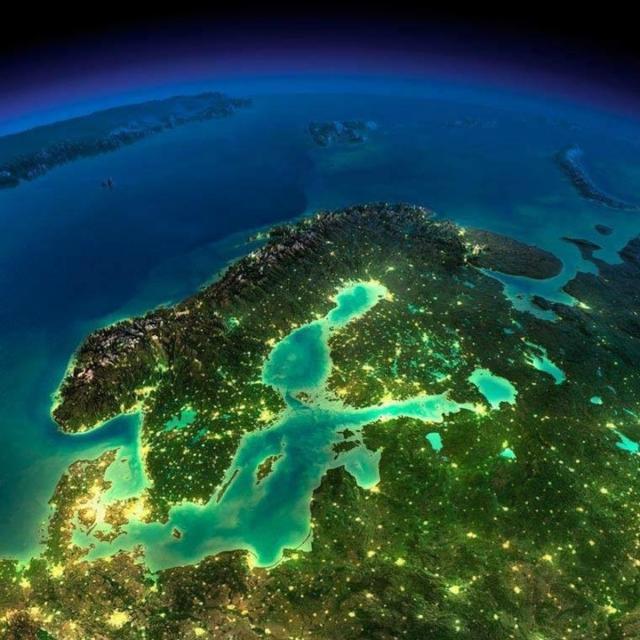
How can we live a good life on one planet with over seven billion people? This course will explore greening the economy on four levels – individual, business, city, and nation. We will look at the relationships between these levels and give many practical examples of the complexities and solutions across the levels. Scandinavia, a pioneering place advancing sustainability and combating climate change, is a unique starting point for learning about greening the economy. We will learn from many initiatives attempted in Scandinavia since the 1970s, which are all potentially helpful and useful for other countries and contexts.

Oct 5th 2026
5-12 Weeks
ROMA: A Discussion of Diversity and the Treatment of Minorities in Europe (CanopyLAB) CanopyLAB
Humanity in Action, Denmark

ROMA: A Discussion of Diversity and the Treatment of Minorities in Europe (CanopyLAB)

Learning about the Roma experience in Europe is not only about learning history. It is about understanding the presence, and it is also an insight into a common European future. Konstanty Gebert analyses the Roma people’s past and present and discusses issues of race, identity, integration and discrimination that are at the forefront of contemporary European politics.

Self Paced
Self-Paced
Becoming a changemaker: Introduction to Social Innovation (Coursera) Coursera
University of Cape Town

Becoming a changemaker: Introduction to Social Innovation (Coursera)

This free 6 week course is for anyone who wants to make a difference. Whether you are already familiar with the field of social innovation or social entrepreneurship, working for an organization that wants to increase its social impact, or just starting out, this course will take you on a journey of exploring the complex problems that surround us and how to start thinking about solutions.

Oct 5th 2026
5-12 Weeks
A Business Approach to Sustainable Landscape Restoration (Coursera) Coursera
Erasmus University Rotterdam

A Business Approach to Sustainable Landscape Restoration (Coursera)

Integrated landscape management and large-scale landscape restoration should be in every company’s business strategy because in order to reach the Sustainable Development Goal on Land Degradation Neutrality (SDG Number 15.3) scaling up and acceleration of business-driven landscape restoration is urgently needed.

Oct 5th 2026
5-12 Weeks