Community Change in Public Health (Coursera)

Community Change in Public Health (Coursera)

In bringing about behavior change in public health, we often focus on the individual mother, student, or farmer. We should not forget the community structure and norms constrain for encouraging individual health behaviors. This course examines the community context of the changes needed to promote the public’s health. We begin by examining the various definitions of ‘community’ and the processes by which we ‘diagnose’ or seek to understand the structure and characteristics of different types of communities.

Class Deals by MOOC List - Click here and see Coursera's Active Discounts, Deals, and Promo Codes.

An appreciation of community similarities and differences is necessary lest we fall into the trap of designing one-size-fits-all interventions. We need to recognize that no matter that outsiders may view a community as poor or neglected, we can find strengths and capacities for improvement in each community. Identifying community capacities and resources is the first step in facilitating community change. Different practical and philosophical approaches to change and therefore, examined. Specific to the change process is our recognition of the need for communities to participate in the design, implementation and evaluation of any intervention. We examine the concept of participation in an effort to see how different levels of involvement may affect sustainability of community change efforts. Finally a case study of a community participatory approach to onchocerciasis control in Africa is presented. Community Directed Intervention has subsequently been successfully applied to providing other essential primary health care services by and in the community, such as insecticide treated bednets, malaria treatment, vitamin A distribution, deworming medicines, and pneumonia and diarrhea case management.
Course 5 of 5 in the Foundations of Global Health Specialization

Syllabus

WEEK 1
This week, we'll get oriented to the course, learn about the ecological model, and learn how to classify communities on the basis of identity, linkages, group orientation, and integration.

WEEK 2
Welcome to Week 2 of Community Change in Public Health. This week's lectures will focus on Community Efficacy and Community Change Models. Learning these concepts will help you gain a deeper understanding of the forces at work within communities and how they can be harnessed to affect positive change.

WEEK 3
Welcome to Module 3. This week, we'll take a look at the political economy framework as well as the concepts of community participation and involvement levels. You'll also complete your first peer review assignment this week by reading a case study and using what you've learned to describe community change.

WEEK 4
This week, we'll look at community coalitions, contrasting community-based and community-directed programs, and the results of enhancing community-directed treatment.

WEEK 5
In this final week, we'll learn about the Community-Directed Intervention (CDI) process, an expansion beyond the Community-Directed Treatment process used with Ivermectin. Finally, you will complete your second peer-review assignment in which you'll describe a community from a case study and also describe two possible interventions to sustain the change that is already underway.

Go to Class
MOOC List is learner-supported. When you buy through links on our site, we may earn an affiliate commission.

Related Courses

Clinical Kidney, Pancreas and Islet Transplantation (Coursera) Coursera
Leiden University,Leiden University Medical Center

Clinical Kidney, Pancreas and Islet Transplantation (Coursera)

Kidney transplantation is a major advance of modern medicine which provides high-quality of life for patients with end-stage renal disease. What used to be an experimental, risky, and very limited treatment option more than 50 years ago is now routinely performed in many countries worldwide. The number of renal transplants is expected to rise sharply in the next decade since the proportion of patients with end stage renal disease is increasing.

Aug 17th 2026
4 Weeks
Traditional herbal medicine in supportive cancer care: From alternative to integrative (Coursera) Coursera
Technion - Israel Institute of Technology

Traditional herbal medicine in supportive cancer care: From alternative to integrative (Coursera)

Please join us for an exciting and innovative journey, examining one of the most important and often overlooked aspects of the oncology setting: Traditional Herbal Medicine in Supportive Cancer Care. This course is presented with short lectures offering a wide range of issues related to the principles and practice of herbal medicine in cancer care.

Aug 17th 2026
13-24 Weeks
Evidence-based Toxicology (Coursera) Coursera
Johns Hopkins University

Evidence-based Toxicology (Coursera)

Welcome to the Evidence-based Toxicology (EBT) course. In medicine and healthcare, evidence-based medicine has revolutionized the way that information is evaluated transparently and objectively. Over the past ten years, a movement in North America and Europe has attempted to translate this revolution to the field of toxicology.

Aug 17th 2026
5-12 Weeks
Childbirth: A Global Perspective (Coursera) Coursera
Emory University

Childbirth: A Global Perspective (Coursera)

This course will review challenges for maternal and newborn health in the developing world, where a great many women and babies are suffering from complications during pregnancy, childbirth, and the days following birth. Themes covered include the epidemiology of maternal and newborn mortality and morbidity, relevant issues for the global health workforce, community-based interventions to improve maternal and newborn health and survival, and sociocultural dynamics surrounding birth.

Aug 24th 2026
5-12 Weeks
Psychology of Popularity (Coursera) Coursera
University of North Carolina

Psychology of Popularity (Coursera)

The level of popularity you experienced in childhood and adolescence is still affecting you today in ways that you may not even realize. Learn about how psychologists study popularity and how these same concepts can be used in adulthood to be more successful at work, become better parents, and have a happier life.

Aug 17th 2026
5-12 Weeks
Medical Neuroscience (Coursera) Coursera
Duke University

Medical Neuroscience (Coursera)

Medical Neuroscience explores the functional organization and neurophysiology of the human central nervous system, while providing a neurobiological framework for understanding human behavior. In this course, you will discover the organization of the neural systems in the brain and spinal cord that mediate sensation, motivate bodily action, and integrate sensorimotor signals with memory, emotion and related faculties of cognition. The overall goal of this course is to provide the foundation for understanding the impairments of sensation, action and cognition that accompany injury, disease or dysfunction in the central nervous system. The course will build upon knowledge acquired through prior studies of cell and molecular biology, general physiology and human anatomy, as we focus primarily on the central nervous system.

Aug 17th 2026
13-24 Weeks
HPV-Associated Oral and Throat Cancer: What You Need to Know (Coursera) Coursera
Icahn School of Medicine at Mount Sinai

HPV-Associated Oral and Throat Cancer: What You Need to Know (Coursera)

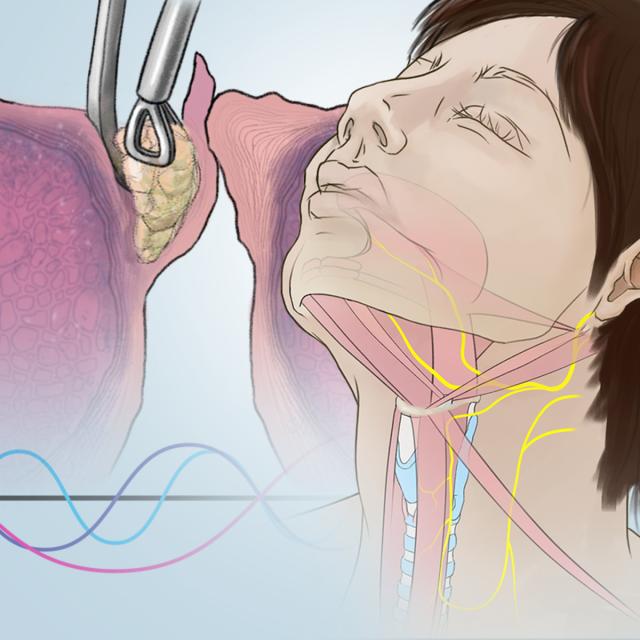
This course, offered by the Department of Otolaryngology – Head and Neck Surgery at the Icahn School of Medicine at Mount Sinai, is designed to inform primary care physicians and otolaryngologists (general and head and neck surgeons), as well as medical students, residents, nurses, physician assistants, medical assistants, about HPV-associated oral and throat cancers. It is also applicable to individuals who wish to broaden their knowledge and vernacular about this disease process, especially those who may have been diagnosed with HPV and/or HPV-associated oropharyngeal cancers.

Aug 17th 2026
5-12 Weeks
Population Health: Syndemics (Coursera) Coursera
Leiden University

Population Health: Syndemics (Coursera)

Do you wish to contribute to breaking cycles of ill-health in disadvantaged populations? And explore co-occurrence of diseases, such as substance abuse, infectious and chronic disease, and the relation with social factors (disparities)? Are you disappointed in the poor effectiveness of interventions for combined social and medical problems? Then this syndemics course might provide you with some answers.

Aug 17th 2026
4 Weeks
Stories of Infection (Coursera) Coursera
Stanford University

Stories of Infection (Coursera)

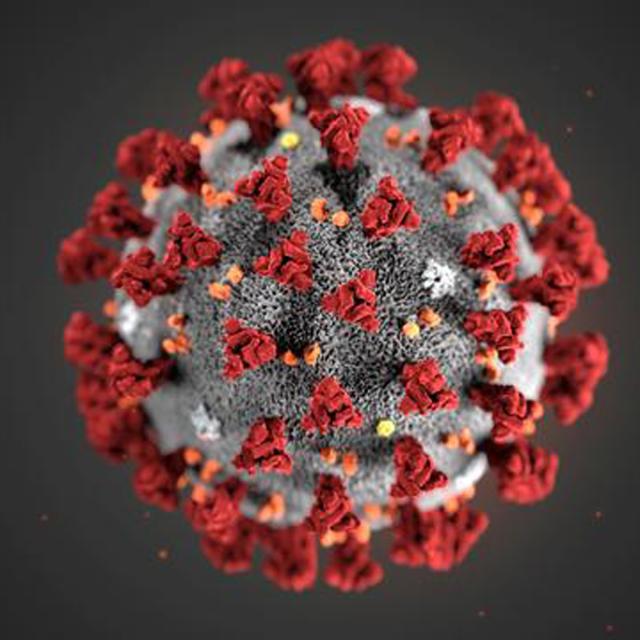
This course introduces learners to a variety of infectious diseases using a patient-centered, story-based approach. Through illustrated, short videos, learners will follow the course of each patient’s illness, from initial presentation to resolution. Integrating the relevant microbiology, pathophysiology and immunology, this course aims to engage and entice the learner towards future studies in microbiology, immunology and infectious diseases.

Aug 17th 2026
5-12 Weeks
Everyday Chinese Medicine (Coursera) Coursera
The Chinese University of Hong Kong

Everyday Chinese Medicine (Coursera)

This course aims to serve as an education platform on Chinese medicine (CM) for the general public. Our primary goal is to empower healthcare choices by promoting awareness and practical application on CM diagnostic and therapeutic approaches, as well as regulation on CM services and herbal products using international examples.

Aug 17th 2026
5-12 Weeks