Bioinformatic Methods I (Coursera)

Offered by University of Toronto,
Bioinformatic Methods I (Coursera)

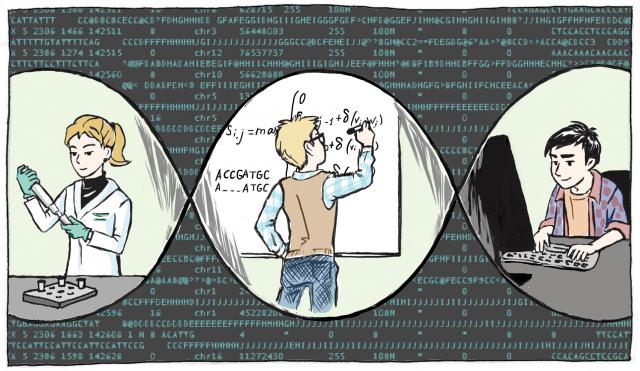
Large-scale biology projects such as the sequencing of the human genome and gene expression surveys using RNA-seq, microarrays and other technologies have created a wealth of data for biologists. However, the challenge facing scientists is analyzing and even accessing these data to extract useful information pertaining to the system being studied. This course focuses on employing existing bioinformatic resources – mainly web-based programs and databases – to access the wealth of data to answer questions relevant to the average biologist, and is highly hands-on.

Class Deals by MOOC List - Click here and see Coursera's Active Discounts, Deals, and Promo Codes.

Topics covered include multiple sequence alignments, phylogenetics, gene expression data analysis, and protein interaction networks, in two separate parts.
The first part, Bioinformatic Methods I (this one), deals with databases, Blast, multiple sequence alignments, phylogenetics, selection analysis and metagenomics.
The second part, Bioinformatic Methods II, covers motif searching, protein-protein interactions, structural bioinformatics, gene expression data analysis, and cis-element predictions.
This pair of courses is useful to any student considering graduate school in the biological sciences, as well as students considering molecular medicine. Both provide an overview of the many different bioinformatic tools that are out there.
These courses are based on one taught at the University of Toronto to upper-level undergraduates who have some understanding of basic molecular biology. No programming is required for this course.
Course 1 of 4 in the Plant Bioinformatic Methods Specialization.

Syllabus

WEEK 1
NCBI/Blast I
In this module we'll be exploring the amazing resources available at NCBI, the National Centre for Biotechnology Information, run by the National Library of Medicine in the USA. We'll also be doing a Blast search to find similar sequences in the enormous NR sequence database. We can use similar sequences to infer homology, which is the primary predictor of gene or protein function.

WEEK 2
Blast II/Comparative Genomics
In this module we'll continue exploring the incredible resources available at NCBI, the National Centre for Biotechnology Information. We will be performing several different kinds of Blast searches: BlastP, PSI-Blast, and Translated Blast. We can use similar sequences identified by such methods to infer homology, which is the primary predictor of gene or protein function. We'll also be comparing parts of the genomes of a couple of different species, to see how similar they are.

WEEK 3
Multiple Sequence Alignments
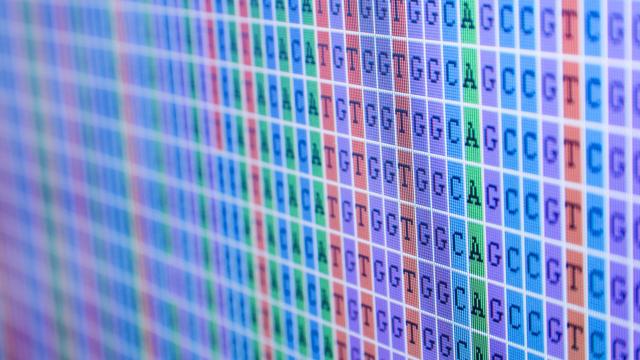
In this module we'll be doing multiple sequence alignments with Clustal (as implemented in MEGA), DiAlign, and MAFFT. Multiple sequences alignments can tell you where in a sequence the conserved and variable regions are, which is important for understanding the biology of the sequences under investigation. It also has practical applications, such as being able to design PCR primers that will amplify sequences from a number of different species, for example.

WEEK 4
Review: NCBI/Blast I, Blast II/Comparative Genetics, and Multiple Sequence Alignments

WEEK 5
Phylogenetics
In this module we'll be using the multiple sequence alignments we generated last lab to do some phylogenetic analyses with both neighbour-joining and maximum likelihood methods. The tree-like structure generated by such analyses tells us how closely sequences are related one to another, and suggests when in evolutionary time a speciation or gene duplication event occurred.

WEEK 6
Selection Analysis
In this module we'll take a set of orthologous sequences from bacteria and use DataMonkey to analyze them for the presence of certain sites under positive, negative or neutral selection. Such an analysis can help understand the biology of a set of protein coding sequences by identifying residues that might be important for biological function (those residues under negative selection) or those that might be involved in response to external influences, such as drugs, pathogens or other factors (residues under positive selection).

WEEK 7
'Next Gen' Sequence Analysis (RNA-Seq) / Metagenomics
In this module we'll explore some of the data that have been generated as a result of the rapid decrease in the cost of sequencing DNA. We'll be exploring a couple of RNA-Seq data sets that can tell us where any given gene is expressed, and also how that gene might be alternatively spliced. We'll also be looking at a couple of metagenome data sets that can tell us about the kinds of species (especially microbial species that might otherwise be hard to culture) that are in a given environmental niche.

WEEK 8
Review: Phylogenetics, Selection Analysis, and 'Next Gen' Sequence Analysis (RNA-seq)/Metagenomics + Final Assignment


Go to Class
MOOC List is learner-supported. When you buy through links on our site, we may earn an affiliate commission.

Related Courses

Leadership Through Marketing (Coursera) Coursera
Northwestern University

Leadership Through Marketing (Coursera)

The success of every organization depends on attracting and retaining customers. Although the marketing concepts for doing so are well established, digital technology has empowered customers, while producing massive amounts of data, revolutionizing the processes through which organizations attract and retain customers. In this course, students will learn how to identify new opportunities to create value for empowered consumers, develop strategies that yield an advantage over rivals, and develop the data science skills to lead more effectively, allocate resources, and to confront this very challenging environment with confidence.

Jun 28th 2026
4 Weeks
Practical Predictive Analytics: Models and Methods (Coursera) Coursera
University of Washington

Practical Predictive Analytics: Models and Methods (Coursera)

Statistical experiment design and analytics are at the heart of data science. In this course you will design statistical experiments and analyze the results using modern methods. You will also explore the common pitfalls in interpreting statistical arguments, especially those associated with big data. Collectively, this course will help you internalize a core set of practical and effective machine learning methods and concepts, and apply them to solve some real world problems.

Jun 22nd 2026
4 Weeks
Pattern Discovery in Data Mining (Coursera) Coursera
University of Illinois at Urbana-Champaign

Pattern Discovery in Data Mining (Coursera)

Learn the general concepts of data mining along with basic methodologies and applications. Then dive into one subfield in data mining: pattern discovery. Learn in-depth concepts, methods, and applications of pattern discovery in data mining. We will also introduce methods for data-driven phrase mining and some interesting applications of pattern discovery. This course provides you the opportunity to learn skills and content to practice and engage in scalable pattern discovery methods on massive transactional data, discuss pattern evaluation measures, and study methods for mining diverse kinds of patterns, sequential patterns, and sub-graph patterns.

Jun 22nd 2026
4 Weeks
Machine Learning Foundations: A Case Study Approach (Coursera) Coursera
University of Washington

Machine Learning Foundations: A Case Study Approach (Coursera)

Do you have data and wonder what it can tell you? Do you need a deeper understanding of the core ways in which machine learning can improve your business? Do you want to be able to converse with specialists about anything from regression and classification to deep learning and recommender systems? In this course, you will get hands-on experience with machine learning from a series of practical case-studies.

Jun 22nd 2026
5-12 Weeks
The Brain and Space (Coursera) Coursera
Duke University

The Brain and Space (Coursera)

This course is about how the brain creates our sense of spatial location from a variety of sensory and motor sources, and how this spatial sense in turn shapes our cognitive abilities. Knowing where things are is effortless. But “under the hood,” your brain must figure out even the simplest of details about the world around you and your position in it.

Jun 22nd 2026
5-12 Weeks
Foundations of strategic business analytics (Coursera) Coursera
ESSEC Business School

Foundations of strategic business analytics (Coursera)

Who is this course for? This course is designed for students, business analysts, and data scientists who want to apply statistical knowledge and techniques to business contexts. For example, it may be suited to experienced statisticians, analysts, engineers who want to move more into a business role. You will find this course exciting and rewarding if you already have a background in statistics, can use R or another programming language and are familiar with databases and data analysis techniques such as regression, classification, and clustering.

Jun 22nd 2026
4 Weeks
Graph Analytics for Big Data (Coursera) Coursera
University of California, San Diego

Graph Analytics for Big Data (Coursera)

Want to understand your data network structure and how it changes under different conditions? Curious to know how to identify closely interacting clusters within a graph? Have you heard of the fast-growing area of graph analytics and want to learn more? This course gives you a broad overview of the field of graph analytics so you can learn new ways to model, store, retrieve and analyze graph-structured data.

Jun 22nd 2026
5-12 Weeks
Dino 101: Dinosaur Paleobiology (Coursera) Coursera
University of Alberta

Dino 101: Dinosaur Paleobiology (Coursera)

Dino 101: Dinosaur Paleobiology is a 12-lesson course teaching a comprehensive overview of non-avian dinosaurs. Topics covered: anatomy, eating, locomotion, growth, environmental and behavioral adaptations, origins and extinction. Lessons are delivered from museums, fossil-preparation labs and dig sites. Estimated workload: 3-5 hrs/week.

Jun 27th 2026
5-12 Weeks
The Data Scientist's Toolbox (Coursera) Coursera
Johns Hopkins University

The Data Scientist's Toolbox (Coursera)

In this course you will get an introduction to the main tools and ideas in the data scientist's toolbox. The course gives an overview of the data, questions, and tools that data analysts and data scientists work with. There are two components to this course. The first is a conceptual introduction to the ideas behind turning data into actionable knowledge. The second is a practical introduction to the tools that will be used in the program like version control, markdown, git, GitHub, R, and RStudio.

Jun 22nd 2026
4 Weeks
Marketing Analytics (Coursera) Coursera
University of Virginia

Marketing Analytics (Coursera)

Organizations large and small are inundated with data about consumer choices. But that wealth of information does not always translate into better decisions. Knowing how to interpret data is the challenge -- and marketers in particular are increasingly expected to use analytics to inform and justify their decisions. Marketing analytics enables marketers to measure, manage and analyze marketing performance to maximize its effectiveness and optimize return on investment (ROI). Beyond the obvious sales and lead generation applications, marketing analytics can offer profound insights into customer preferences and trends, which can be further utilized for future marketing and business decisions.

Jun 22nd 2026
5-12 Weeks