Développement psychologique de l'enfant (Coursera)

Offered by University of Geneva,
Développement psychologique de l'enfant (Coursera)

Comment se développent les enfants? Quelles sont leurs compétences perceptives, affectives et sociales ? Quels sont leurs besoins ? Telles sont les questions auxquelles répond ce MOOC. Nous vous apporterons des informations claires, validées scientifiquement et accessibles, que vous soyez parents, grands-parents, étudiants, professionnels de la petite enfance ou tout simplement désireux de mieux comprendre le développement des enfants.

Class Deals by MOOC List - Click here and see Coursera's Active Discounts, Deals, and Promo Codes.

Vous allez découvrir que l’enfant, dès sa naissance, est déjà une personne avec de nombreuses capacités et connaissances, générales ou spécifiques, qui apprend d’une manière constante, rapide et efficace.
Nous explorerons ensemble les compétences précoces des enfants étudiées en psychologie. Nous parcourrons notamment le développement de la sécurité affective, du contrôle de soi, des émotions, du jeu et de la créativité. Nous aborderons également la conscience de soi des jeunes enfants, ainsi que le développement de l’empathie, du sens moral et de l’équité. Pour finir, nous nous pencherons sur la question de la parentalité, car comme le disait Winnicott "un enfant seul ça n'existe pas".
N'attendez plus, rejoignez ce MOOC pour partir à la découverte du monde incroyable du développement psychologique du jeune enfant.

Syllabus

WEEK 1
Quelles sont les compétences des bébés et comment les étudier?
Dans ce module, vous allez découvrir certaines techniques permettant aux scientifiques d’étudier la présence ou non de certaines compétences perceptives chez les bébés. Par la suite, nous vous montrerons quelles incroyables capacités sont déjà présentes chez le fœtus et le nouveau-né. Dès le plus jeune âge, un enfant est capable de reconnaitre le visage de sa mère, certaines émotions, des voix, mais aussi d’utiliser le goût et l’odorat, et montrer une préférence pour l’odeur des parents et du lait maternel.

WEEK 2
Comment se développe la sécurité affective des jeunes enfants?
Les êtres humains ne sont pas faits pour vivre seuls. Ils sont par définitions des êtres sociaux, qui ont besoin de tisser des liens forts d’amour ou d’amitié. Dans ce module, vous allez découvrir les bases des théories de l’attachement. Ces liens que l’enfant crée avec ses parents et plus tard ses amis, jouent un rôle primordial pour son bon développement. Comment créer ces liens ? Comment les maintenir ? Quel rôle doivent jouer les parents ?

WEEK 3
Comment se développent les émotions primaires et morales des jeunes enfants?
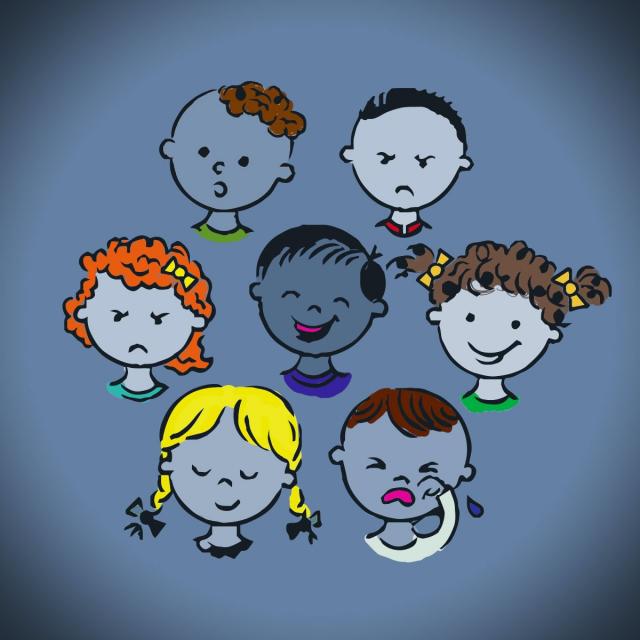
La joie, la colère, le dégoût, la tristesse, la surprise et la peur. Les recherches actuelles s’accordent sur le rôle crucial des émotions dans l’acquisition et la régulation de compétences aussi bien sociales que cognitives.
Dans ce cours, vous allez acquérir les connaissances de base sur le développement de ces émotions. Vous saurez à partir de quel âge, les enfants sont capables d’exprimer, de discriminer et d’identifier ces émotions.

WEEK 4
Comment se développe le soi des jeunes enfants?
La volonté et le contrôle de soi, c’est-à-dire la capacité à réguler volontairement ses pensées, ses émotions et ses comportements, est indispensable aux enfants et aux adultes pour établir des relations sociales positives et rendre possible la vie en communauté.
Dans ce module, vous allez apprendre les conditions sous lesquelles se développent la volonté et le contrôle de soi. Ainsi que les raisons pourquoi dans certaines situations, les enfants ne font pas ce que leur demande l’adulte.

WEEK 5
Pourquoi les jeunes enfants aiment-ils jouer? Quels sont les effets bénéfiques des jeux?
Tous les enfants jouent !! Le jeu apparait spontanément au cours du développement de l’enfant, quelles que soient les cultures.
Dans ce cours, vous allez découvrir les effets bénéfiques des jeux comme le « faire semblant », ainsi que ceux avec des « amis imaginaires ». Vous apprendrez, quelles sont les jeux qui contribuent au développement de l’enfant.

WEEK 6
Comment se développent l'empathie, le sens moral et le sens de l'équité des jeunes enfants?
Dans ce module, vous allez découvrir quatre grandes capacités se développant pendant l’enfance. Il s’agit de l’empathie, le sens de la morale et de l’équité et l’altruisme. Il existe un large éventail de comportements destinés à apporter de l’aide, à partager, à réconforter, à informer et à coopérer avec les autres. Ces comportements, dits prosociaux, sont universels et ne se limitent pas à l’être humain. Ils jouent un rôle crucial dans la vie et les relations interpersonnelles dès le plus jeune âge. Allons ensemble à leur découverte !

WEEK 7
La parentalité: que se passe-t-il du côté des parents?
Comme le disait Winnicott "Un enfant sans parents ça n'existe pas...". Dans ce module, nous verrons comment se développe la parentalité puis la coparentalité, quels en sont les enjeux.
Go to Class
MOOC List is learner-supported. When you buy through links on our site, we may earn an affiliate commission.

Related Courses

Hearing Loss in Children (Coursera) Coursera
University of Michigan

Hearing Loss in Children (Coursera)

Approximately 2 to 3 out of 1000 children in the United States are born with a significant hearing loss. Early identification and intervention of hearing loss is crucial to children’s lifelong learning outcomes. It is well documented that later identification of hearing loss can lead to significant delays in children’s speech, language, literacy, social and emotional development.

Oct 12th 2026
5-12 Weeks
Synapses, Neurons and Brains (Coursera) Coursera
Hebrew University of Jerusalem

Synapses, Neurons and Brains (Coursera)

These are very unique times for brain research. The aperitif for the course will thus highlight the present “brain-excitements” worldwide. You will then become intimately acquainted with the operational principles of neuronal “life-ware” (synapses, neurons and the networks that they form) and consequently, on how neurons behave as computational microchips and how they plastically and constantly change - a process that underlies learning and memory.

Oct 19th 2026
5-12 Weeks
Introduction to Psychology (Coursera) Coursera
Yale University

Introduction to Psychology (Coursera)

What are people most afraid of? What do our dreams mean? Are we natural-born racists? What makes us happy? What are the causes and cures of mental illness? This course tries to answer these questions and many others, providing a comprehensive overview of the scientific study of thought and behavior. It explores topics such as perception, communication, learning, memory, decision-making, persuasion, emotions, and social behavior. We will look at how these aspects of the mind develop in children, how they differ across people, how they are wired-up in the brain, and how they break down due to illness and injury.

Oct 26th 2026
5-12 Weeks
Symptom Management in Palliative Care (Coursera) Coursera
Stanford University

Symptom Management in Palliative Care (Coursera)

This course should be taken after the Essentials of Palliative Care course and continues building your primary palliative care skills – communication, psychosocial support and goals of care. You will learn how to screen, assess, and manage both physical and psychological symptoms. You will explore common symptoms such as pain, nausea, fatigue, and distress and learn specific treatments.

Oct 12th 2026
4 Weeks
Understanding Violence (Coursera) Coursera
Emory University

Understanding Violence (Coursera)

We are so pleased to have you join us as we investigate this crucial topic. Violence is a leading cause of death, disability and health care use worldwide. Violence is a complex problem and can only be understood and reduced though a multidisciplinary approach. This course introduces you to experts who study different forms of violence and we will discuss the various causes of violence. You will also learn about efforts to reduce violence and engage in a day of compassion.

Oct 19th 2026
5-12 Weeks
Principles of fMRI 2 (Coursera) Coursera
Johns Hopkins University,University of Colorado Boulder

Principles of fMRI 2 (Coursera)

Functional Magnetic Resonance Imaging (fMRI) is the most widely used technique for investigating the living, functioning human brain as people perform tasks and experience mental states. It is a convergence point for multidisciplinary work from many disciplines. Psychologists, statisticians, physicists, computer scientists, neuroscientists, medical researchers, behavioral scientists, engineers, public health researchers, biologists, and others are coming together to advance our understanding of the human mind and brain. This course covers the analysis of Functional Magnetic Resonance Imaging (fMRI) data.

Oct 19th 2026
4 Weeks
Managing Emotions in Times of Uncertainty & Stress (Coursera) Coursera
Yale University

Managing Emotions in Times of Uncertainty & Stress (Coursera)

Developed by the Yale Center for Emotional Intelligence, Managing Emotions in Times of Uncertainty & Stress will provide participants with the knowledge, skills, and strategies to understand and manage their emotions and those of their students. The 10-hour online course is designed for school staff, including teachers, paraprofessionals, counselors, principals, and non-teaching staff in preK-12 schools.

Nov 2nd 2026
5-12 Weeks
Emergency Care: Pregnancy, Infants, and Children (Coursera) Coursera
University of Colorado System

Emergency Care: Pregnancy, Infants, and Children (Coursera)

Welcome to the final course of lectures in your quest to master EMT basics. In this course, we will cover some of the highest-stress patient populations: pregnant patients and kids, also known as pediatrics. To wrap up your EMT knowledge we will end this course with information about hazmat situations, extricating patients from tight spots and finally how you write a note about your patient care. You will learn to ensure it communicates what your assessment of the patient was, what interventions you performed and why you did them.

Oct 12th 2026
4 Weeks
Children's Human Rights - An Interdisciplinary Introduction (Coursera) Coursera
University of Geneva

Children's Human Rights - An Interdisciplinary Introduction (Coursera)

Drawing on the contributions of several academic disciplines including law, psychology, sociology, history, educational and health sciences, economy and anthropology, an interdisciplinary approach guides the student into a selection of critical issues concerning children’s rights. Participants will gain insight relative to the development of this specific human rights category, as well as to the evolution of the challenges faced by children over time and society’s efforts to respond.

Nov 2nd 2026
5-12 Weeks
Digital Communication and Emotion (Coursera) Coursera
Arizona State University

Digital Communication and Emotion (Coursera)

Communication online can be hard, especially when emotions get involved. Whether you’re facing someone’s sarcastic joke or a heated discussion, digital communication requires finesse. Even in normal situations, this communication can benefit from specific skills that let you get your message across clearly on any medium. However, you may still wonder about the best ways to go about online communication.

Oct 12th 2026
5-12 Weeks
Health Across the Gender Spectrum (Coursera) Coursera
Stanford University

Health Across the Gender Spectrum (Coursera)

This course offers an intimate, story-based introduction to the experiences of six transgender children and their families. Through illustrated stories and short teaching videos, learners will gain a better understanding of gender identity and the gender spectrum. Stanford physicians, K-12 educators, and transgender faculty members offer practical tips for parents, teachers, healthcare providers and anyone who wants to help create a more gender-expansive environment - one in which all people can live authentically. As a global community of unique individuals, we can begin to build a world that is ready to nurture and love each and every child.

Oct 26th 2026
3 Weeks