Music as Biology: What We Like to Hear and Why (Coursera)

Offered by Duke University,
Music as Biology: What We Like to Hear and Why (Coursera)

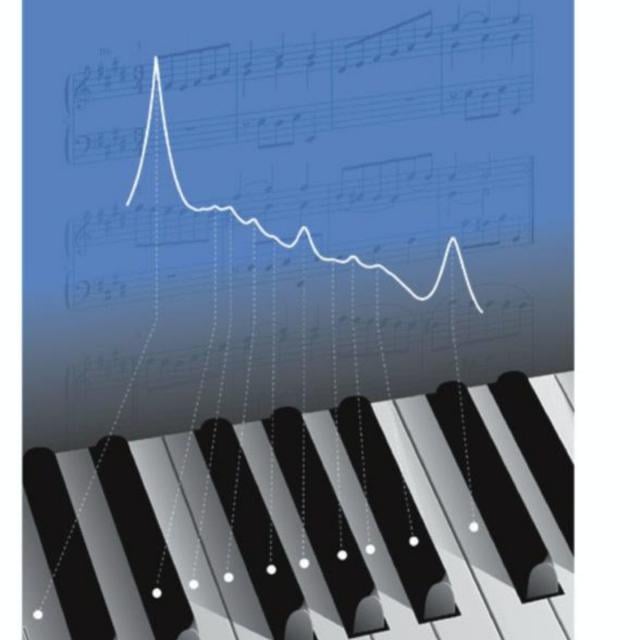
The course will explore the tone combinations that humans consider consonant or dissonant, the scales we use, and the emotions music elicits, all of which provide a rich set of data for exploring music and auditory aesthetics in a biological framework. Analyses of speech and musical databases are consistent with the idea that the chromatic scale (the set of tones used by humans to create music), consonance and dissonance, worldwide preferences for a few dozen scales from the billions that are possible, and the emotions elicited by music in different cultures all stem from the relative similarity of musical tonalities and the characteristics of voiced (tonal) speech.

Class Deals by MOOC List - Click here and see Coursera's Active Discounts, Deals, and Promo Codes.

Like the phenomenology of visual perception, these aspects of auditory perception appear to have arisen from the need to contend with sensory stimuli that are inherently unable to specify their physical sources, leading to the evolution of a common strategy to deal with this fundamental challenge.

Syllabus

WEEK 1
Course Introduction
Introduction to Music as Biology
Sound Signals, Sound Stimuli, and the Human Auditory System
An overview of the organization of the human auditory system, and how sound signals are transformed into sound stimuli.

WEEK 2
The Perception of Sound Stimuli
An introduction to the sound qualities we perceive, and how and why these qualities differ from the information in sound signals.

WEEK 3
Vocalization and Vocal Tones
A discussion of the nature of vocal sound signals, their biological importance and their role in understanding music.

WEEK 4
Defining Music and Exploring Why We Like It
The tonal phenomena that need to be explained in any theory of music, and different approaches that have been take to provide answers.

WEEK 5
Musical Scales
Why a small number of basic scales are used in music worldwide, and how a biological framework explains this and related puzzles.

WEEK 6
Music, Emotion, and Cultural Differences
How emotion is conveyed by vocal similarity in music across cultures, and how the speech of a culture and its music are related. A summing up of the major points in the course follows.
Additional Resources
Additional demonstrations and commentaries by Ruby Froom on some of the musical issues considered in the course, as well as a glossary of terms and bibliography for references.
Go to Class
MOOC List is learner-supported. When you buy through links on our site, we may earn an affiliate commission.

Related Courses

Exploring Beethoven’s Piano Sonatas Part 2 (Coursera) Coursera
Curtis Institute of Music

Exploring Beethoven’s Piano Sonatas Part 2 (Coursera)

Welcome to Part 2 of Exploring Beethoven's Piano Sonatas! I'm delighted to launch another set of new lectures of this course as Part 2. As before, this class is meant for people of all levels of experience with Beethoven's music (including no experience at all!). Remember that you are able to watch the lectures as many times as you like, at whatever pace is comfortable for you.

Sep 7th 2026
5-12 Weeks
Emotions: a Philosophical Introduction (Coursera) Coursera
Universitat Autònoma de Barcelona

Emotions: a Philosophical Introduction (Coursera)

Philosophy is like sex: sure you can get some interesting results, but that's not why we do it. Going one step beyond…why do you FEEL pain or pleasure? Do plants have emotions? How is possible that some people do not understand other’s emotions? Emotions seem to be everywhere, giving meaning to all events of our lives. They are the backbone of social activities as well as they drive the cognitive processes of several living entities. Several animals, including humans, have emotions but…what about machines?...Do machine can have emotions?

Sep 14th 2026
5-12 Weeks
Music and Social Action (Coursera) Coursera
Yale University

Music and Social Action (Coursera)

What is a musician’s response to the condition of the world? Do musicians have an obligation and an opportunity to serve the needs of the world with their musicianship? At a time of crisis for the classical music profession, with a changing commercial landscape, a shrinking audience base, and a contraction in the number of professional orchestras, how does a young musician construct a career today? Are we looking at a dying art form or a moment of reinvigoration?

Sep 7th 2026
5-12 Weeks
Pro Tools Basics (Coursera) Coursera
Berklee College of Music

Pro Tools Basics (Coursera)

Producing music is an incredibly creative process, and knowing the tools of the trade is essential in order to transmit the musical ideas in your head into the DAW in a creative and uninhibited way. Whether you have used a computer to create music before, or you have been curious about production for years, this 4-week course will give you an introductory look into the world of Avid Pro Tools and Pro Tools First.

Sep 14th 2026
4 Weeks
Arts and Heritage Management (Coursera) Coursera
Università Bocconi

Arts and Heritage Management (Coursera)

Today cultural institutions are facing important dilemmas in many aspects of their management. Over the past decades, a new figure has emerged that of the art manager. Imagine you went to work every day to connect artists with audiences, vision with reality, and money with a mission. That is what managers in the arts do, they play an essential role in transforming the minds, lives, and communities through creative expression. This course has been conceptualized to address the need of skills and techniques to help professionals and managers in running art and cultural institutions.

Sep 7th 2026
5-12 Weeks
Advanced Neurobiology II (Coursera) Coursera
Peking University

Advanced Neurobiology II (Coursera)

Hello everyone! Welcome to advanced neurobiology! Neuroscience is a wonderful branch of science on how our brain perceives the external world, how our brain thinks, how our brain responds to the outside of the world, and how during disease or aging the neuronal connections deteriorate. We’re trying to understand the molecular, cellular nature and the circuitry arrangement of how nervous system works.

Sep 7th 2026
5-12 Weeks
Music for Wellness (Coursera) Coursera
Berklee College of Music

Music for Wellness (Coursera)

You love music. You listen to music all the time. Maybe you sing, play an instrument, or compose music. You don’t need to have musical talent to use music to enhance your well being, and even your health. Learn simple techniques to enrich your mind, body, and spirit through music. The methods can be applied in your daily life, particularly when you are feeling down or stressed out.

Sep 14th 2026
4 Weeks