Principles of fMRI 2 (Coursera)

Principles of fMRI 2 (Coursera)

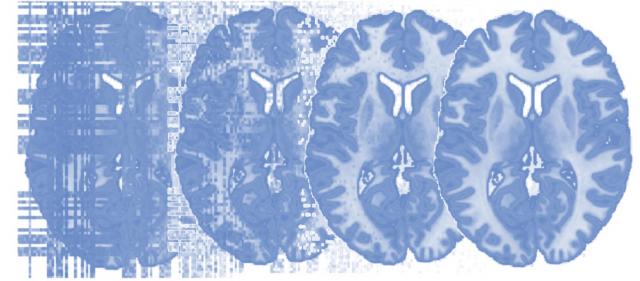
Functional Magnetic Resonance Imaging (fMRI) is the most widely used technique for investigating the living, functioning human brain as people perform tasks and experience mental states. It is a convergence point for multidisciplinary work from many disciplines. Psychologists, statisticians, physicists, computer scientists, neuroscientists, medical researchers, behavioral scientists, engineers, public health researchers, biologists, and others are coming together to advance our understanding of the human mind and brain. This course covers the analysis of Functional Magnetic Resonance Imaging (fMRI) data.

Class Deals by MOOC List - Click here and see Coursera's Active Discounts, Deals, and Promo Codes.

It is a continuation of the course "Principles of fMRI, Part 1"

Course 3 of 4 in the Neuroscience and Neuroimaging Specialization

Syllabus

WEEK 1: This week we will discuss psychological and behavioral inference, as well as advanced experimental design.
WEEK 2: This week we will continue with advanced experimental design, and also discuss advanced GLM modeling.
WEEK 3: This week we will focus on brain connectivity.
WEEK 4: This week we will focus on multi-voxel pattern analysis.
Go to Class
MOOC List is learner-supported. When you buy through links on our site, we may earn an affiliate commission.

Related Courses

Introducción a la Psicología (Coursera) Coursera
Universidad Austral

Introducción a la Psicología (Coursera)

¿Qué es el inconsciente? ¿Qué es la autoestima? ¿Qué es el apego y cómo incide en los vínculos adultos ? ¿Cómo funciona nuestro cerebro y cómo se modifica a lo largo de la vida? En este curso se abordarán estos interrogantes y diversos temas vinculados con la Psicología desde una mirada académica y mediante el estudio de los principales autores que han realizado significativos aportes a esta ciencia.

Sep 14th 2026
5-12 Weeks
Principles of fMRI 1 (Coursera) Coursera
Johns Hopkins University

Principles of fMRI 1 (Coursera)

Functional Magnetic Resonance Imaging (fMRI) is the most widely used technique for investigating the living, functioning human brain as people perform tasks and experience mental states. It is a convergence point for multidisciplinary work from many disciplines. Psychologists, statisticians, physicists, computer scientists, neuroscientists, medical researchers, behavioral scientists, engineers, public health researchers, biologists, and others are coming together to advance our understanding of the human mind and brain. This course covers the design, acquisition, and analysis of Functional Magnetic Resonance Imaging (fMRI) data, including psychological inference, MR Physics, K Space, experimental design, pre-processing of fMRI data, as well as Generalized Linear Models (GLM’s).

Sep 14th 2026
4 Weeks
Philosophy, Science and Religion: Philosophy and Religion (Coursera) Coursera
University of Edinburgh

Philosophy, Science and Religion: Philosophy and Religion (Coursera)

Philosophy, Science and Religion mark three of the most fundamental modes of thinking about the world and our place in it. Are these modes incompatible? Put another way: is the intellectually responsible thing to do to ‘pick sides’ and identify with one of these approaches at the exclusion of others? Or, are they complementary or mutually supportive? As is typical of questions of such magnitude, the devil is in the details. For example, it is important to work out what is really distinctive about each of these ways of inquiring about the world. In order to gain some clarity here, we’ll be investigating what some of the current leading thinkers in philosophy, science and religion are actually doing.

Sep 14th 2026
5-12 Weeks
Data-Driven Decisions with Power BI (Coursera) Coursera
Knowledge Accelerators

Data-Driven Decisions with Power BI (Coursera)

New Power BI users will begin the course by gaining a conceptual understanding of the Power BI desktop application and the Power BI service. Learners will explore the Power BI interface while learning how to manage pages and understand the basics of visualizations. Learners will engage in numerous hands-on experiences to discover how to import, connect, clean, transform, and model their own data in the Power BI desktop application.

Sep 14th 2026
5-12 Weeks
Computational Neuroscience (Coursera) Coursera
University of Washington

Computational Neuroscience (Coursera)

This course provides an introduction to basic computational methods for understanding what nervous systems do and for determining how they function. We will explore the computational principles governing various aspects of vision, sensory-motor control, learning, and memory. Specific topics that will be covered include representation of information by spiking neurons, processing of information in neural networks, and algorithms for adaptation and learning.

Sep 14th 2026
5-12 Weeks
The Brain and Space (Coursera) Coursera
Duke University

The Brain and Space (Coursera)

This course is about how the brain creates our sense of spatial location from a variety of sensory and motor sources, and how this spatial sense in turn shapes our cognitive abilities. Knowing where things are is effortless. But “under the hood,” your brain must figure out even the simplest of details about the world around you and your position in it.

Sep 14th 2026
5-12 Weeks
Sleep: Neurobiology, Medicine, and Society (Coursera) Coursera
University of Michigan

Sleep: Neurobiology, Medicine, and Society (Coursera)

The objective of this course is to give students the most up-to-date information on the biological, personal, and societal relevance of sleep. Personal relevance is emphasized by the fact that the single best predictor of daytime performance is the quality of the previous night's sleep. The brain actively generates sleep, and the first section of the course is an overview of the neurobiological basis of sleep control.

Sep 14th 2026
5-12 Weeks
Reproducible Templates for Analysis and Dissemination (Coursera) Coursera
Emory University

Reproducible Templates for Analysis and Dissemination (Coursera)

This course will assist you with recreating work that a previous coworker completed, revisiting a project you abandoned some time ago, or simply reproducing a document with a consistent format and workflow. Incomplete information about how the work was done, where the files are, and which is the most recent version can give rise to many complications.

Sep 14th 2026
5-12 Weeks
Big Data Analysis with Scala and Spark (Coursera) Coursera
École Polytechnique Fédérale de Lausanne

Big Data Analysis with Scala and Spark (Coursera)

Manipulating big data distributed over a cluster using functional concepts is rampant in industry, and is arguably one of the first widespread industrial uses of functional ideas. This is evidenced by the popularity of MapReduce and Hadoop, and most recently Apache Spark, a fast, in-memory distributed collections framework written in Scala. In this course, we'll see how the data parallel paradigm can be extended to the distributed case, using Spark throughout.

Sep 14th 2026
4 Weeks
Mindfulness and Well-being: Living with Balance and Ease (Coursera) Coursera
Rice University

Mindfulness and Well-being: Living with Balance and Ease (Coursera)

This is the sequel course to Foundations of Mindfulness that will continue to provide a broad overview of the fundamental concepts, principles, and practices of mindfulness. With interactive exercises to help students explore their own attitudes, mental habits and behaviors, Foundations of Mindfulness series offers a pathway for living with more freedom, authenticity and ease. Featured components of the course include experiential exercises, guided meditations, personal reflection and interactive discussions.

Sep 14th 2026
4 Weeks