The Little Stuff: Energy, Cells, and Genetics (Coursera)

The Little Stuff: Energy, Cells, and Genetics (Coursera)

In this course, we will explore the smaller side of biology: molecular biology. We’ll cover basic topics including cell biology and how cells can go “rogue” and turn into cancer, how energy from the sun is transferred to fuel our bodies, basics of genetics and inheritance, and genetic technologies. At the end of this course, we will discuss ethical and moral implications of several exciting and new genetic technologies.

Class Deals by MOOC List - Click here and see Coursera's Active Discounts, Deals, and Promo Codes.

What You Will Learn

  • Explain how the body maintains control of cells and how loss of control can lead to cancer.
  • Describe how energy is passed through the biosphere and why (most) of life is dependent on the sun.
  • Explain the basics of genetics, including epigenetics, and how each relates to our phenotype.
  • Describe at least three different genetic technologies currently impact society and give pro and against arguments for each.

Course 2 of 4 in the Biology Everywhere Specialization

Syllabus

WEEK 1
Cells Gone Wild: Cancer
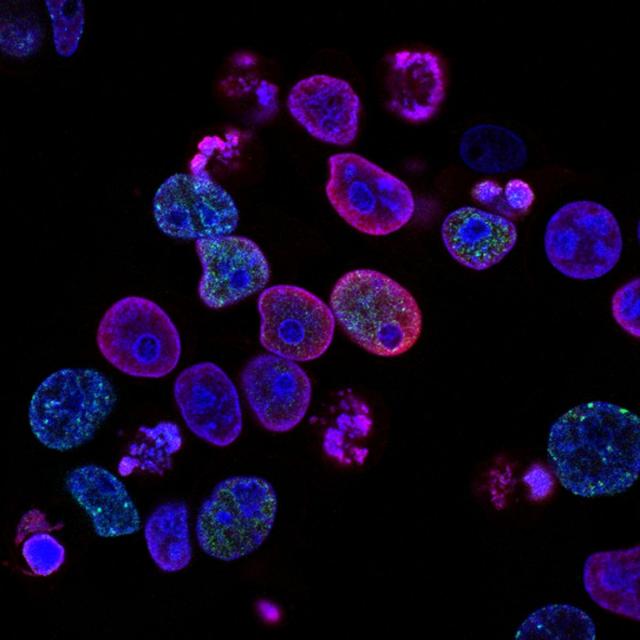
In this module, we will explore cell biology with particular attention to one application of cell biology to our daily lives, cancer.

WEEK 2
Energy: From The Sun to Your Granola Bar
In this module, we will discuss energy, including why the plants are the basis for (most) of life on earth and how we can harness these fundamental biochemical reactions for making certain foods and beverages, such as bread and beer.

WEEK 3
Mom Genes: DNA, Genetics, and Parenthood
In this module, we will explore the basic of genetics including a discussion of epigenetics.

WEEK 4
Oh, Brave New World
In this module, we will explore new genetic technologies, with a particular eye to ethical and moral implications of new technologies.

Go to Class
MOOC List is learner-supported. When you buy through links on our site, we may earn an affiliate commission.

Related Courses

Classical papers in molecular genetics (Coursera) Coursera
University of Geneva

Classical papers in molecular genetics (Coursera)

You have all heard about the DNA double helix and genes. Many of you know that mutations occur randomly, that the DNA sequence is read by successive groups of three bases (the codons), that many genes encode enzymes, and that gene expression can be regulated. These concepts were proposed on the basis of astute genetic experiments, as well as often on biochemical results. The original articles were these concepts appeared are however not frequently part of the normal curriculum of biologists, biochemists and medical students.

Jun 1st 2026
5-12 Weeks
Explorando la Energía Sustentable (Coursera) Coursera
Pontificia Universidad Católica de Chile

Explorando la Energía Sustentable (Coursera)

Este curso introductorio aborda conceptos de energía sustentable y describe tecnologías avanzadas que pueden sustituir progresivamente las actuales dominadas por el carbón, el petróleo y gas natural, cuyas emisiones está perturbando progresivamente el clima, lo que puede afectar el desarrollo y la convivencia internacional.

Jun 1st 2026
4 Weeks
Mind of the Universe - Genetic Privacy: should we be concerned? (Coursera) Coursera
Leiden University

Mind of the Universe - Genetic Privacy: should we be concerned? (Coursera)

Should all our genetic information be made public in order to eradicate genetic diseases from this world? Who owns your genetic data once it becomes publicly accessible? What is your responsibility to family members when you know more about genetic diseases than they do? Who decides what kind of genetic information is relevant to a person? And what does genetic privacy mean to you?

Jun 1st 2026
5-12 Weeks
Introduction to solar cells (Coursera) Coursera
Technical University of Denmark - DTU

Introduction to solar cells (Coursera)

How do solar cells work, why do we need, and how can we measure their efficiency? These are just some of the questions Introduction to solar cells tackles. Whether you are looking for general insight in this green technology or your ambition is to pursue a career in solar, “Introduction to Solar Cells” is an excellent starting point. The course is a tour through the fundamental disciplines including solar cell history, why we need solar energy, how solar cells produce power, and how they work. During the course we cover mono- and multi-crystalline solar cells, thin film solar cells, and new emerging technologies.

Jun 1st 2026
5-12 Weeks
Precision Medicine (Coursera) Coursera
University of Geneva

Precision Medicine (Coursera)

This course will provide you with the key knowledge and tools to understand the fundamentals and practical implications of precision medicine, its opportunities and challenges. It will address precision-medicine era diagnostics, treatment selection, genetic counseling, public health interventions, and biomedical research. It will also deal with data science and ethical issues. From genomic analysis and genetic counseling to cancer biomarkers, from risk assessment of chronic diseases to the understanding of gene-environment interactions, from pharmacogenomics to multi-omics data integration, experts will walk you through the many aspects of precision medicine, from the bench to the bedside and to population health.

Jun 1st 2026
5-12 Weeks
Bioinformatic Methods I (Coursera) Coursera
University of Toronto

Bioinformatic Methods I (Coursera)

Large-scale biology projects such as the sequencing of the human genome and gene expression surveys using RNA-seq, microarrays and other technologies have created a wealth of data for biologists. However, the challenge facing scientists is analyzing and even accessing these data to extract useful information pertaining to the system being studied. This course focuses on employing existing bioinformatic resources – mainly web-based programs and databases – to access the wealth of data to answer questions relevant to the average biologist, and is highly hands-on.

Jun 1st 2026
5-12 Weeks
Genetics and Society: A Course for Educators (Coursera) Coursera
American Museum of Natural History

Genetics and Society: A Course for Educators (Coursera)

How have advances in genetics affected society? What do we need to know to make ethical decisions about genetic technologies? This course includes the study of cloning, genetic enhancement, and ownership of genetic information. Course participants will acquire the tools to explore the ethics of modern genetics and learn how to integrate these issues into their classrooms.

Jun 1st 2026
4 Weeks
Philosophy and the Sciences: Introduction to the Philosophy of Physical Sciences (Coursera) Coursera
University of Edinburgh

Philosophy and the Sciences: Introduction to the Philosophy of Physical Sciences (Coursera)

What is the origin of our universe? What are dark matter and dark energy? This is the first part of the course 'Philosophy and the Sciences', dedicated to Philosophy of the Physical Sciences. Scientific research across the physical sciences has raised pressing questions for philosophers. The goal of this course is to introduce you to some of the main areas and topics at the key juncture between philosophy and the physical sciences.

Jun 1st 2026
4 Weeks
Non-Communicable Diseases in Humanitarian Settings (Coursera) Coursera
University of Copenhagen

Non-Communicable Diseases in Humanitarian Settings (Coursera)

NCDs are the leading cause of death in almost every region of the world, and place a huge burden on individuals, families and societies. Humanitarian settings have a negative effect on the levels of disease, and the possibility of treatment. The importance of NCDs in global health is acknowledged by their inclusion in the Sustainable Development Goals, which call for a reduction of a third in premature mortality from NCDs by 2030. However, NCDs have until recently received little attention in humanitarian settings, leaving prevention, care and treatment needs largely unaddressed among some of the most vulnerable populations. According to the World Health Organization, 70 percent of global deaths are due to NCDs.

Jun 1st 2026
3 Weeks
Understanding Prostate Cancer (Coursera) Coursera
Johns Hopkins University

Understanding Prostate Cancer (Coursera)

Welcome to Understanding Prostate Cancer. My name is Ken Pienta, Professor of Urology and Oncology at the Johns Hopkins School of Medicine. I have been studying prostate cancer and treating patients with prostate cancer for over 25 years. I've put together this course in order to introduce you to the essentials of prostate cancer. This Understanding Prostate Cancer Course should be helpful to anyone who wants to develop a deeper understanding of prostate cancer biology and treatment. It should be useful to students who are interested in a deeper understanding of the science of cancer.

Jun 1st 2026
3 Weeks