ODS y sostenibilidad: una mirada desde los colegios (Coursera)

ODS y sostenibilidad: una mirada desde los colegios (Coursera)

En este curso veremos cómo podemos generar cambios y transformaciones (a nivel individual, organizacional y social) para la sostenibilidad desde la educación formal y no-formal. Partiremos del concepto de los Objetivos de Desarrollo Sostenible (ODS) como un marco potente para generar reflexiones críticas, que nos lleven a generar acciones colectivas desde la escuela en pro de la sostenibilidad.

Class Deals by MOOC List - Click here and see Coursera's Active Discounts, Deals, and Promo Codes.

El curso se compone de cuatro módulos. En el primer módulo veremos las raíces de la crisis ambiental, a partir de los factores históricos que la han generado, incluyendo la perspectiva científica, cultural, económica y política, asociadas desde la necesidad de dar respuesta a esa crisis desde la mirada de la sostenibilidad. En el segundo módulo veremos enfoques y principios que puedan guiar el diseño de programas y proyectos educativos enfocados en sostenibilidad, podrás conocer cinco propuestas que se acercan a generar acciones reflexivas y transformadoras en diversos contextos educativos. Para cerrar esa reflexión conceptual en el tercer módulo exploraremos una caja de herramientas de estrategias pedagógicas transformadoras que puedes aplicar en tu contexto para acercar la problemática de sostenibilidad a tu propia realidad. Finalmente en el cuarto módulo, veremos diferentes rutas y tips para diseñar tu propio proyecto educativo para enfrentar la problemática ambiental y dar una respuesta transformadora hacía la sostenibilidad.
Durante todo el curso analizaremos casos concretos de proyectos, iniciativas, programas, innovaciones para promover sostenibilidad a través de la educación formal y no-formal.
What You Will Learn

  • Entender críticamente el concepto de desarrollo sostenible
  • Entender el rol de la educación en promover sostenibilidad
  • Conocer diferentes enfoques, principios y competencias para diseñar estrategias de educación para sostenibilidad.
  • Conocer estrategias pedagógicas que permitan aplicar los conceptos y principios para resolver problemas relevantes de sostenibilidad en su contexto.
  • Integrar y aplicar conocimientos adquiridos para diseñar una propuesta de educación para la sostenibilidad en su propio contexto

Syllabus

WEEK 1
El desarrollo sostenible y la educación
Bienvenido al primer módulo de este curso donde aprenderemos qué se entiende por crisis planetaria en relación a la problemática de la sostenibilidad, desde sus orígenes y diferentes perspectivas de respuestas. De igual manera, veremos el impacto a que ha tenido esta en la construcción de nuevas perspectivas educativas que afrontan el problema y generan diversos esquemas de reflexión hacía la misma. Te invitamos a mirar desde una posición crítica el surgimiento de la problemática de la sostenibilidad en el mundo y en la escuela para generar un espacio de cambio y reflexión sobre la realidad.

WEEK 2
Principios y competencias
Bienvenido al segundo módulo de este curso donde aprenderemos sobre los procesos pedagógicos que se desarrollan en relación a la problemática de la sostenibilidad, buscaremos reconocer la necesidad de repensar la escuela para aportar a la solución de un mundo más sostenible. Para ello te mostraremos cuatro perspectivas de trabajo: biomemisis enfocada en plantear soluciones sociales y tecnológicas inspirados en la naturaleza; place-based learning o aprendizaje situado enfocado en generar un acercamiento a los problemas de la sostenibilidad desde el contexto; pensamiento sistémico enfocado en reconocer los elementos, relaciones y emergencias que presenta el problema de la sostenibilidad como sistema de análisis; y finalmente, la educación ciudadana y comunitaria enfocada en la construcción de nuevos enfoques de colectividad entorno a la crisis global. Te invitamos a mirar desde una posición crítica la problemática de la sostenibilidad en tu contexto, para generar desde este un proceso de transformación y reflexión en tu quehacer.

WEEK 3
Herramientas pedagógicas
Bienvenido al tercer módulo de este curso donde aprenderemos sobre las herramientas pedagógicas para desarrollar en clase acciones reflexivas alrededor de la problemática de la sostenibilidad, buscaremos conocer cómo llevar las reflexiones del plano conceptual a un plano práctico. Para ello te mostraremos en un primero momento herramientas pedagógicas desde tres enfoques: participativo, crítico y holístico, desde estrategias que ampliaran tu conocimiento alrededor de la visión de la relación de la sostenibilidad con la escuela. Para fortalecer tu reflexión te daremos a conocer cuatro experiencias que ponen en práctica en escenarios reales esas herramientas de trabajo docente, al finalizar cada experiencia encontrarás guías de trabajo que puedes usar en tu práctica docente y con ello enriquecer la reflexión que llevarás acabo como guía del módulo cuatro. Te invitamos a mirar desde esas experiencias de trabajo puntos que puedas desde una posición crítica incorporar en relación a la problemática de la sostenibilidad desde tu contexto, con el fin de generar desde este un proceso, transformaciones y reflexiones en tu quehacer que impacten el contexto.

WEEK 4
Proyecto
Bienvenido al cuarto módulo de este curso. En este módulo diseñaremos un proyecto que nos permita generar en nuestra institución acciones reflexivas alrededor de la problemática de la sostenibilidad, espacios de práctica donde pondremos en diálogo con nuestra realidad lo aprendido alrededor de la sostenibilidad y los ODS en este curso. Para ello te mostraremos en un primero momento criterios para que tengas en cuenta y tres maneras para llegar a la construcción de tu proyecto. También te proponemos unas preguntas de metareflexión para que hagas durante el camino de gestión con el fin de que autorreflexiones tu proceso. Finalmente, te encontrarás con un medidor de tu idea para ir tomando más fuerza aquello que quieres emprender. Al final del módulo, te invitamos a mirar una galería de experiencias de trabajo que te permitirán conocer otros profesores y su trabajo en el marco de los ODS. A partir de este recurso, podrás reflexionar acerca de la sostenibilidad en la escuela, con el fin de que te motives y veas que somos varios los que queremos gestionar reflexiones acerca de las relaciones más sostenibles con nuestro planeta, con los otros y consigo mismos.
Go to Class
MOOC List is learner-supported. When you buy through links on our site, we may earn an affiliate commission.

Related Courses

Sustainable Food Production Through Livestock Health Management (Coursera) Coursera
University of Illinois at Urbana-Champaign

Sustainable Food Production Through Livestock Health Management (Coursera)

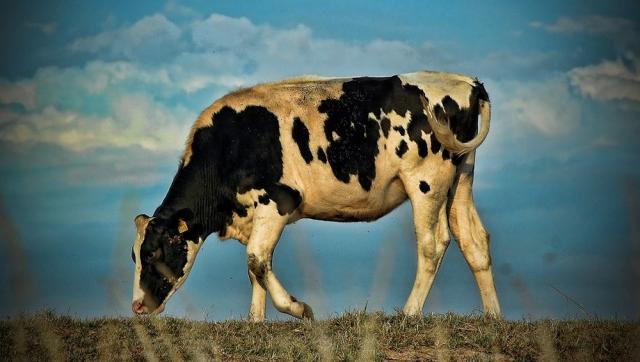
Learn about the impact of infectious disease on sustainable animal-based food production by understanding the science of growth, immunity, and infection and by learning the problem-solving skills needed to advance animal health and food production through optimal management practices. In this course we will explore the effect of infectious disease on sustainable animal-based food production. The content and learning outcomes of this new course will be designed to be relevant across different food production sectors (i.e., beef, dairy, poultry, and pigs).

Nov 2nd 2026
5-12 Weeks
Introduction to Faecal Sludge Management (Coursera) Coursera
École Polytechnique Fédérale de Lausanne

Introduction to Faecal Sludge Management (Coursera)

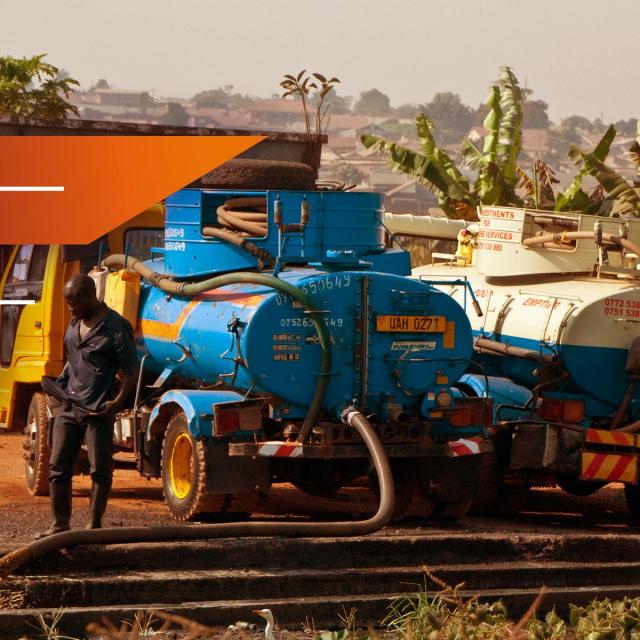
Do you want learn how to apply concepts of sustainable faecal sludge management (FSM) on a city-wide scale? This course starts with an overview of what faecal sludge is and an introduces you to the engineering fundamentals and required information for the design and selection of technologies. Sanitation solutions are prone to failure if an integrated planning approach that includes stakeholder involvement and the development of appropriate institutional, management and financial arrangements is not implemented.

Nov 2nd 2026
5-12 Weeks
Sustainable Agricultural Land Management (Coursera) Coursera
University of Florida

Sustainable Agricultural Land Management (Coursera)

This course will cover the agricultural and urban water quality issues in Florida, their bases, land and nutrient management strategies, and the science and policy behind the best management practices (BMPs). Students will learn to evaluate BMP research and analyze its role in determining practices and policies that protect water quality.

Nov 2nd 2026
5-12 Weeks
Our Earth's Future (Coursera) Coursera
American Museum of Natural History

Our Earth's Future (Coursera)

Our Earth’s Future is about the science of climate change and how to talk about it. You will learn from scientists in the fields of climatology, oceanography, Earth science, and anthropology who study how climate change is affecting people, populations, and ways of life. Explore the multiple lines of evidence for the human-induced climate change that is happening today, and consider what that means for the future of our planet. At the end of this course you will be able to understand key scientific principles, identify and address misconceptions, and contribute confidently to conversations about climate change.

Nov 2nd 2026
5-12 Weeks
Literacy Teaching and Learning: Aims, Approaches and Pedagogies (Coursera) Coursera
University of Illinois at Urbana-Champaign

Literacy Teaching and Learning: Aims, Approaches and Pedagogies (Coursera)

This course opens with an exploration of the social context and aims of literacy teaching and learning. It goes on to describe a range of historical and contemporary approaches to literacy pedagogy, including didactic, authentic, functional, and critical approaches. The course takes has a 'Multiliteracies' perspective, which aims to expand the definition of literacy to encompass today's multimodal communications, and the diversity of literacies across different social and culltural contexts.

Nov 2nd 2026
4 Weeks
Wind resources for renewable energies (Coursera) Coursera
École Polytechnique

Wind resources for renewable energies (Coursera)

The main goal of this course is to get the necessary knowledge on atmospheric and fluid dynamics in order to quantify the wind resource of a local or regional area. We’ll learn about basic meteorology, the specific dynamics of turbulent boundary layers and some standard techniques to estimate wind resources regardless of the type of turbine used or the level of efficiency achieved.

Nov 2nd 2026
4 Weeks
A Business Approach to Sustainable Landscape Restoration (Coursera) Coursera
Erasmus University Rotterdam

A Business Approach to Sustainable Landscape Restoration (Coursera)

Integrated landscape management and large-scale landscape restoration should be in every company’s business strategy because in order to reach the Sustainable Development Goal on Land Degradation Neutrality (SDG Number 15.3) scaling up and acceleration of business-driven landscape restoration is urgently needed.

Nov 2nd 2026
5-12 Weeks
ICT in Primary Education: Transforming children's learning across the curriculum (Coursera) Coursera
University of London

ICT in Primary Education: Transforming children's learning across the curriculum (Coursera)

Why and how are teachers integrating ICT (Information and Communication Technology) into primary education? In this course we analyse examples from schools in different parts of the world, and bring professional teachers, headteachers and policymakers together to share their best ideas and inspiring stories. The materials in the course are based on studies carried out for the UNESCO Institute of IT in Education, Moscow.

Nov 2nd 2026
5-12 Weeks
Corporate Sustainability. Understanding and Seizing the Strategic Opportunity (Coursera) Coursera
Università Bocconi

Corporate Sustainability. Understanding and Seizing the Strategic Opportunity (Coursera)

In this course, thought leaders in a wide variety of management and economics fields illustrate how to assess and seize the opportunities offered by these global emergencies. They will offer new ways to understand the purpose and the logic of success of the business enterprise in this new context, providing ideas and examples on how to manage the transition process to realize the value creation potential from corporate sustainability for all involved stakeholders.

Nov 2nd 2026
5-12 Weeks
Critical Thinking Skills for University Success (Coursera) Coursera
The University of Sydney

Critical Thinking Skills for University Success (Coursera)

In this course, you will learn how to develop your Critical Thinking Skills to help you achieve success in your university studies. After completing this course, you will be able to: 1. Use critical thinking and argumentation in university contexts to improve academic results ; 2. Understand the importance and function of critical thinking in academic culture ; 3. Use a variety of thinking tools to improve critical thinking ; 4. Identify types of argument, and bias within arguments, in order to better evaluate the strength of arguments; 5. Use evidence to support claims in arguments ; 6. Apply critical thinking and argumentation to real world problems and issues

Nov 2nd 2026
5-12 Weeks
Greening the Economy: Lessons from Scandinavia (Coursera) Coursera
Lund University

Greening the Economy: Lessons from Scandinavia (Coursera)

How can we live a good life on one planet with over seven billion people? This course will explore greening the economy on four levels – individual, business, city, and nation. We will look at the relationships between these levels and give many practical examples of the complexities and solutions across the levels. Scandinavia, a pioneering place advancing sustainability and combating climate change, is a unique starting point for learning about greening the economy. We will learn from many initiatives attempted in Scandinavia since the 1970s, which are all potentially helpful and useful for other countries and contexts.

Nov 2nd 2026
5-12 Weeks
Making Sense of the News: News Literacy Lessons for Digital Citizens (Coursera) Coursera
University of Hong Kong,The State University of New York

Making Sense of the News: News Literacy Lessons for Digital Citizens (Coursera)

Never before has the need for News Literacy been more urgent. As news consumers are bombarded with a constant stream of fake news, propaganda, hoaxes, rumors, satire, and advertising — that often masquerade as credible journalism — it is becoming more and more difficult to distinguish fact from fiction. While the public’s faith in the news media erodes, purveyors of misinformation have helped give rise to troubling cultural trends and alarming political movements.

Nov 2nd 2026
5-12 Weeks