Herramientas de la Economía Circular (Coursera)

Herramientas de la Economía Circular (Coursera)

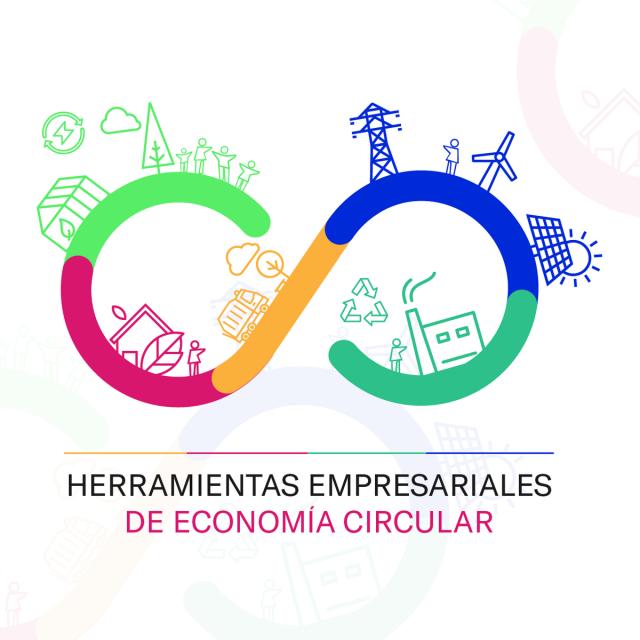
La Economía Circular representa una perspectiva de mejoramiento continuo para la transformación de sistemas de producción y consumo sostenibles. Aprender de sus herramientas, agrega un valor agregado concreto, a las competencias de profesionales interesados en la sostenibilidad ambiental y social. El presente curso ofrece aprender de la importancia de la Economía Circular a través de sus herramientas, útiles para el diseño de proyectos.

Class Deals by MOOC List - Click here and see Coursera's Active Discounts, Deals, and Promo Codes.

Al finalizar el curso, los participantes estarán en la capacidad de:

  • Identificar oportunidades de Economía Circular como estrategia para el desarrollo económico sostenible.
  • Aplicar herramientas para la identificación de proyectos de Economía Circular.
  • Aplicar metodologías de formulación de proyectos para diseñar iniciativas circulares de uso eficiente de recursos.

La estructura del curso contempla 5 módulos, cada uno requiere una dedicación de 3 a 5 horas de estudio y práctica. El primer módulo introduce el concepto de la Economía Circular como un nuevo lenguaje global, sus prioridades de su aplicación, e importancia en países de América Latina, e identifica las estrategias empresariales para su implementación. Los siguientes módulos introducen las diversas herramientas de Economía Circular útiles para el diseño de proyectos aplicados, cálculo de beneficios económicos, ambientales y sociales, y metodologías para la estructuración de la presentación de proyectos.
El curso está orientado a profesionales de áreas de operación de empresas, universitarios de pregrado en carreras de ingeniera y/o administración de empresas, estudiantes de posgrado y tecnólogos.

What You Will Learn

  • Identificar oportunidades de Economía Circular como estrategia para el desarrollo económico sostenible.
  • Aplicar las herramientas Eco-Mapa, Eco-Balance y Costos de Ineficiencia, para la identificación de proyectos de economía circular.
  • Aplicar metodologías de formulación de proyectos para diseñar iniciativas circulares de uso eficiente de recursos.

Syllabus

WEEK 1
Introducción
La esencia de la Economía Circular
Bienvenido al primer módulo del curso Herramientas de la Economía Circular. En este módulo aprenderemos qué es la Economía Circular, su esencia, los conceptos que la fundamentan y las implicaciones para América Latina. Además, conocerás cuáles son los actores de la Economía Circular, sus roles y junto con algunos invitados especiales revisaremos el contexto actual en la región, los retos y oportunidades para el futuro.

WEEK 2
Herramientas de la Economía Circular I
Bienvenidos al segundo módulo del curso Herramientas de la Economía Circular. En este módulo aplicaremos dos herramientas que son de mucha importancia y utilidad a la hora de diseñar proyectos de Economía Circular. Estas herramientas son el Eco-Mapa y el Eco-Balance, con ellas podremos identificar puntos críticos, hacer un análisis de flujo de recursos, materiales y energía, además de hacer un diagnóstico de la eficiencia en la transformación de recursos.

WEEK 3
Herramientas de la Economía Circular II

WEEK 4
Alternativas preventivas e indicadores
En este módulo revisaremos cómo se llega a propuestas de alternativas preventivas y circulares, y cómo podemos analizar y evaluar la viabilidad económica, ambiental y social de estas mediante el uso de indicadores. Esto será un aspecto importante para complementar la caja de herramientas de Economía Circular y formular un proyecto.

WEEK 5
Proyecto de Economía Circular
En este último módulo aprenderás a estructurar una presentación de una propuesta de alternativa de Economía Circular que presentarás a la junta directiva para su aprobación. Estudiaremos el contenido de esta presentación y el tipo de información que le interesa a la junta directiva para tomar decisiones sobre esta propuesta.

Go to Class
MOOC List is learner-supported. When you buy through links on our site, we may earn an affiliate commission.

Related Courses

Data Mining Project (Coursera) Coursera
University of Colorado Boulder

Data Mining Project (Coursera)

This course offers step-by-step guidance and hands-on experience of designing and implementing a real-world data mining project, including problem formulation, literature survey, proposed work, evaluation, discussion and future work. Data Mining Project can be taken for academic credit as part of CU Boulder’s Master of Science in Data Science (MS-DS) degree offered on the Coursera platform

Jun 8th 2026
4 Weeks
The Sustainable Development Goals – A global, transdisciplinary vision for the future (Coursera) Coursera
University of Copenhagen

The Sustainable Development Goals – A global, transdisciplinary vision for the future (Coursera)

In 2015, the UN launched the 17 Sustainable Development Goals (SDGs). Adopted by 193 member states, the goals represent an important international step in setting humanity on a trajectory towards sustainable development. Within this course, you will get a historical overview of how sustainability has been understood, as well as a thorough introduction to the SDGs – what they are, how progress can be measured, and how the SDGs are relevant for the management of the global systems supporting humanity. The course will examine how various societal actors are responding to and implementing the SDGs.

Jun 8th 2026
3 Weeks
Sharing Cities: Governance and Urban Sustainability (Coursera) Coursera
Lund University

Sharing Cities: Governance and Urban Sustainability (Coursera)

How can we govern the sharing economy in our cities? This course connects the sharing economy, cities, governance and urban sustainability to provide unique knowledge and insights into sharing cities. We utilize a diversity of leading examples of the emerging sharing economy in cities to bring this course to life. The sharing economy can contribute to social, environmental and economic sustainability, and sharing cities can unlock new opportunities and solve urban challenges by facilitating and applying the sharing economy in urban contexts. But it is imperative that the sharing economy is shaped and designed to advance urban sustainability.

Jun 8th 2026
5-12 Weeks
Comprendre l'écologie, pour une économie innovante (Coursera) Coursera
ESCP Europe

Comprendre l'écologie, pour une économie innovante (Coursera)

Conçu conjointement par le think-tank Ecolo-Ethik et ESCP Europe, ce MOOC se propose de vous aider à dépasser les idées reçues sur l’écologie, dans le souci d’une démarche ouverte et multiple. A ce titre, de grands experts reconnus interviendront pour illustrer, approfondir et enrichir les différentes thématiques.

Jun 8th 2026
5-12 Weeks
Global Environmental Management (Coursera) Coursera
Technical University of Denmark - DTU

Global Environmental Management (Coursera)

Learn about the best environmental technologies for a sustainable development and how they are managed in various settings around the world. This course gives you an opportunity to learn about global trends that influence our environment and the living conditions and how different management systems and approaches that are used around the world to manage the environment. This includes current environmental technologies built for the environment and technologies for sustainable soil management, groundwater protection methods and integrated Water resources management.

Jun 8th 2026
5-12 Weeks
Oceanography: a key to better understand our world (Coursera) Coursera
University of Barcelona,Barcelona Foundation for Ocean Sailing - FNOB

Oceanography: a key to better understand our world (Coursera)

The course for a round the world regatta leads the boats through the Mediterranean Sea and the Atlantic, Southern Indian and South Pacific Oceans. On their voyage, the skippers come across a large variety of oceanographic situations: strong currents, floating ice, wave formations of every kind and biological diversity. In this course the student will learn about the foundations of the science of oceanography. You'll learn about the classification and formation of the ocean floor, how current sea satellite analysis systems work, the chemistry of the oceans and the processes that led to its formation.

Jun 8th 2026
5-12 Weeks
Global sustainability and corporate social responsibility: Be sustainable (Coursera) Coursera
Macquarie University

Global sustainability and corporate social responsibility: Be sustainable (Coursera)

It is no longer acceptable for organisations to focus entirely on financial success if they are to be competitive on the global stage. As corporate scandals continue to make headlines, you will expand your strategic thinking beyond your organisation’s competitive financial environment to consider its broader impact on society. You will grapple with the conflicting outcomes of maximising financial return and societal impact as you develop the skills to create a balance that is sustainable.

Jun 8th 2026
5-12 Weeks
Diseño de Proyectos de Desarrollo (Coursera) Coursera
Inter-American Development Bank - IDB

Diseño de Proyectos de Desarrollo (Coursera)

¿Sabes cómo hacer para que tus proyectos logren los resultados esperados? Un diseño adecuado es el primer paso hacia un proyecto exitoso. Este curso te brindará los conocimientos y herramientas fundamentales para diseñar proyectos de desarrollo sostenibles, evaluables y que cumplan con los objetivos propuestos.

Jun 8th 2026
3 Weeks
Transforming Communities (Coursera) Coursera
University of Colorado Boulder

Transforming Communities (Coursera)

This course focuses on communities and organizations in transition, and using the skills and new knowledge you have to lead change. In this course, we will discuss fundamentals of sustainability and resilience. We then go over the essentials of being a change maker. This course will provide further opportunity for skill building. We will go over asset mapping and needs assessments, two important skills that will be used for you to work with your clients so understand community and organizational needs, and have broad engagement, and use a systems-based approach to so that that the community can define its own needs and identify its own assets. This course will have three modules.

Jun 8th 2026
3 Weeks
Sustainable Business Enterprises (Coursera) Coursera
University of Illinois at Urbana-Champaign

Sustainable Business Enterprises (Coursera)

This course will explore current challenges and opportunities facing firms in the area of environmental sustainability. It will begin with an introduction to sustainability, with a particular focus on how environmental sustainability is relevant to business. Topics such as unsustainable consumption/consumer behavior, market research sustainable product design, sustainable value chains and communications will be covered. The bottom-up approach in terms of immersion, emersion, and design as applied to sustainable business enterprise will be covered.

Jun 8th 2026
4 Weeks
Climate change education: sustainable environments (Coursera) Coursera
Inter-American Development Bank - IDB

Climate change education: sustainable environments (Coursera)

In this course, we explore the components of landscapes and natural disasters. We emphasize human actions that impact the environment, both in terms of modification and preservation. Additionally, we explore concepts related to cities, megacities, and sustainable environments. The course also delves into the connection between the environment, health, and diseases.

Jun 8th 2026
3 Weeks
Energy, Environment, and Everyday Life (Coursera) Coursera
University of Illinois at Urbana-Champaign

Energy, Environment, and Everyday Life (Coursera)

This course teaches you everything you need to know about energy, the environment, and at least a number of things in everyday life. It starts by talking about energy itself and where it comes from. This includes how much we have, who has it, who uses it, and what that all means. The video clips are produced in a fast-paced multimedia format during which Professor Ruzic throws in fun and demonstrations. There are multiple-choice questions to check your understanding and some more in-depth exercises to guide you deeper into the subject.

Jun 8th 2026
5-12 Weeks