Alfabetização Midiática, Informacional e Diálogo Intercultural - UNESCO e UNICAMP (Coursera)

Alfabetização Midiática, Informacional e Diálogo Intercultural - UNESCO e UNICAMP (Coursera)

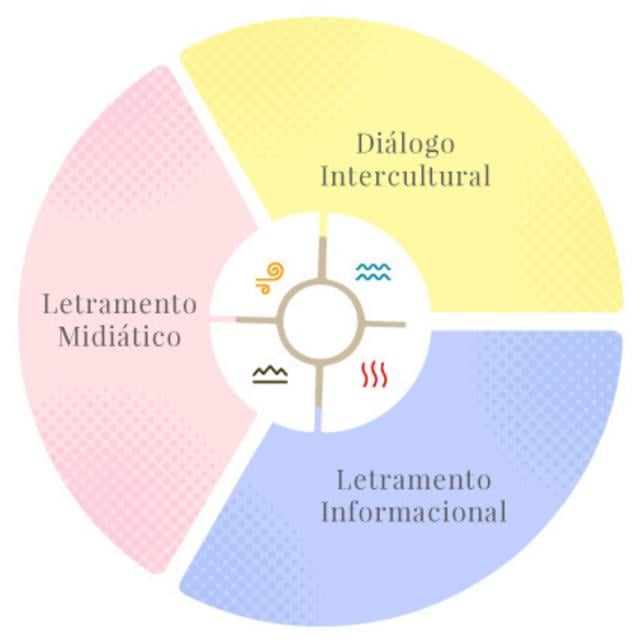
Este curso quer pensar junto com você sobre um fenômeno recente no Brasil, que é a presença de uma grande quantidade de informação via mundo digital. Vamos mostrar diferentes caminhos do que podemos fazer com essa quantidade incrível de midias e como participar da construção de conteúdo digital de maneira sóbria e segura.

Class Deals by MOOC List - Click here and see Coursera's Active Discounts, Deals, and Promo Codes.

Além disso, nós fomos buscar conselhos de várias lideranças comunitárias, e você terá acesso a suas percepções e análises nos videos de cada semana do curso. Querer saber o que pensa quem é diferente de nós é sempre um bom início de investigação.
Há uma tradição de pensar a filosofia contemporânea no Brasil como um modo de pensar a nossa realidade. Os filósofos são aqueles que pensam sobre o mundo, sobre o que acontece no mundo, e que nos atualizam com reflexões sobre a nossa vida e as nossas relações

Syllabus

WEEK 1
Alfabetização midiática e informacional: uma introdução
Bem vindo ao curso de Alfabetização Midiática, informacional e Diálogo Intercultural! Neste módulo você terá disponível uma introdução de recursos e informações que te levarão à uma maior capacidade de compreender porque os meios de comunicação e outros provedores de informações são importantes para o desenvolvimento e as sociedades democráticas, aprender sobre o que os meios de comunicação e outros provedores de informações devem fazer para apoiar o desenvolvimento e a democracia, reconhecer a necessidade de informação, aprender como melhor localizar e acessar informações necessárias e muitos outros aprendizados que a Alfabetização Midiática e Informacional e o Diálogo Intercultural pode lhe proporcionar em termos de conhecimento.
WEEK 2
Alfabetização em Mídia, Informação e Diálogo Intercultural

WEEK 3
Alfabetização midiática e informacional: avaliando e usando informações e conteúdo midiático

WEEK 4
Alfabetização midiática e informacional: Usando pesquisa e análise para produzir sua própria informação e conteúdo de mídia

WEEK 5
Liberdade de Expressão, Liberdade de Informação, Liberdade de Imprensa

WEEK 6
Representações de Gênero na mídia, nos Livros, na Internet e na História

WEEK 7
Ética da mídia e da informação em relação às necessidades dos grandes negócios, política e desenvolvimento

WEEK 8
Entendendo e Avaliando o Mundo da Publicidade

WEEK 9
Desafios da Internet e Oportunidades para Crianças e Jovens

WEEK 10
Envolvendo-se com mídia e usando nova tecnologia e Informação para Ação Social

Go to Class
MOOC List is learner-supported. When you buy through links on our site, we may earn an affiliate commission.

Related Courses

Intellectual Humility: Science (Coursera) Coursera
University of Edinburgh

Intellectual Humility: Science (Coursera)

It’s clear that the world needs more intellectual humility. But how do we develop this virtue? And why do so many people still end up so arrogant? Do our own biases hold us back from becoming as intellectually humble as we could be—and are there some biases that actually make us more likely to be humble? Which cognitive dispositions and personality traits give people an edge at being more intellectually humble - and are they stable from birth, learned habits, or something in between? And what can contemporary research on the emotions tell us about encouraging intellectual humility in ourselves and others?

Jun 22nd 2026
4 Weeks
Introduction to Philosophy (Coursera) Coursera
University of Edinburgh

Introduction to Philosophy (Coursera)

This course will introduce you to some of the main areas of research in contemporary philosophy. Each module a different philosopher will talk you through some of the most important questions and issues in their area of expertise. We’ll begin by trying to understand what philosophy is – what are its characteristic aims and methods, and how does it differ from other subjects? Then we’ll spend the rest of the course gaining an introductory overview of several different areas of philosophy.

Jun 15th 2026
5-12 Weeks
Søren Kierkegaard - Subjectivity, Irony and the Crisis of Modernity (Coursera) Coursera
University of Copenhagen

Søren Kierkegaard - Subjectivity, Irony and the Crisis of Modernity (Coursera)

In this course created by former associate professor at the Søren Kierkegaard Research Centre, Jon Stewart, we will explore how Kierkegaard deals with the problems associated with relativism, the lack of meaning and the undermining of religious faith that are typical of modern life. His penetrating analyses are still highly relevant today and have been seen as insightful for the leading figures of Existentialism, Post-Structuralism and Post-Modernism.

Jun 22nd 2026
5-12 Weeks
Ancient Philosophy: Plato & His Predecessors (Coursera) Coursera
University of Pennsylvania

Ancient Philosophy: Plato & His Predecessors (Coursera)

What is philosophy? How does it differ from science, religion, and other modes of human discourse? This course traces the origins of philosophy in the Western tradition in the thinkers of Ancient Greece. We begin with the Presocratic natural philosophers who were active in Ionia in the 6th century BCE and are also credited with being the first scientists.

Jun 22nd 2026
4 Weeks
Advanced Information Literacy (Coursera) Coursera
The State University of New York

Advanced Information Literacy (Coursera)

This course is designed to build upon a learner's search skills and expertise in the information literacy concepts that underpin scholarship at college or university. This badge incentivizes them to continue improving their information literacy competencies over their academic and workplace career. By participating in this course, one can use these advanced search skills to save time conducting literature reviews, efficiently gather and organize information, ethically use sources, and protect their own intellectual property. Learners will work independently on a topic of their choosing and receive feedback from their peers throughout the process.

Jun 15th 2026
5-12 Weeks
Using Educational Technology with English Learners (Coursera) Coursera
Rice University

Using Educational Technology with English Learners (Coursera)

This course is designed for early career teachers to learn about evaluating and incorporating technology into the classroom to engage students, especially English learners (ELs). Teachers face the challenging expectation of helping ELs achieve grade-level standards and to develop additional 21st century skills, including citizenship, collaboration, creativity, communication, character, and critical thinking. Selecting and utilizing appropriate, high-quality educational technology as part of the learning process can motivate students and facilitate academic success.

Jun 15th 2026
4 Weeks
Principles of Secure Coding (Coursera) Coursera
University of California, Davis

Principles of Secure Coding (Coursera)

This course introduces you to the principles of secure programming. It begins by discussing the philosophy and principles of secure programming, and then presenting robust programming and the relationship between it and secure programming. We'll go through a detailed example of writing robust code and we'll see many common programming problems and show their connection to writing robust, secure programs in general.

Jun 15th 2026
4 Weeks
On Strategy : What Managers Can Learn from Philosophy - PART 1 (Coursera) Coursera
CentraleSupélec

On Strategy : What Managers Can Learn from Philosophy - PART 1 (Coursera)

In the expression “creative thinking”, the keyword is not creativity; the keyword is thinking. With the help of great philosophers, you will rediscover the art of thinking. To help leaders to be rigorous even without figures, great philosophers have lots of ideas. Managers are invited to rediscover the art of thinking. They should understand the role of mental models, realize the importance of cognitive bias, agree on clear definitions and efficient criteria etc. Creativity demands the ability to unshackle ourselves from conventional ways of thinking, to "think outside the box".

Jun 1st 2026
5-12 Weeks
Data, Security, and Privacy (Coursera) Coursera
University of California, Irvine

Data, Security, and Privacy (Coursera)

This course provides hands-on experience with technology-based productivity tools, as well as foundational knowledge and understanding of system design and development. The course is designed to integrate concepts of hardware, software, and the Internet. This course also provides an overview of data security, data privacy, and ways to increase productivity and efficiency. Students will also investigate technology career paths and some of the various certifications available in the industry.

Jun 22nd 2026
3 Weeks
Philosophy, Science and Religion: Religion and Science (Coursera) Coursera
University of Edinburgh

Philosophy, Science and Religion: Religion and Science (Coursera)

Philosophy, Science and Religion mark three of the most fundamental modes of thinking about the world and our place in it. Are these modes incompatible? Put another way: is the intellectually responsible thing to do to ‘pick sides’ and identify with one of these approaches at the exclusion of others? Or, are they complementary or mutually supportive? As is typical of questions of such magnitude, the devil is in the details. For example, it is important to work out what is really distinctive about each of these ways of inquiring about the world. In order to gain some clarity here, we’ll be investigating what some of the current leading thinkers in philosophy, science and religion are actually doing.

Jun 16th 2026
5-12 Weeks
Humanidades digitales (Coursera) Coursera
Universitat Autònoma de Barcelona

Humanidades digitales (Coursera)

¿Te has planteado para qué sirven las humanidades en el siglo XXI? ¿Cómo el advenimiento de lo Digital ha cambiado nuestra forma de acercarnos a las Humanidades? ¿Y al revés? ¿De qué forma las Humanidades influencian sobre los diferentes aspectos de la Tecnología? Te ofrecemos el primer curso online que da respuesta a estas preguntas. Una visión de las Humanidades Digitales desde la filosofía, la historia, la arqueología, el arte,… y desde las ciencias computacionales y la visión por ordenador.

Jun 8th 2026
4 Weeks
The Modern and the Postmodern (Part 2) (Coursera) Coursera
Wesleyan University

The Modern and the Postmodern (Part 2) (Coursera)

This course examines how the idea of "the modern" develops at the end of the 18th century in European philosophy and literature, and how being modern (or progressive, or hip) became one of the crucial criteria for understanding and evaluating cultural change. Are we still in modernity, or have we moved beyond the modern to the postmodern?

Jun 15th 2026
5-12 Weeks